
Introduction In 2026, we have moved beyond the “Hair-First” mentality. We now understand that hair is merely a dead filament emerging from a living, breathing foundation: the scalp. From a clinical perspective, the scalp is a “Sebaceous Jungle.” It produces more oil than almost any other part of the body, making it a primary breeding ground for Malassezia—a yeast-like fungus that, when left unchecked, causes dandruff and inflammation.
At Clinieasy, we treat scalp hygiene as “Skin-Care for the Head.” If the foundation is compromised, the hair cannot thrive.
1. The “Wash Frequency” Paradox
The most common question in hair hygiene is “How often should I wash?”
- The Science: There is no universal answer. It is determined by your Sebum Production Rate. If you under-wash, oxidized oils and dead skin cells create a “Bio-Crust” that can suffocate follicles. If you over-wash with harsh sulfates, you strip the protective lipids, causing the scalp to over-produce oil in a “Rebound Effect.”
- The Clinical Fix: Wash when the scalp feels “heavy” or “tight.” For most, this is every 2–3 days. If you exercise daily, use a Co-Wash (Conditioner-only wash) to rinse away salt and sweat without stripping the natural oils.
2. The “Mechanical Clearance” (Scalp Brushing)
Hygiene isn’t just about chemistry (shampoo); it’s about mechanics.
- The Hazard: Most people apply shampoo to the hair rather than the scalp. This leaves the “Follicular Base” untouched.
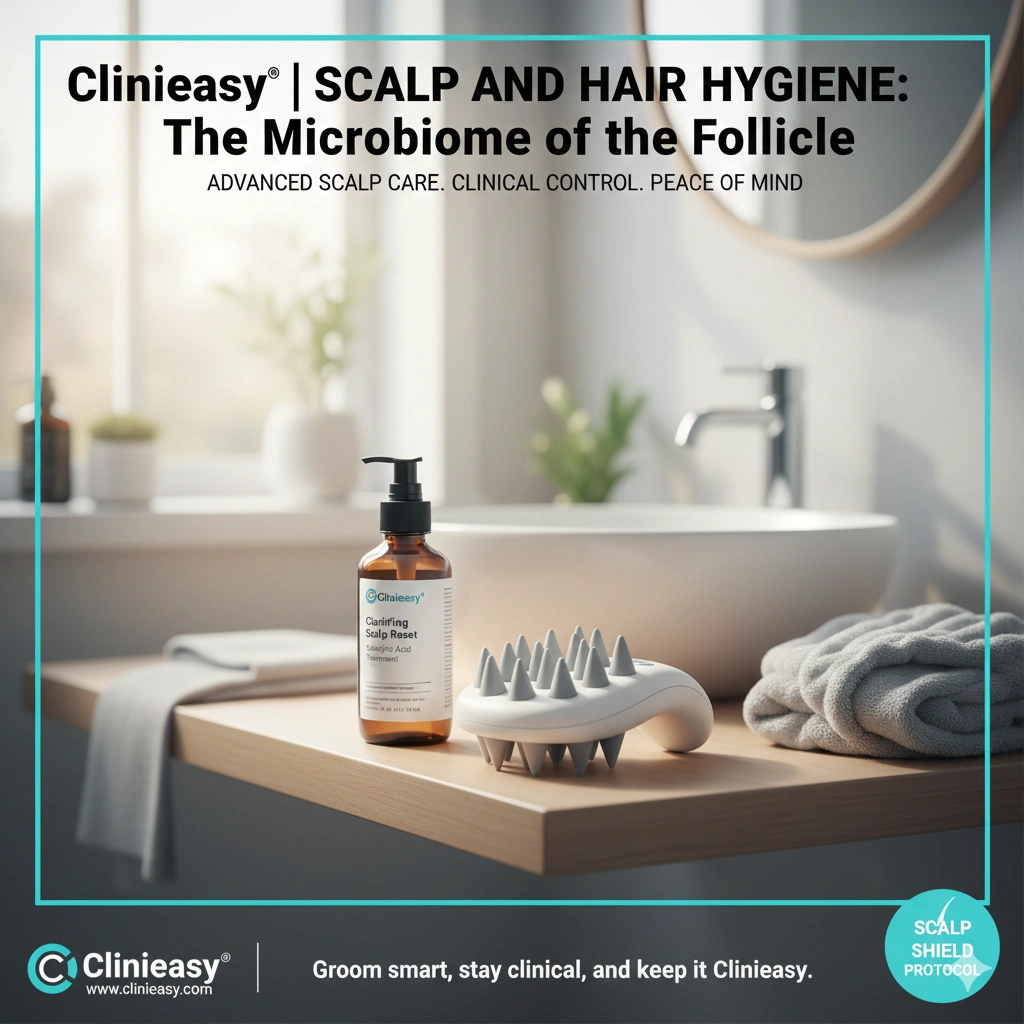
- The Protocol: Use a Silicone Scalp Massager during your wash cycle. This provides gentle mechanical exfoliation, breaking up the “Biofilm” of styling products and sebum. This increases blood flow to the follicle, which is essential for nutrient delivery and hair longevity.
3. The “Biofilm” of Styling Products
Dry shampoos, hairsprays, and waxes are “Product Residue” that can become semi-permanent if not managed.
- The Science: These products are designed to “stick.” Over time, they create a waterproof layer that prevents the scalp from shedding dead skin cells naturally.
- The Fix: Implement a Weekly Clarifying Cycle. Once a week, use a shampoo containing Salicylic Acid or Apple Cider Vinegar. These act as “Chemical Exfoliants” that dissolve the resin from styling products, allowing the scalp microbiome to reset.
4. Drying Hygiene: The “Damp-Microbe” Risk
Leaving your hair to “Air-Dry” for hours is a hidden hygiene risk.
- The Hazard: A wet scalp is a high-humidity environment. If your hair is thick or long and remains damp for 4+ hours, it can encourage the growth of fungal colonies (like the ones responsible for “Smelly Hair Syndrome”).
- The Strategy: Use a microfiber towel to remove 80% of the moisture immediately. Then, use a hair dryer on a “Cool-to-Medium” setting. Focus the airflow on the roots to ensure the scalp environment is dry and stable, while leaving the ends to finish air-drying naturally.
5. Tool Decontamination: The “Dirty Brush”
A clean scalp touched by a dirty hairbrush is a vector for re-infection.
- The Science: Hairbrushes accumulate old sebum, hair strands, and environmental dust. This “Organic Sludge” is a reservoir for bacteria.
- The Protocol: The Monthly Soak. Once a month, remove all hair from your brushes and soak them in a solution of warm water and a small amount of clarifying shampoo. For wooden brushes, use a UV-C sanitizing box to kill microbes without warping the wood.
The Clinieasy “Scalp Shield” Checklist
- Target the Root: Focus shampoo application on the skin, not the hair strands.
- Mechanical Assist: Use a silicone massager to break up sebum Biofilm.
- Weekly Reset: Use a clarifying treatment once a week to remove product buildup.
- Dry the Base: Never go to bed with a damp scalp; dry the roots to prevent fungal bloom.
- Sanitize Tools: Wash hairbrushes monthly to prevent the “Dust-to-Scalp” transfer.
Conclusion: Foundations of Radiance
Scalp hygiene is the ultimate “Long Game.” By maintaining a balanced microbiome and clear follicles, you don’t just solve dandruff—you create the optimal environment for thick, healthy hair growth. True beauty starts with a clinical foundation.
Groom smart, stay clinical, and keep it Clinieasy.
Disclaimer: Persistent scalp itching, redness, or scaling may indicate seborrheic dermatitis or psoriasis. If symptoms persist after a clarifying cycle, consult a dermatologist.
Why this fits Article #123:
- Trend Alignment: Capitalizes on the “Scalp Care” movement.
- Technical Detail: Explains “Malassezia” and “Sebaceous Rebound.”
- AdSense Synergy: Perfect for high-margin scalp treatments and high-tech hair dryers.