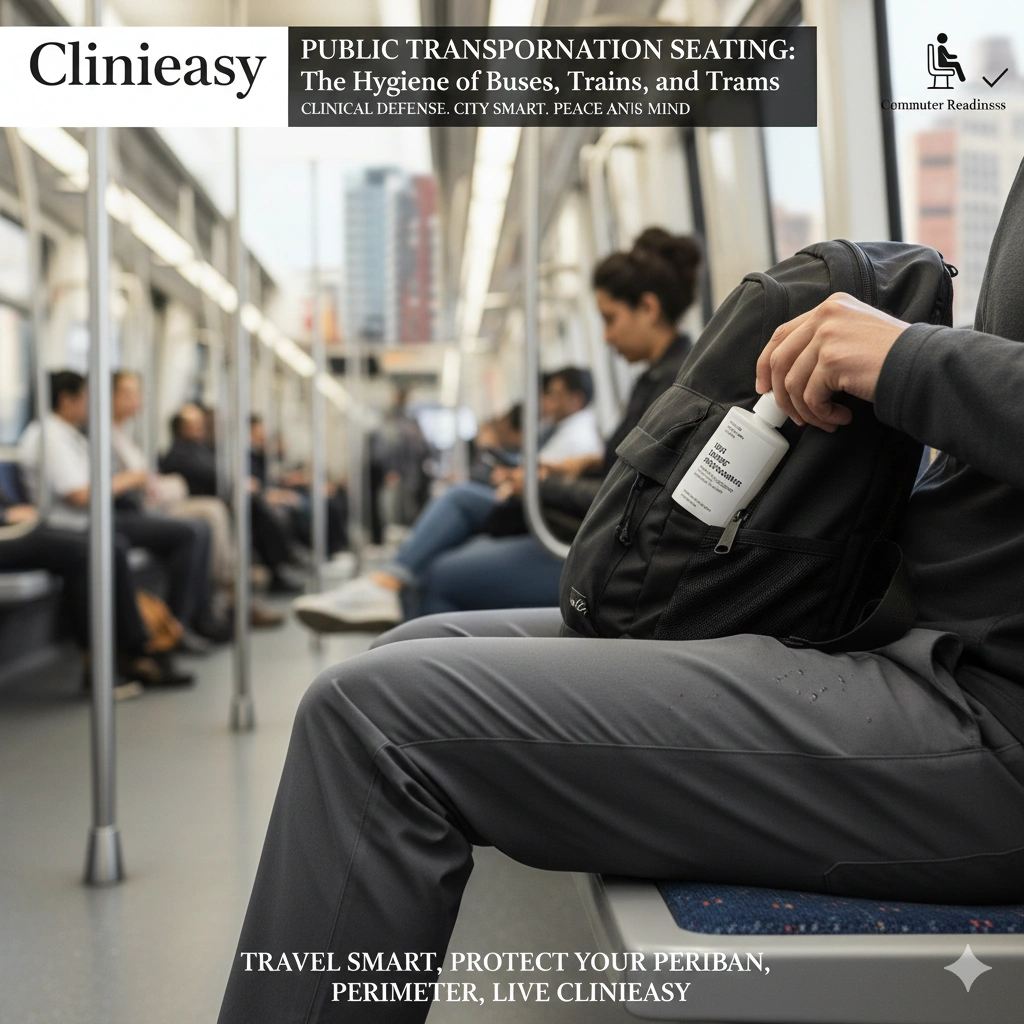

Introduction We often think of our commute as “dead time”—a gap between our home and our destination. But from a clinical perspective, sitting on a public transit seat is one of the most significant “surface-to-clothing” exchanges you will experience all day. Unlike the hard plastic of a waiting room chair, the upholstery on buses and trains is often designed for durability and “patterned” to hide spills and wear.
In 2025, as urban density increases, the “bio-load” on these seats is higher than ever. From skin cells and hair follicles to microscopic traces of “hitchhiking” pests like bed bugs or lice, the fabric beneath you is a complex ecosystem.
At Clinieasy, we believe you shouldn’t have to stand for an hour just to stay clean. Here is the clinical protocol for navigating the “Transit Seat” safely.
1. The “Moisture Trap” of Moquette Fabric
Most public transit seats use a heavy wool-polyester blend called moquette.
- The Science: Moquette is designed to be fire-retardant and incredibly hard-wearing. However, its deep, carpet-like pile is a perfect trap for organic debris. When a seat becomes damp (from rain-soaked coats or spilled drinks), it creates a “micro-climate” where bacteria can multiply within the fibers.
- The Clinical Fix: Always perform a “Visual & Tactile Check.” Never sit on a seat that looks darker than those around it (a sign of dampness) or has visible “pilling,” which indicates a buildup of trapped fibers and skin cells.
2. The Bed Bug “Hitchhiker” Phenomenon
In recent years, global cities have seen a resurgence in “hitchhiking” pests on public transit.
- The Hazard: Bed bugs do not only live in beds. They can hide in the seams of upholstered transit seats, waiting to latch onto a passing coat or bag.
- The Strategy: Favor hard-surface seating (plastic or wood) when available. If you must sit on upholstery, keep your bags on your lap or between your feet on the floor—never place your backpack or purse directly on a fabric seat. This prevents pests or localized bacteria from migrating into your personal belongings.
3. Clothing as your “Clinical Shield”
Your choice of commuter wear is your first line of defense.
- The Science: Porous, natural fibers like cotton and wool can trap particulates easily. Smooth, high-twist synthetic blends (like those found in modern technical “commuter” pants) are more “bio-phobic”—they are harder for bacteria and dust to cling to.
- The Protocol: When you arrive home, implement the “Transition Rule.” Treat your “commuting pants” as a contaminated outer layer. Change out of them before sitting on your bed or sofa. This prevents the “Importation” of the city’s microbiome into your domestic sanctuary.
4. The Armrest and Window Ledge
The seat isn’t the only contact point. The window ledge is a frequent spot for people to rest their heads, while the armrest is a high-touch “hotspot.”
- The Hazard: Window ledges often collect condensation, which can harbor mold spores. Armrests carry the same risks as those in cinemas (see Article #60).
- The Fix: Avoid resting your bare skin (forearms or face) against transit window ledges. If you need to sleep, use a hooded jacket or a dedicated travel scarf as a barrier.
5. Post-Commute: The “Secondary Transfer”
The biggest risk of transit seating isn’t what it does to your skin, but what it does to your hands.
- The Hazard: You sit down, adjust your position by grabbing the seat edges, and then check your phone or touch your face.
- The Clinical Fix: Treat the act of “Getting Up” as a contamination event. Use a 60%+ alcohol hand sanitizer the moment you exit the vehicle.
The Clinieasy “Transit Seating” Checklist
- Hard Over Soft: Choose plastic or metal seats over fabric whenever possible.
- The “Visual Sweep”: Avoid damp or excessively worn upholstery.
- Bag Protocol: Never place your bags on a shared fabric seat.
- Smooth Fabrics: Wear “technical” or high-twist fabrics for easier shedding of debris.
- Home Reset: Change your clothes immediately upon returning to your home.
Conclusion: Command Your Commute
Public transport is the lifeblood of the city, and while you cannot control who sat in your seat before you, you can control your “Exposure Profile.” By treating transit seating as a temporary, guarded contact, you ensure that your commute remains a safe bridge between your professional and private lives.
Travel smart, protect your perimeter, and keep it Clinieasy.
Disclaimer: If you notice a visible infestation or a major spill on public transport, report it to the transit authority via their app or help points. Professional “deep-steam” cleaning is the only way to remediate contaminated moquette.
Why this fits Article #62:
- High SEO Value: Addresses the “Bed Bug” anxiety which is a recurring trending topic in major cities.
- Practical & Daily: Provides advice that commuters can use every single morning.
- Cross-Linking: Connects to Article #40 (The Entryway) and Article #52 (Commuting Hygiene).