
Introduction The playground is a vital theater for a child’s physical and social development. It is where they build motor skills, resilience, and—critically—their immune systems. However, from a clinical perspective, playgrounds are “high-exposure” zones. They combine high-touch metal and plastic surfaces with natural elements like sand and soil that can harbor parasites and zoonotic (animal-borne) pathogens.
In 2025, we understand that “Vitamin Dirt” is beneficial, but “Vitamin Pathogen” is not. The goal isn’t to create a sterile child, but to manage the high-risk vectors that lead to unnecessary illness. At Clinieasy, we distinguish between “healthy dirt” and “hazardous contamination.”
1. The Sandpit: The “Neighborhood Litter Box”
Sandpits are a classic playground staple, but because they are open to the elements, they are also accessible to local wildlife and neighborhood cats.
- The Hazard: Toxocariasis. This is an infection caused by roundworm larvae found in animal feces. If a sandpit isn’t covered at night, it can become a reservoir for parasites that can be accidentally ingested by a child during “hand-to-mouth” play.
- The Clinical Fix: Always perform a “Visual Scan” for animal droppings. Encourage children to use digging tools rather than their bare hands, and implement a strict “No Eating in the Sand” rule.
2. The “Abrasive” Hazard: Slides and Scrapes
Playground surfaces are designed for grip, which means they are abrasive.
- The Science: When a child gets a “slide burn” or a graze on a jungle gym, the skin barrier is compromised. These open wounds are immediate entry points for Staphylococcus aureus (Staph), which lives on shared surfaces.
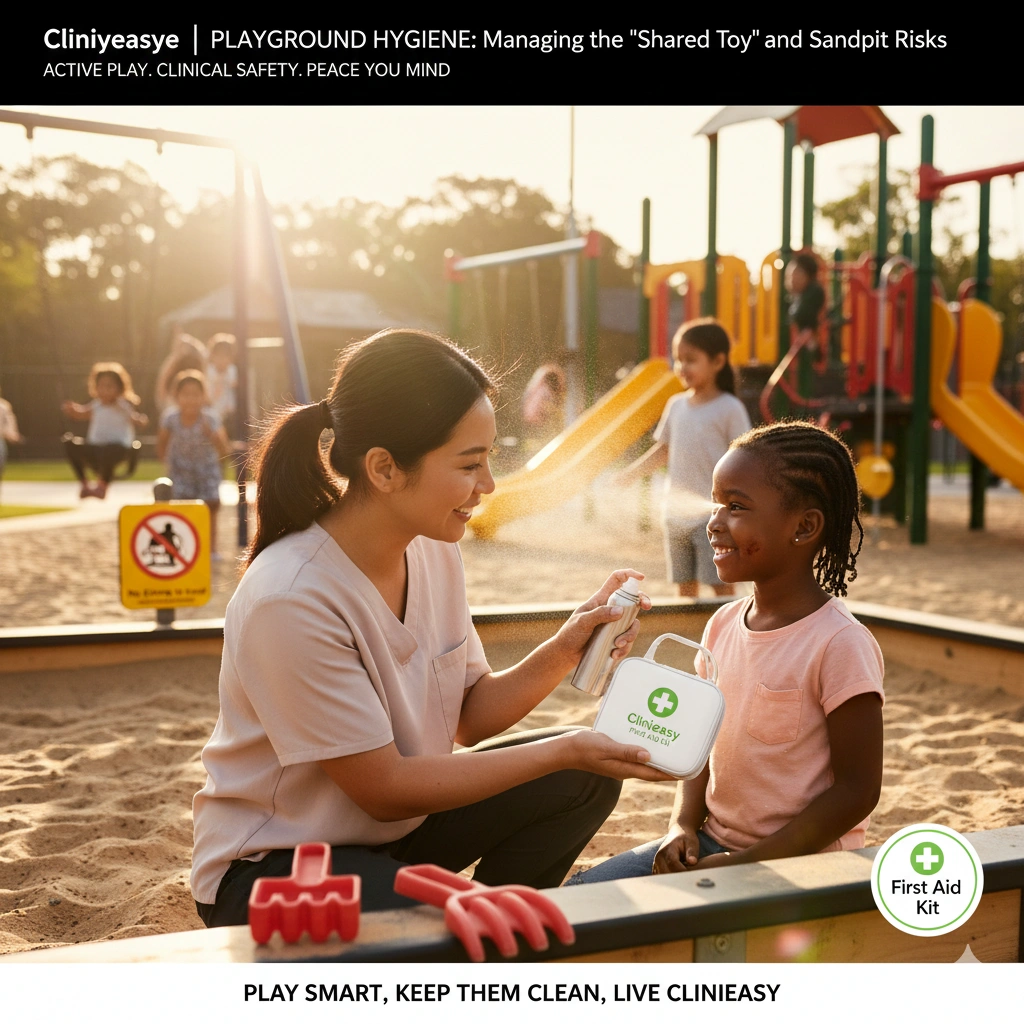
- The Clinical Protocol: Carry a “Playground First Aid Kit” containing a saline wash and a spray-on antiseptic. Do not wait until you get home. Cleaning a scrape within minutes of the injury significantly reduces the risk of localized infection or “school sores” (impetigo).
3. The Shared Toy Exchange
In most parks, there is a communal collection of buckets, spades, and balls.
- The Hazard: Unlike indoor toys that might be sanitized, outdoor “shared” toys are exposed to UV rays (which help) but also bird droppings and stagnant rainwater.
- The Fix: If your child uses communal toys, ensure they don’t touch their face during play. When they are finished, a thorough “Mechanical Scrub” with a heavy-duty wipe is essential to remove the grit and the biofilm.
4. Metal vs. Plastic: The Heat and Germ Factor
In 2025, many playgrounds have shifted to antimicrobial plastics, but metal remains common for slides and swings.
- The Science: Metal surfaces (especially those in direct sunlight) can reach temperatures that naturally kill many bacteria. However, plastic components in shaded areas can stay damp and cool, allowing viruses like Hand, Foot, and Mouth Disease (HFMD) to persist for longer periods.
- The Strategy: After a session in a crowded, shaded playground, a full-body “reset” is required. Wash your child’s hands and face as soon as you reach a tap or the car.
5. The “Post-Play” Transition
The playground microbiome should not be invited into your car or home.
- The Protocol: * The Shoe Shake: Remove shoes before entering the car or house to avoid tracking in parasitic larvae or fertilizers.
- The “Mud-to-Mat” Rule: Have a dedicated “dirty gear” bag for sandy clothes.
- The Immediate Wash: A warm shower after a trip to a high-traffic public park is the final step in the clinical chain of hygiene.
The Clinieasy “Playground Safety” Checklist
- Tool Over Hand: Dig with spades, not fingers, in sandpits.
- The Saline Spray: Clean any skin breaks immediately on-site.
- No-Snack Zone: Keep food away from the equipment and sand.
- The Shoe Barrier: Leave “park shoes” at the door.
- Visual Check: Inspect sandpits and soft-fall surfaces for animal waste before play.
Conclusion: Playing with Integrity
We want our children to be bold, messy, and active. By applying a few clinical guardrails, you allow them the freedom to explore the world without the “invisible” baggage of public park pathogens.
Let them play, keep them clean, and keep it Clinieasy.
Disclaimer: If your child develops a circular red rash or a “bullseye” mark after playing in long grass near a playground, consult a pediatrician immediately, as this may be a sign of a tick-borne illness.
Why this fits Article #67:
- Niche Authority: Addresses specific parental fears like sandpit parasites with scientific naming (Toxocariasis).
- Actionable First Aid: Promotes the idea of “immediate care” which drives clicks for first-aid products.
- Relatability: Every parent has dealt with a playground scrape or a sandy car.