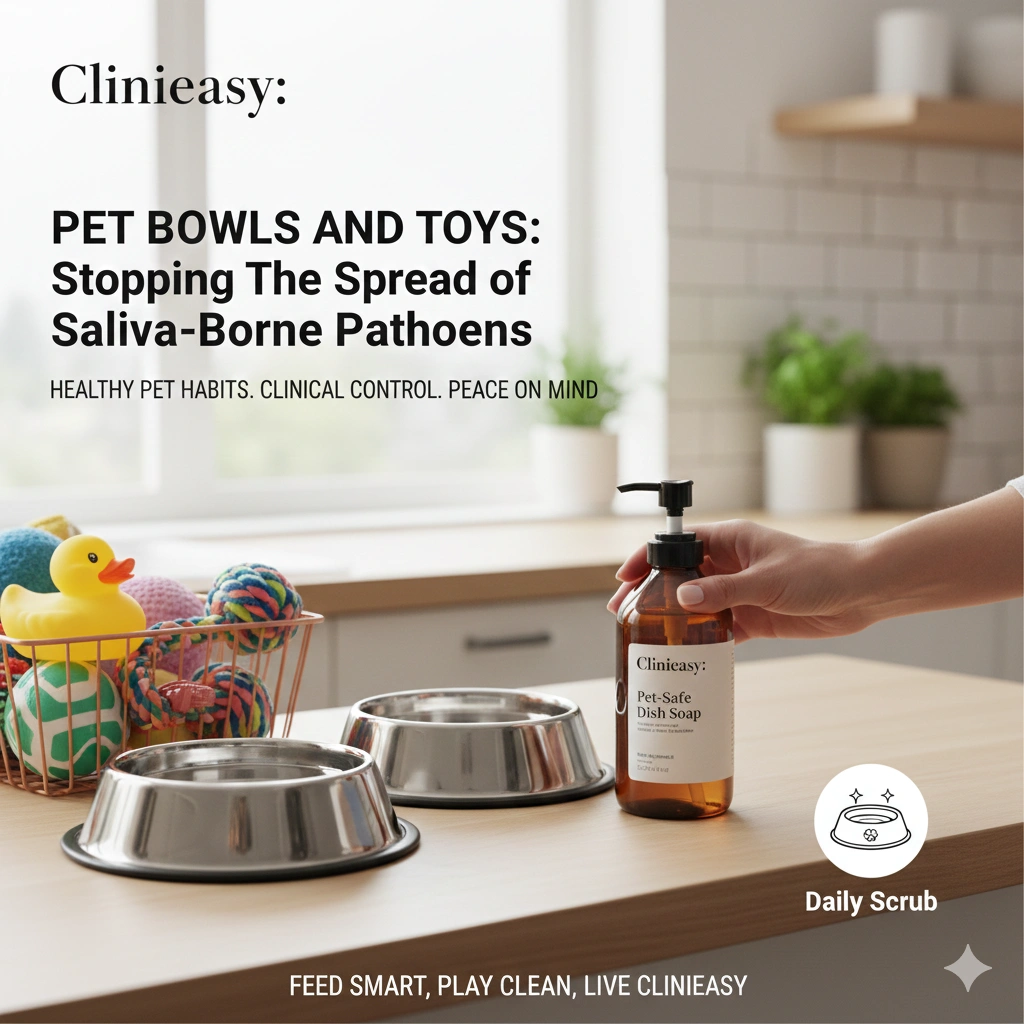

Introduction We often focus on what our pets track in from outside, but the items they put in their mouths multiple times a day—their food and water bowls, and their toys—are silent harbors for pathogens. From a clinical perspective, these items are “saliva-rich environments” that, if left unmanaged, can become incubators for bacteria and sources of gastrointestinal upset for both pets and humans.
In 2025, as our understanding of zoonotic disease (illnesses transferable between animals and humans) grows, the hygiene of pet food and play items is no longer just about preventing a “doggy smell.” It’s about breaking the “Oral-to-Hand” transmission chain. At Clinieasy, we bring clinical precision to pet feeding and playtime.
1. The “Biofilm” in Pet Bowls
Pet bowls are not just empty containers. Over time, a slimy layer forms on the surface.
- The Science: This layer is a biofilm, a complex community of bacteria (like E. coli and Staphylococcus) encased in a protective matrix. These bacteria thrive on food residue and moisture.
- The Hazard: Biofilm can cause gingivitis in pets and, if accidentally ingested by humans (e.g., from touching the bowl and then touching your mouth), can lead to stomach upset.
- The Clinical Fix: Bowls must be washed daily—not just rinsed. Use hot, soapy water (or run them through the dishwasher on a high-heat cycle). Stainless steel bowls are clinically superior to plastic or ceramic as they are less porous and easier to sterilize.
2. The Water Bowl: A Constant Source of Contamination
Water bowls are often overlooked because “it’s just water.” But your pet’s saliva contains a cocktail of bacteria.
- The Science: When your pet drinks, they deposit bacteria and food particles into the water. This creates a nutrient-rich broth that can quickly become a bacterial breeding ground, especially in warmer temperatures.
- The Clinieasy Protocol: Change water twice daily. Clean the water bowl daily with hot, soapy water. Consider investing in a filtered pet water fountain, as the continuous circulation and filtration help reduce biofilm formation, but remember the reservoir still needs weekly deep cleaning.
3. Chew Toys: The Oral Micro-Exchange
Chew toys are vital for dental health and mental stimulation, but they are also a direct conduit for oral bacteria.
- The Hazard: Toys constantly move between your pet’s mouth, the floor, and sometimes even your hands or children’s hands. They can become coated in saliva-borne bacteria.
- The Strategy: * The Boil-Wash Rule: Hard rubber or plastic toys can be boiled for 5 minutes once a week to sterilize them.
- The Hot Cycle: Fabric toys (if machine-washable) should be run through a hot laundry cycle with pet-safe detergent.
- The “Discard” Policy: If a toy is visibly torn or heavily soiled and cannot be cleaned, it should be discarded.
4. Food Storage: Beyond the Bowl
The way pet food is stored is as crucial as how the bowl is cleaned.
- The Hazard: Open bags of dry food can attract pests or become contaminated with airborne bacteria. Canned wet food, if left out, rapidly spoils.
- The Fix: Store dry food in airtight containers to prevent insect infestations and moisture absorption. For wet food, never leave it out for more than 30 minutes. Unfinished portions should be immediately refrigerated in a sealed container (not the original can) and discarded after 2 days.
5. The “Post-Pet Contact” Hand Wash
The final barrier against zoonotic transfer is human hand hygiene.
- The Clinical Rule: Always wash your hands thoroughly with soap and water after:
- Handling pet food.
- Cleaning bowls.
- Playing with pet toys.
- Especially before eating or preparing human food.
The Clinieasy “Pet Oral Hygiene” Checklist
- Daily Bowl Scrub: Wash food and water bowls with hot, soapy water every day.
- Double-Dip Water: Change pet water twice daily.
- Heat for Toys: Boil hard toys or hot-wash fabric toys weekly.
- Airtight Food: Store dry food in sealed containers.
- Hands Last: Always wash your hands after handling pet items.
Conclusion: A Clean Mouth, A Clean Home
Our pets enrich our lives immeasurably. By applying these clinical principles to their feeding and play items, you safeguard their health and maintain a clean, harmonious home environment. It’s a small investment of time for a significant return in health and peace of mind.
Feed smart, play clean, and keep it Clinieasy.
Disclaimer: If your pet shows signs of gastrointestinal distress (vomiting, diarrhea), or unusual oral lesions, consult your veterinarian immediately. While hygiene helps, it doesn’t replace professional medical care.
Why this fits Article #71:
- Directly Addresses Pet Owner Concerns: Focuses on practical, everyday activities.
- High-Value Product Integration: Naturally promotes specific types of bowls, toys, and cleaning methods.
- Clinical Authority: Uses terms like “biofilm” and “zoonotic disease” to establish expertise