
In 2026, the average person touches their phone over 2,600 times a day. We take them into kitchens, onto public transit, and—most critically—into bathrooms. From a clinical perspective, your smartphone is a “Portable Fomite.” Because the battery keeps the device warm, it provides a perfect incubation temperature for the pathogens we transfer from our hands to the glass surface.
Studies have shown that a typical smartphone carries more bacteria per square inch than a public toilet seat. At Clinieasy, we view phone sanitation not as “tech maintenance,” but as Primary Hand Hygiene. If you wash your hands but then touch a contaminated phone, your hands are instantly re-colonized.
1. The “Heat Sink” Incubation
Why are phones so much dirtier than other surfaces?
- The Science: Most bacteria thrive at temperatures between $20°C$ and $40°C$. The internal processors of a smartphone keep the screen and casing within this “Goldilocks Zone” for microbial growth. When you add the oils (lipids) from your face and fingertips, you create a nutrient-rich “Bio-Film” on the glass.
- The Clinical Fix: The Daily Decon. You must sanitize your phone at least once every 24 hours—ideally as soon as you return home from the “Public Sphere.”
2. The “Glass-Safe” Sanitization
In the past, people were afraid that alcohol would strip the “Oleophobic” (oil-repellent) coating of their screens. In 2026, screen technology is more resilient, but caution is still required.
- The Protocol: Use 70% Isopropyl Alcohol wipes or a microfiber cloth lightly dampened with a 70% alcohol solution. Never spray directly onto the device; moisture can seep into the charging ports or speaker grilles.
- The “Dry Wipe” Myth: Using your shirt or a dry tissue only spreads the oils and bacteria around. You need a solvent (alcohol) to break the molecular bond of the Bio-Film.
3. UV-C: The Clinical Gold Standard
For those who want to avoid chemicals or moisture entirely, 2026 has brought UV-C technology into the mainstream.
- The Science: UV-C light at the $254nm$ wavelength penetrates the DNA and RNA of viruses and bacteria, rendering them unable to replicate.
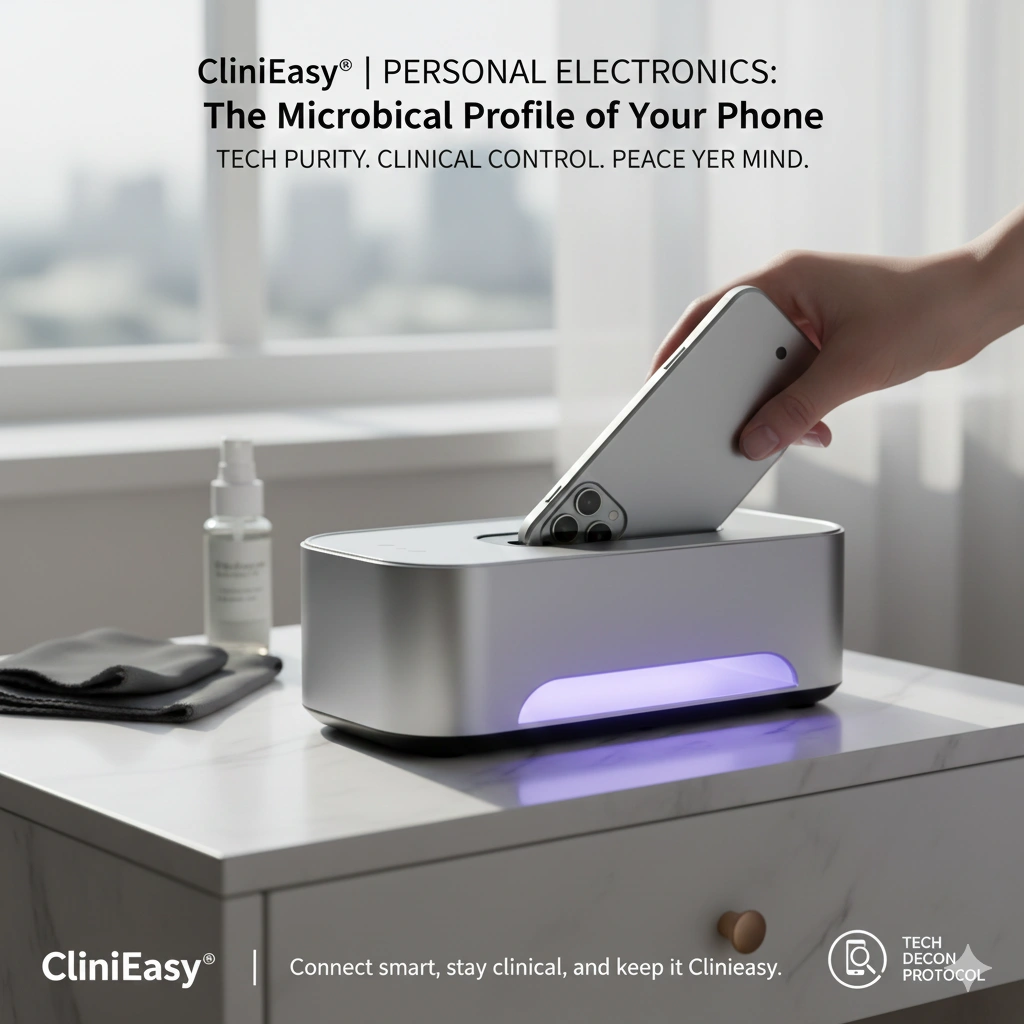
- The Strategy: Use a UV-C Sanitizing Chamber. Placing your phone in a “PhoneBath” for 5–10 minutes provides a 360-degree decontamination that wipes cannot achieve, reaching into the small crevices of the buttons and charging ports.
4. The “Bathroom Border” Policy
The most significant leap in tech hygiene is behavioral.
- The Hazard: “Toilet-Scolling” is the leading cause of fecal coliform bacteria (like E. coli) being found on mobile devices. Aerosolized particles from the “Toilet Plume” settle directly onto the screen.
- The Mandate: The Phone-Free Zone. Establish a strict rule: the phone never enters the bathroom. If it does, it must undergo a full UV-C or alcohol decontamination before it touches your bed or dining table.
5. Antimicrobial Cases and Screen Protectors
In 2026, your phone’s “Armor” should do more than just protect against drops.
- The Innovation: Modern phone cases are now infused with Silver-Ion technology. Silver ions are naturally antimicrobial; they create an inhospitable environment for bacteria on the surface of the case.
- The Fix: When upgrading your gear, prioritize cases and screen protectors with “Built-in Antimicrobial Protection.” While these don’t replace cleaning, they act as a “Continuous Defense” layer between your scheduled decontaminations.
The Clinieasy “Tech Decon” Checklist
- The 24-Hour Reset: Sanitize your phone every evening with 70% Isopropyl alcohol.
- Microfiber Only: Use dedicated cloths to prevent micro-scratches on the lens.
- UV-C Integration: Use a sanitizing box for “Deep Cleans” without moisture.
- Bathroom Ban: Keep the device out of high-aerosol bathroom environments.
- Ion Defense: Use silver-ion infused cases for passive microbial management.
Conclusion: Your Most Personal Surface
Your phone is the bridge between your digital life and your physical body. By applying a clinical protocol to its maintenance, you ensure that this “Third Hand” is a tool for productivity, not a vector for infection. In the modern world, a clean screen is a sign of a clinical mind.
Connect smart, stay clinical, and keep it Clinieasy.
Disclaimer: Always turn off your device before cleaning with liquids. Avoid using bleach, hydrogen peroxide, or abrasive cleaners, as these will permanently damage the screen’s protective coatings.
Why this fits Article #128:
- High Relevance: Everyone has a phone; everyone knows they are dirty.
- Tech-Forward: Discusses UV-C and Silver-Ion technology.
- AdSense Synergy: Perfect for tech accessories, cleaning products, and high-end hardware.