
Introduction In the hyper-digital world of 2026, we often treat physical objects as “low-risk.” However, from a clinical perspective, paper and mail are “Porous Vectors.” Unlike a smartphone screen that can be wiped clean in seconds, the fibrous nature of paper allows it to trap and protect microbes, while shared office pens are among the most frequently exchanged items in a professional setting.
At Clinieasy, we recognize that “Tactile Productivity” still has a place. To manage it safely, you must understand how pathogens behave on organic surfaces.
1. The “Mailroom” Multiplier
Think about the journey of a single envelope: it is handled by the sender, postal sorters, delivery drivers, and finally, your office mailroom staff.
- The Science: Viruses like Influenza and certain bacteria can survive on cardboard and paper for anywhere from a few hours to two days. While the risk of “Surface-to-Human” transmission is lower than “Aerosol” transmission, the high number of “Hand-to-Envelope” touchpoints makes mail a notable vector.
- The Clinical Fix: The “Buffer Zone” Protocol. Designate a specific tray or area for incoming mail. If a document isn’t urgent, let it sit for 24 hours—this natural “dwell time” allows the majority of surface pathogens to lose viability.
2. The “Shared Pen” Paradox
The “Reception Desk Pen” is a classic hygiene trap.
- The Hazard: A shared pen is handled by dozens of people, many of whom may have just touched their face or coughed into their hands. Unlike your personal devices, these pens are almost never sanitized.
- The Protocol: Carry your own “EDC” (Everyday Carry) Pen. In 2026, a high-quality, copper or brass pen is a clinical choice; copper and its alloys have natural Oligodynamic properties, meaning they actively kill many bacteria and viruses on contact.
3. Paper Files and “Friction Transfer”
For those in legal, medical, or administrative fields, paper files are unavoidable.
- The Science: Turning pages often involves “Finger-to-Tongue” contact (to improve grip)—a catastrophic hygiene error. Additionally, as you move papers, the friction can aerosolize “Paper Dust,” which is a mix of cellulose fibers and dried microbial particles.
- The Fix: Use Silicone Finger Moistener or “Grip Pads” instead of saliva. If you are processing large volumes of old files, work in a well-ventilated area or use a desktop air purifier to catch disturbed particulates.
4. The “Package Entry” Decontamination
The 2026 economy runs on deliveries.
- The Strategy: The “Box-in-Box” Method. When a package arrives at your home or office, open the external shipping box at the entryway. Remove the internal item (which has been protected from the transit environment) and dispose of the outer cardboard immediately.
- The Hand Reset: Cardboard is highly absorbent of oils and grime. Always wash your hands with soap and water immediately after processing mail or packages, as hand sanitizer is less effective against the physical “grit” found on shipping materials.
5. Transitioning to “Digital-First” Hygiene
The most effective hygiene protocol for physical media is to eliminate it.
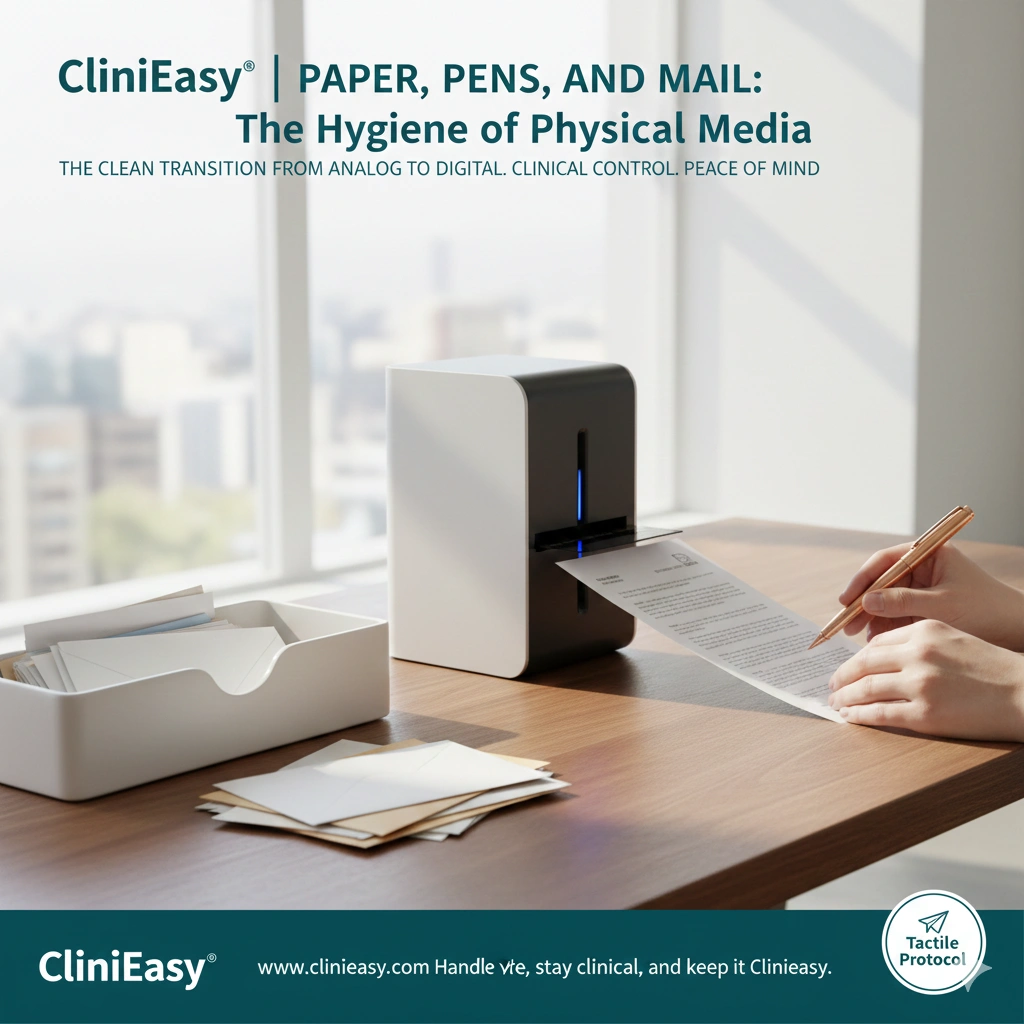
- The Fix: Use a high-speed document scanner to digitize mail and files the moment they arrive. Once scanned, the physical paper can be recycled, removing the ongoing “Bio-Load” from your workspace.
The Clinieasy “Tactile” Checklist
- Personal Pen Only: Stop using shared pens; carry a copper or brass EDC pen.
- The 24-Hour Buffer: Let non-urgent mail sit for a day to reduce viral load.
- No Saliva Gripping: Never lick your fingers to turn pages; use silicone moisteners.
- Outer-Box Disposal: Open packages at the door and discard shipping boxes immediately.
- Post-Mail Wash: Always use soap and water after handling large volumes of paper.
Conclusion: Mastering the Analog Interface
Physical media connects us to the tangible world, but it requires a clinical boundary. By designating a mail “Buffer Zone” and committing to a personal pen, you close one of the most common—yet overlooked—gaps in your professional hygiene defense.
Handle with care, stay clinical, and keep it Clinieasy.
Disclaimer: For sensitive documents that cannot be “buffered” or left to sit, consider a dedicated UV-C Mail Sanitizer box, which uses 254nm light to decontaminate surfaces without damaging the paper or ink.
Why this fits Article #119:
- Niche Insight: Addresses a very specific office problem (shared pens/mail).
- Scientific Depth: Introduces the “Oligodynamic effect” of copper.
- AdSense Synergy: Perfect for stationery, scanners, and skin-care ads.