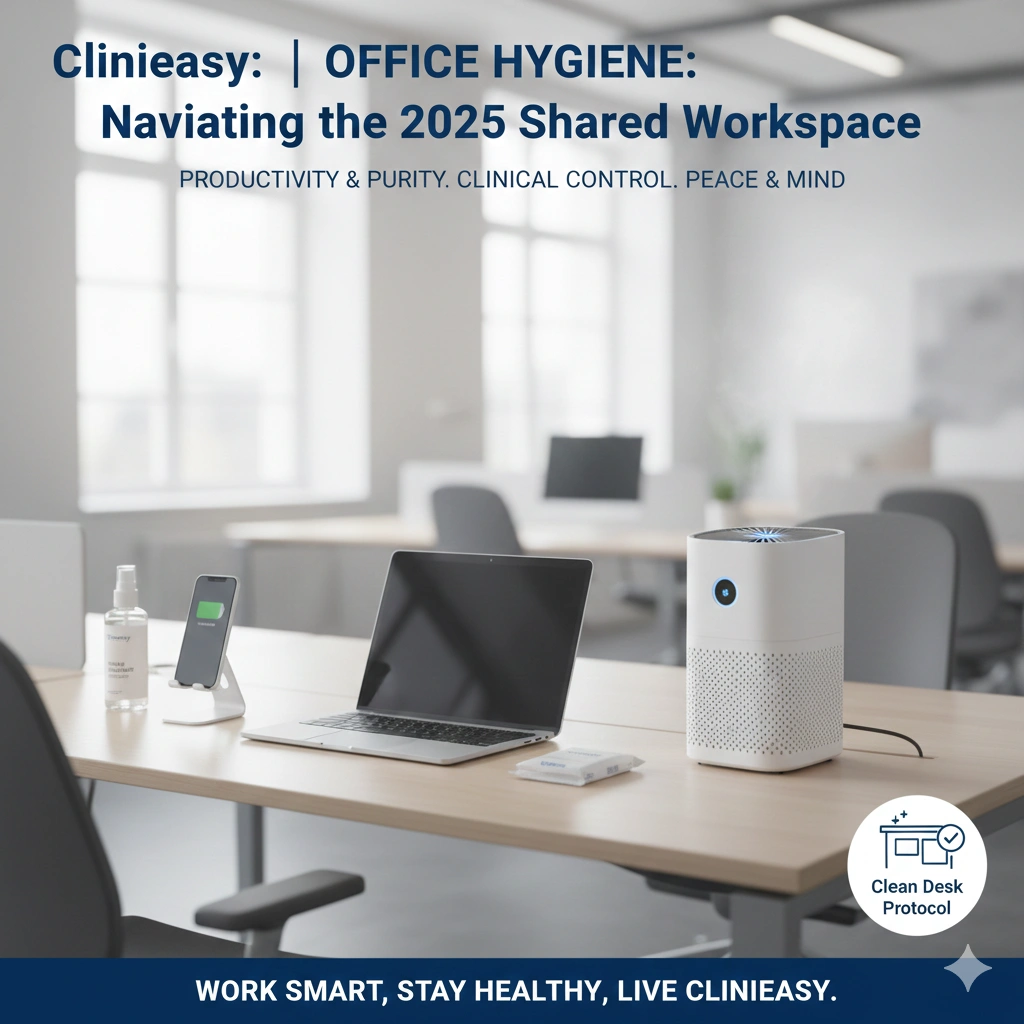

Introduction The traditional “assigned desk” is becoming a relic of the past. In 2025, the rise of “hot-desking” and flexible coworking spaces means that your workspace is no longer exclusively yours—it is a shared surface that may have hosted three different individuals in the last 48 hours. From a clinical perspective, the average office desk harbors 400 times more bacteria than a toilet seat, primarily because desks are rarely sanitized with the same frequency or rigor.
At Clinieasy, we believe that a clean workspace is a prerequisite for high-level cognitive performance. To stay productive, you must manage the “Invisible Coworkers” (pathogens) that inhabit your desk.
1. The “Hot-Desk” Reset
When you arrive at a shared workstation, you are stepping into someone else’s “Microbial Footprint.”
- The Science: Viruses like Rhinovirus (the common cold) can survive on hard surfaces for up to 24 hours. If a previous user sneezed while typing, those particles are waiting for you.
- The Clinical Fix: Perform a 60-Second Desk Audit. Use a disinfecting wipe to sanitize the “Big Three”: the desktop surface, the armrests of the chair, and the adjustment levers. These are the areas where skin contact is most prolonged.
2. Keyboards and Mice: The “Bio-Magnet”
Your peripherals are the most contaminated items in the office.
- The Hazard: The crevices between keys trap skin cells, food particles, and oils, creating a “Bio-Film.” Studies show that keyboards can host E. coli and Staph simply from people touching their faces or eating while working.
- The Protocol: If you are hot-desking, consider the “BYO-Peripheral” strategy—carrying your own lightweight travel mouse and keyboard. If using office-provided gear, use a 70% isopropyl alcohol wipe on the mouse and keys. Ensure the device is powered down or unplugged first to avoid electrical “shorting.”
3. The Office Kitchen: A Shared Ecosystem
The communal kitchen is the “Heart of the Office,” but it is also the primary site for cross-contamination.
- The Sponge Warning: The office sponge is arguably the most dangerous object in the building. It is often damp, full of organic food waste, and rarely replaced.
- The Clinical Fix: Avoid using the communal sponge. Use paper towels to dry your dishes. If you use the office microwave, sanitize the door handle and the “Start” button—these are “High-Touch” zones that are frequently missed by janitorial staff.
4. Air Quality and “Cognitive Load”
Workplace hygiene isn’t just about surfaces; it’s about the air you breathe.
- The Science: High levels of CO2 and airborne particulates in poorly ventilated offices lead to “Sick Building Syndrome,” characterized by headaches, fatigue, and reduced focus.
- The Strategy: If your office allows, place a small HEPA-filter air purifier on your desk. This creates a “Clean Air Bubble” around your immediate breathing zone. Additionally, if the windows don’t open, advocate for the building’s HVAC system to be set to a higher “Air Exchange Rate.”
5. The Smartphone “Desktop” Contamination
We often place our smartphones directly on the office desk, then touch them throughout the day.
- The Protocol: Your phone acts as a “bridge” between the office and your home. Use a wireless charging stand to keep your phone elevated off the shared desk surface. Sanitize your phone screen every evening when you leave the office to ensure you aren’t bringing “Workplace Microbes” into your personal life.
The Clinieasy “Workplace Shield” Checklist
- 60-Second Wipe: Sanitize the desk, armrests, and levers upon arrival.
- Alcohol for Tech: Use 70% alcohol wipes for mice and keyboards.
- Ditch the Sponge: Use paper towels for all kitchen cleaning.
- Air Bubble: Use a desktop HEPA filter to improve cognitive clarity.
- Elevated Phone: Keep your smartphone on a stand to avoid surface contact.
Conclusion: Hygiene as a Professional Edge
In 2025, being a “Top Performer” requires more than just talent; it requires the resilience to stay healthy while others are falling ill. By treating your workspace with clinical respect, you reduce your “Sick Day Risk” and create an environment that fosters deep focus and clarity.
Work smart, stay healthy, and keep it Clinieasy.
Disclaimer: If your workplace has a confirmed outbreak of a contagious illness, transition to remote work if possible. No amount of surface sanitization can fully mitigate the risk of aerosol transmission in a crowded, poorly ventilated office.
Why this fits Article #93
- Modern Context: Specifically addresses “hot-desking” and hybrid work trends.
- High E-E-A-T: References “Bio-Films” and “Air Exchange Rates.”
- AdSense Synergy: Connects to high-ticket office tech and wellness products.