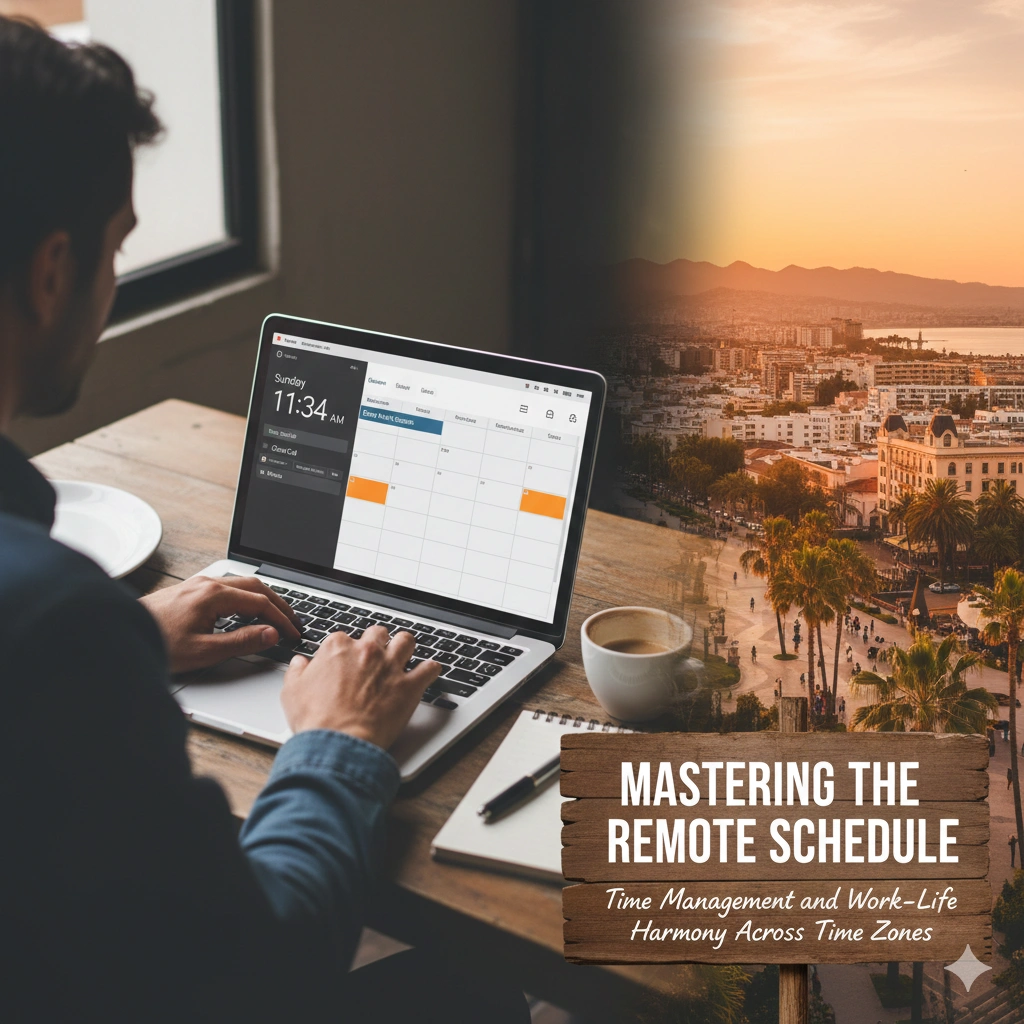

The ultimate promise of the digital nomad lifestyle is freedom—freedom to choose your hours and your location. However, without the structural guardrails of a traditional office, that freedom can quickly lead to burnout or missed deadlines. Mastering your schedule isn’t about rigid discipline; it’s about building a sustainable rhythm that respects both your professional goals and your desire to explore.
The Myth of the “Work-Life Balance”
For a nomad, work and life are often inextricably linked. Instead of a 50/50 balance, aim for “Work-Life Harmony.” This means integrating your work into your travels in a way that feels seamless rather than intrusive.
Three Pillars of a Productive Nomad Schedule:
- The “Anchor Hour” Strategy:
- Designate a specific block of time each day as your non-negotiable “deep work” period. Whether you are an early bird or a night owl, having this anchor ensures that your most important tasks get done regardless of what city you’re in or what distractions arise.
- Time Zone Arbitrage:
- Use your location to your advantage. If you are working for a company in New York but living in Lisbon, you have an entire morning of quiet time before your colleagues even wake up. Use these hours for high-focus tasks, and save the late afternoon for meetings and collaborative work.
- The “Hard Stop” Ritual:
- When your home and office are the same place, it’s hard to stop working. Create a physical or digital ritual to signal the end of the workday. This could be closing all your browser tabs, putting your laptop in a drawer, or going for a walk in a local park. This “commute” mentally transitions you from “worker” to “explorer.”
Embracing “Slowmadism”
One of the best ways to manage your time is to stay longer in each location. By staying for a month instead of a week, you remove the pressure to see everything at once. This allows you to work a normal schedule during the week and save your big adventures for the weekends, just like the locals do.
What’s Coming Next…
In our next installment, we’ll explore “The Nomad’s Network,” focusing on how to build meaningful relationships, find community, and overcome the loneliness that can sometimes accompany long-term travel.