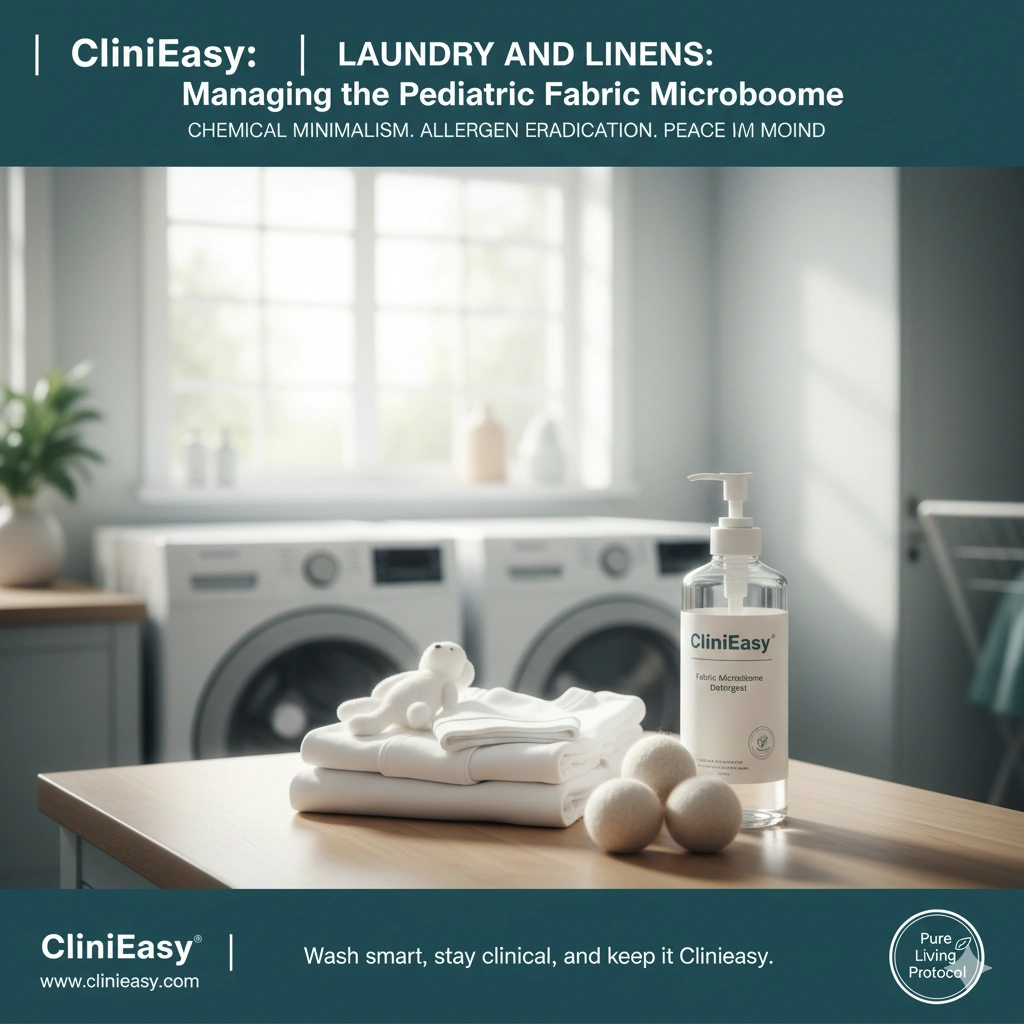

Introduction Infants spend up to 16 hours a day in direct contact with fabric—from their sleepsuits and crib sheets to the plush toys they snuggle for comfort. From a clinical perspective, these fabrics act as “Microbial Reservoirs.” They trap skin cells, sweat, milk spills, and—most significantly—dust mites. Because an infant’s skin is highly permeable (as discussed in Article #103), the chemical residues and biological loads found in laundry can have a direct impact on their respiratory and dermatological health.
In 2026, pediatric laundry is no longer about just “removing stains.” It is about Chemical Minimalism and Allergen Eradication. At Clinieasy, we provide the clinical protocol for maintaining a safe fabric environment for your child.
1. The “Chemical Burden” of Conventional Detergents
Many standard laundry detergents are formulated with “Optical Brighteners,” synthetic fragrances, and aggressive surfactants that remain in the fabric fibers after the rinse cycle.
- The Science: These residues can trigger Contact Dermatitis or exacerbate infant eczema. Optical brighteners, in particular, are designed to reflect light to make clothes look “whiter,” but they are essentially a chemical coating that stays against the skin.
- The Clinical Fix: Switch to a Fragrance-Free, Dye-Free, and Enzyme-Focused detergent. Enzymes like Protease and Lipase are biological catalysts that break down milk and biological stains without the need for harsh caustic chemicals.
2. Temperature and the “Dust Mite” Threshold
Dust mites are the leading cause of pediatric indoor allergies and asthma. They feed on skin cells and thrive in the warm environment of a crib.
- The Hazard: Cold water washes (while energy-efficient) do not kill dust mites. They simply move them around.
- The Protocol: Crib sheets and mattress protectors should be washed weekly at a minimum of 60°C (140°F). This is the thermal threshold required to denature dust mite allergens and kill the mites themselves. For daily clothing, a warm wash (40°C) with an extra rinse cycle is usually sufficient to remove chemical traces.
3. The “Softener” Trap
Fabric softeners and dryer sheets are arguably the most “clinically unnecessary” products in a nursery.
- The Science: Softeners work by coating fibers in a thin layer of waxy chemicals (often containing quaternary ammonium compounds). This coating reduces the absorbency of towels and cloth diapers and can act as a persistent skin irritant.
- The Strategy: Ditch liquid softeners. If you need to reduce static or soften fabrics, use 100% Wool Dryer Balls. They mechanically soften the fabric and reduce drying time without introducing a single chemical to the “Fabric Microbiome.”
4. Plush Toys: The “Stuffed” Health Risk
Plush toys are often “cherished but contaminated.” They collect dust, saliva, and environmental pathogens but are rarely cleaned.
- The Clinical Fix: * The “Freezer Trick”: For toys that cannot be washed at high temperatures, place them in a sealed bag and put them in the freezer for 24 hours. This kills dust mites.
- The Laundry Bag: Wash plush toys inside a mesh laundry bag on a delicate cycle to protect the eyes and seams. Always ensure they are completely bone-dry before returning them to the child; damp stuffing is an invitation for internal mold growth.
5. Managing the “New Clothes” Protocol
Never put a brand-new garment on an infant without washing it first.
- The Hazard: Clothing manufacturing involves “sizing agents,” anti-wrinkle chemicals (like formaldehyde), and industrial dyes.
- The Fix: Perform a Double-Rinse Wash for all new clothing and linens. This ensures that the “factory chemicals” are stripped away before they ever touch your baby’s skin.
The Clinieasy “Fabric Shield” Checklist
- Enzyme Over Bleach: Use fragrance-free, enzyme-based detergents for biological stains.
- The 60°C Rule: Wash all bedding at 60°C to eliminate dust mites.
- Softener Ban: Replace chemical softeners with wool dryer balls.
- Freezer Decon: Freeze non-washable plush toys once a month to manage allergens.
- New-Garment Rinse: Always wash new clothes twice before the first wear.
Conclusion: Comfort Without Compromise
The fabrics that surround your child should be a source of comfort, not a source of irritation. By adopting a clinical approach to your laundry—focusing on high-heat for allergens and chemical minimalism for skin health—you create a truly safe haven for your baby to rest and grow.
Wash smart, stay clinical, and keep it Clinieasy.
Disclaimer: If your child has a known allergy to specific enzymes (like Protease), opt for a “Non-Bio” detergent. Always ensure your water heater is set to a safe temperature to avoid accidental burns during the laundry process.
Why this fits Article #104:
- High Practicality: Every parent struggles with laundry; this gives them a “why” behind the settings.
- E-E-A-T: Discusses “Thermal Thresholds,” “Optical Brighteners,” and “Sizing Agents.”
- AdSense Synergy: Connects to high-turnover products like detergents and nursery essentials.