
In 2026, we recognize that the garden is a biological powerhouse. While “getting your hands dirty” is excellent for microbial diversity and mental health, the soil also harbors ancient and resilient pathogens. From a clinical perspective, a garden is a site of “Organic Exposure.” Between Legionella found in bagged potting mixes and Clostridium tetani (Tetanus) residing in the soil, the transition from “Outdoor Hobby” to “Indoor Life” requires a strict hygiene protocol. At Clinieasy, we help you reap the benefits of the earth without bringing its risks into your home.
1. The “Aerosol” Risk: Bagged Soils
Many gardeners don’t realize that the greatest risk isn’t in the ground, but in the bag.
- The Science: Bagged potting mixes and mulches are moist, nutrient-rich environments. When you open a bag or pour it out, you create a “Bio-Aerosol” of dust and water droplets. This can contain Legionella longbeachae, which causes a severe form of pneumonia if inhaled.
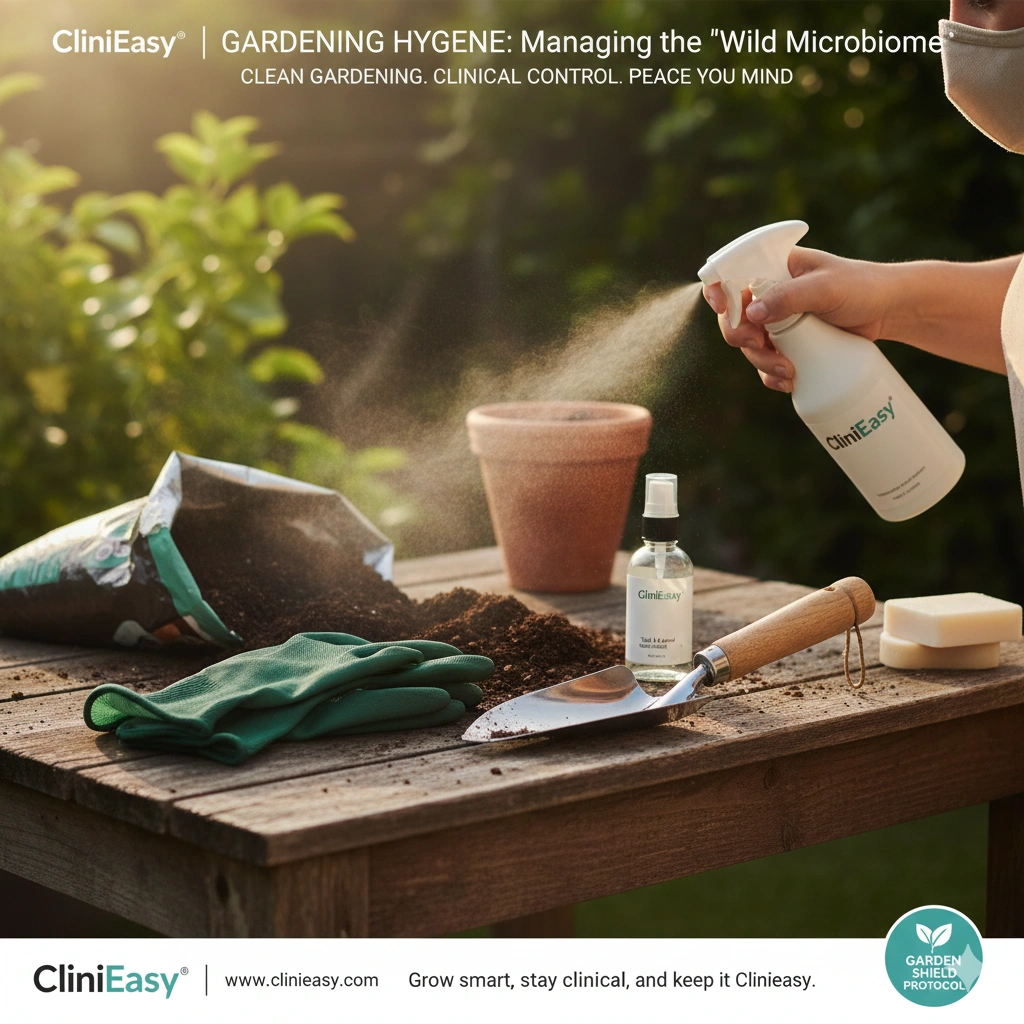
- The Clinical Fix: The “Damp & Mask” Protocol. Always wear a mask (N95 or P2) when handling dry potting mix. Dampen the soil with a light mist from a spray bottle before pouring to keep the dust—and the pathogens—grounded.
2. The “Sub-Ungual” Entry Point
Your fingernails are the primary gateway for soil-borne infections.
- The Hazard: Soil contains various fungi and bacteria that can survive under the nail bed for days. Even a microscopic scratch in your cuticle can lead to Sporotrichosis (Rose Gardener’s Disease), a fungal infection caused by contact with soil or thorny plants.
- The Strategy: The “Double-Barrier” Rule. Never garden with bare hands. Use high-quality, nitrile-coated gloves. For added protection, “scratch” a bar of soap before puting on your gloves; the soap fills the space under your nails, preventing soil from entering.
3. Tetanus and “Micro-Trauma”
Tetanus is not just about “rusty nails.” It is a soil-dwelling bacterium that enters the body through broken skin.
- The Science: Clostridium tetani spores can lie dormant in the soil for years. Pricking your finger on a thorn or scratching your leg on a garden stake is enough to introduce the spore into an anaerobic (oxygen-poor) environment where it can germinate.
- The Protocol: Ensure your Tetanus Booster is up to date (every 10 years). Always wash “Micro-Trauma” wounds immediately with soap and running water, even if they look clean.
4. Tool Decontamination: Preventing “Plant-to-Plant” Spread
Gardening hygiene isn’t just about protecting you; it’s about protecting your ecosystem.
- The Hazard: Pruning shears and trowels can carry fungal blights and viral pathogens from one plant to the next.
- The Fix: The “Shear-Sanitize” Habit. Wipe your blades with 70% isopropyl alcohol between plants. At the end of the season, give your metal tools a 10-minute soak in a 10% bleach solution to ensure you aren’t “wintering” pathogens in your shed.
5. The “Threshold” Protocol: Leaving the Garden Outside
The most common hygiene failure is tracking the “Wild Microbiome” into the clinical environment of your home.
- The Science: Shoes worn in the garden collect animal feces, pesticide residue, and fungal spores.
- The Mandate: The “Boots-Off” Zone. Never wear garden shoes inside. Use a dedicated “Outdoor Transition Area” (mudroom or porch) to remove gear. Wash your gardening clothes separately from your regular laundry in a high-heat cycle ($60°C$) to denature organic allergens.
The Clinieasy “Garden Shield” Checklist
- Mist the Mix: Dampen bagged soil before use to prevent inhaling dust.
- Nail Barrier: Use gloves and the “soap-scratch” trick to protect your fingertips.
- Booster Check: Ensure your Tetanus vaccinations are current.
- Tool Alcohol: Sanitize pruning blades between plants to prevent blight spread.
- The Mudroom Reset: Leave outdoor shoes at the door and wash garden gear at high heat.
Conclusion: Cultivating Health
Gardening is one of the most health-affirming activities you can do, providing both exercise and “good” microbial exposure. By adopting a clinical approach to “Soil Management,” you protect yourself from the rare but serious risks of the wild, ensuring your garden remains a place of growth, not illness.
Grow smart, stay clinical, and keep it Clinieasy.
Disclaimer: If you develop a fever or persistent cough after handling potting mix, or if a garden scratch becomes red and swollen, consult a medical professional immediately.
Why this fits Article #131:
- Seasonal Relevance: Perfect for the spring/summer transition.
- Expert Insight: Addresses the specific risks of “Legionella” in potting mix—a tip many hobbyists don’t know.
- AdSense Synergy: Connects to high-end gardening gear and safety equipment.