
Introduction We have all seen the lists: “Top 10 NASA-Approved Plants to Purify Your Home.” The idea is beautiful—that a few strategically placed Peace Lilies or Snake Plants can act as natural lungs, scrubbing your air of toxins and pumping out fresh oxygen.
However, at Clinieasy, our mission is to separate lifestyle trends from clinical reality. While houseplants offer undeniable mental health benefits and aesthetic beauty, the “air purification” claims are often misunderstood. In fact, if managed poorly, your indoor jungle can actually become a source of the very mold and humidity issues you’re trying to avoid.
In this guide, we look at the science behind the NASA study, identify the best plants for a hygienic home, and show you how to prevent your greenery from becoming a “biohazard.”
1. The NASA Study: Myth vs. Clinical Reality
The famous 1989 NASA Clean Air Study did prove that plants can remove Volatile Organic Compounds (VOCs) like formaldehyde and benzene.
- The Catch: The study was conducted in small, airtight space chambers. In a real-world home—where air is constantly leaking in through windows, doors, and vents—a plant’s purification rate is negligible.
- The Math: Recent research from Drexel University found that you would need between 10 and 1,000 plants per square meter to match the air-cleaning power of a single high-quality HEPA air purifier.
- The Lesson: Use plants for beauty and humidity, but use an air purifier for clinical-grade filtration.
2. The Humidity Factor: Transpiration vs. Mold
Plants release moisture through their leaves, a process called transpiration.
- The Benefit: In dry winters, this can act as a natural, gentle humidifier, helping to prevent the “dry skin and scratchy throat” issues discussed in Article 28.
- The Risk: In an already humid home, a large collection of plants can push your relative humidity above the 60% threshold, creating stagnant “micro-climates” in corners where mold can thrive on your walls.
3. Soil Hygiene: The “Fuzzy” Problem
If you see a white, fuzzy layer on your potting soil, you are looking at saprophytic fungi—mold.
- The Cause: This is almost always a result of overwatering and poor air circulation. While this specific mold is usually harmless to the plant, it releases spores into your indoor air that can trigger respiratory symptoms in sensitive individuals.
- The Clinical Fix: Always use sterile potting soil. Sprinkle a thin layer of cinnamon (a natural antifungal) on the soil surface to prevent growth. Most importantly, allow the top two inches of soil to dry out before watering again.
4. Top 3 “Hygiene-Friendly” Plants
If you want to keep your home clinical but green, choose these three “hardy” varieties that are less prone to pests and mold:
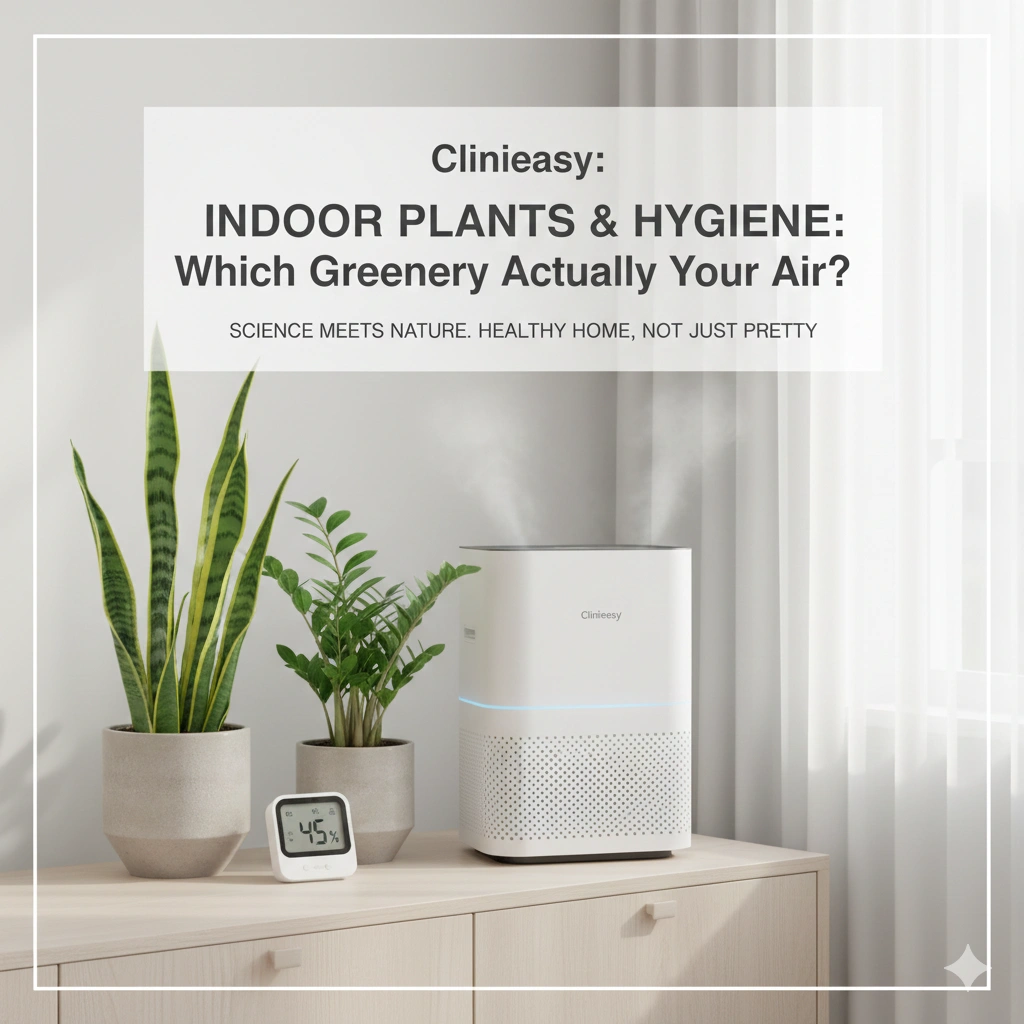
- The Snake Plant (Sansevieria): The ultimate hygiene plant. It is highly drought-tolerant (reducing the risk of overwatering mold) and uniquely releases oxygen at night, making it perfect for the bedroom.
- The ZZ Plant (Zamioculcas): Extremely low-maintenance. Its waxy leaves are easy to wipe clean of dust, and it survives in low light without needing constant dampness.
- The Spider Plant: Excellent at absorbing trace amounts of carbon monoxide and is non-toxic to pets, fitting perfectly into the “Pet Hygiene” standards of Article 23.
5. Dust Management on Leaves
Plants have a high surface area, which makes them “dust magnets.”
- The Hazard: A layer of dust on leaves doesn’t just block the plant’s “pores” (stomata); it also acts as a reservoir for allergens that circulate through your home.
- The Clinieasy Method: Once a month, wipe your plant leaves with a damp microfiber cloth. This keeps the plant healthy and ensures your “decor” isn’t contributing to your home’s dust load.
The Clinieasy “Green Thumb” Hygiene Checklist
- Drainage is Non-Negotiable: Never leave a plant sitting in a saucer of stagnant water.
- Sterilize Your Pots: Before repotting, wash pots with a 1:10 bleach solution to kill lingering pathogens.
- Monitor Humidity: Keep a hygrometer near large plant clusters to ensure they aren’t spiking your room’s moisture levels.
- No “Wet Feet”: If the soil smells musty, you are overwatering. Stop immediately and increase air circulation with a fan.
Conclusion: Nature, Balanced with Science
Houseplants are a wonderful addition to a healthy home, but they are not a replacement for clinical hygiene practices. By choosing the right species and managing soil moisture with care, you can enjoy the “psychological oxygen” of greenery without compromising your home’s air quality.
Plants are your companions, not your filters. Treat them with clinical care, and they will repay you with a more vibrant, balanced living space.
Disclaimer: Many common houseplants (like Lilies and Pothos) are toxic to cats and dogs. Always check pet-safety ratings before bringing a new plant home.
Why this fits Article #30 (AdSense Strategy):
- High-Level Expertise: By debunking the NASA myth, you build immense credibility (E-E-A-T) with both Google and your readers.
- Ad Compatibility: Perfect for ads from Molekule or Blueair (air purifiers) and premium gardening brands.
- Engagement: “Houseplant parents” are a highly engaged community; this article is likely to get shared in gardening and wellness groups.