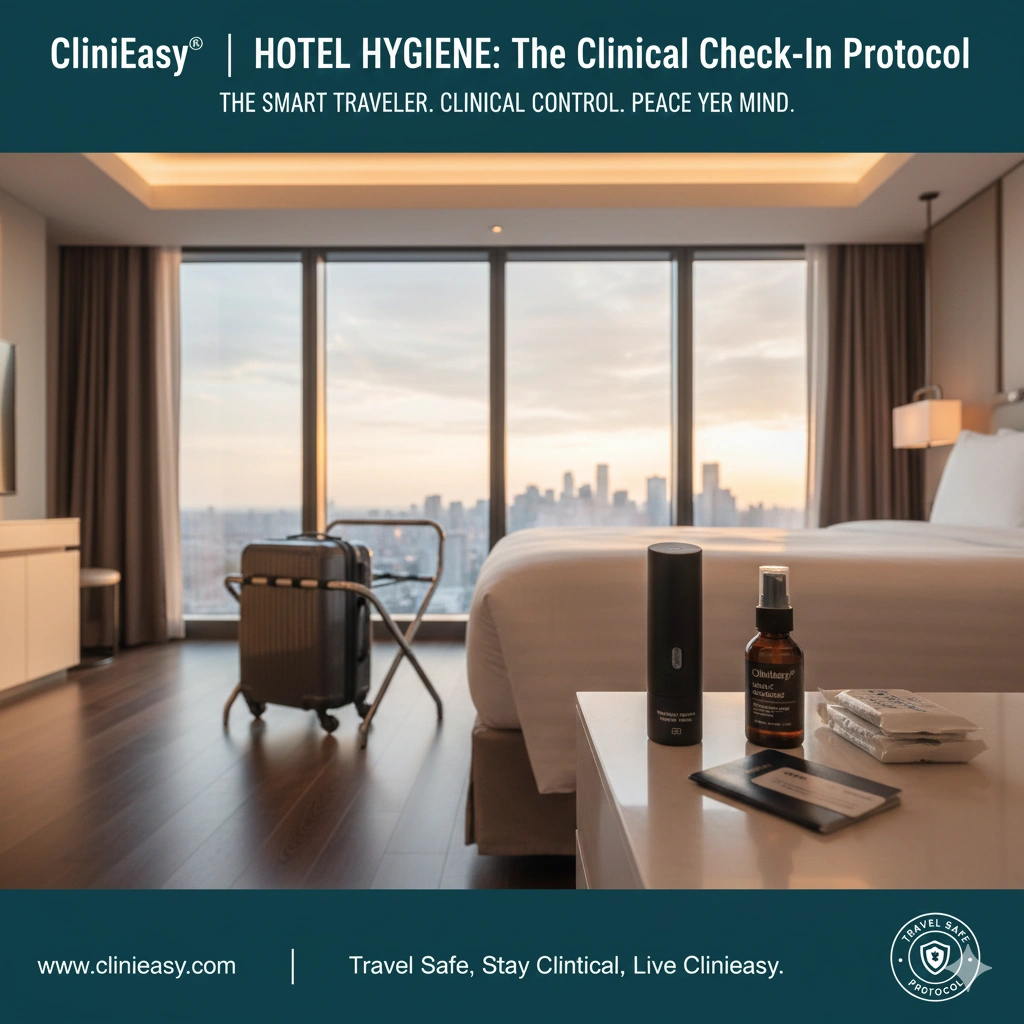

ntroduction In 2026, the hospitality industry has made great strides in “Visible Cleanliness,” but for the clinically-minded traveler, the concern lies in the invisible. A hotel room is a revolving door of international microbiomes. While sheets are changed and floors are vacuumed, certain “High-Frequency” touchpoints can remain untouched for weeks.
From a clinical perspective, your hotel room should be treated as a “Semi-Private Clinical Zone.” By performing a 5-minute “Sanitary Sweep” upon arrival, you can significantly reduce your risk of environmental infection. At Clinieasy, we break down the high-risk zones of the modern hotel room.
1. The “Remote” Reality
The single most contaminated object in a hotel room isn’t the toilet—it’s the television remote.
- The Science: Because remotes are textured and have many crevices, they are difficult to wipe down quickly. Studies consistently show they harbor high levels of Rhinovirus and Staph.
- The Clinical Fix: Don’t touch it directly. Either bring a small plastic sandwich bag to slide the remote into (it still works perfectly through the plastic) or use a 70% alcohol wipe to thoroughly clean the buttons.
- The 2026 Update: If the hotel has a “Smart Room,” use your own smartphone to control the TV via the hotel’s app—this is the gold standard for hygiene.
2. The Bed: Bed Bug Vigilance
Before you unpack or sit on the bed, you must perform the “Clinieasy Perimeter Check.”
- The Hazard: Bed bugs are “hitchhikers” that transcend hotel price points. They are attracted to the CO2 we exhale and the warmth of our bodies.
- The Protocol: Peel back the sheets at the head of the bed. Inspect the seams of the mattress and the headboard for small reddish-brown spots or “husks.”
- The “Luggage Elevation” Rule: Never put your suitcase on the bed or the carpeted floor. Use the metal luggage rack. Bed bugs find it difficult to climb polished metal, whereas they thrive in carpet fibers and wooden drawers.
3. The Bathroom: The “High-Steam” Protocol
Hotel bathrooms are often humid and lack the high-powered ventilation of a residential home, making them hotspots for mold and bacteria.
- The Strategy: Run the hot water in the shower for 2 minutes with the door closed before you use it. This helps “flush” any stagnant water from the showerhead (preventing Legionella risk) and the steam can help settle airborne dust.
- The “Cup” Caution: Never use the glass tumblers provided on the vanity unless they are individually wrapped in plastic. Unwrapped glasses are often wiped with the same cloth used for the counters during housekeeping.
4. Air Quality and “Soft Surfaces”
In 2026, many hotels have eliminated carpets in favor of hard flooring, which is a major hygiene win.
- The Hazard: If your room has a decorative “bed scarf” (the fabric strip at the foot of the bed) or upholstered chairs, these are rarely laundered.
- The Fix: Immediately remove the bed scarf and extra throw pillows and place them in the closet. Stick to the white linens, which are laundered at high temperatures with industrial bleach. If the room feels “stuffy,” check the AC filter; if it’s visibly dusty, don’t hesitate to ask for a room change.
5. The “Check-In” Handover
Hygiene starts at the front desk.
- The Protocol: Every time you handle a plastic key card, a shared pen, or a touchscreen at check-in, use hand sanitizer immediately. Treat your Hotel Key Card like your smartphone—wipe it down once you get to your room, as it is a constant touchpoint between your hands and your pockets.
The Clinieasy “Check-In” Checklist
- Luggage Rack First: Keep bags off the carpet and bed to prevent pests.
- Remote Isolation: Bag the remote or use a smartphone app.
- The Mattress Peel: Check the headboard seams for bed bug markers.
- Ditch the Scarf: Remove non-laundered decorative fabrics from the bed.
- Flush the Shower: Run hot water for 2 minutes to clear the showerhead.
Conclusion: Your Home Away From Home
A hotel stay should be a restorative experience. By taking five minutes to “de-risk” your environment, you ensure that your memories of the trip are about the sights and sounds, not a preventable illness.
Travel safe, stay clinical, and keep it Clinieasy.
Disclaimer: If you discover bed bugs or significant mold in your room, do not attempt to clean it yourself. Notify management immediately and request a room that is not adjacent to the contaminated one.
Why this fits Article #106:
- High Utility: Provides a clear, actionable ritual for travelers.
- E-E-A-T: Discusses “Legionella risk” and “Bed Bug biology.”
- AdSense Synergy: Perfect for “Travel Gear,” “Sanitization Products,” and “Hotel Booking” ads.