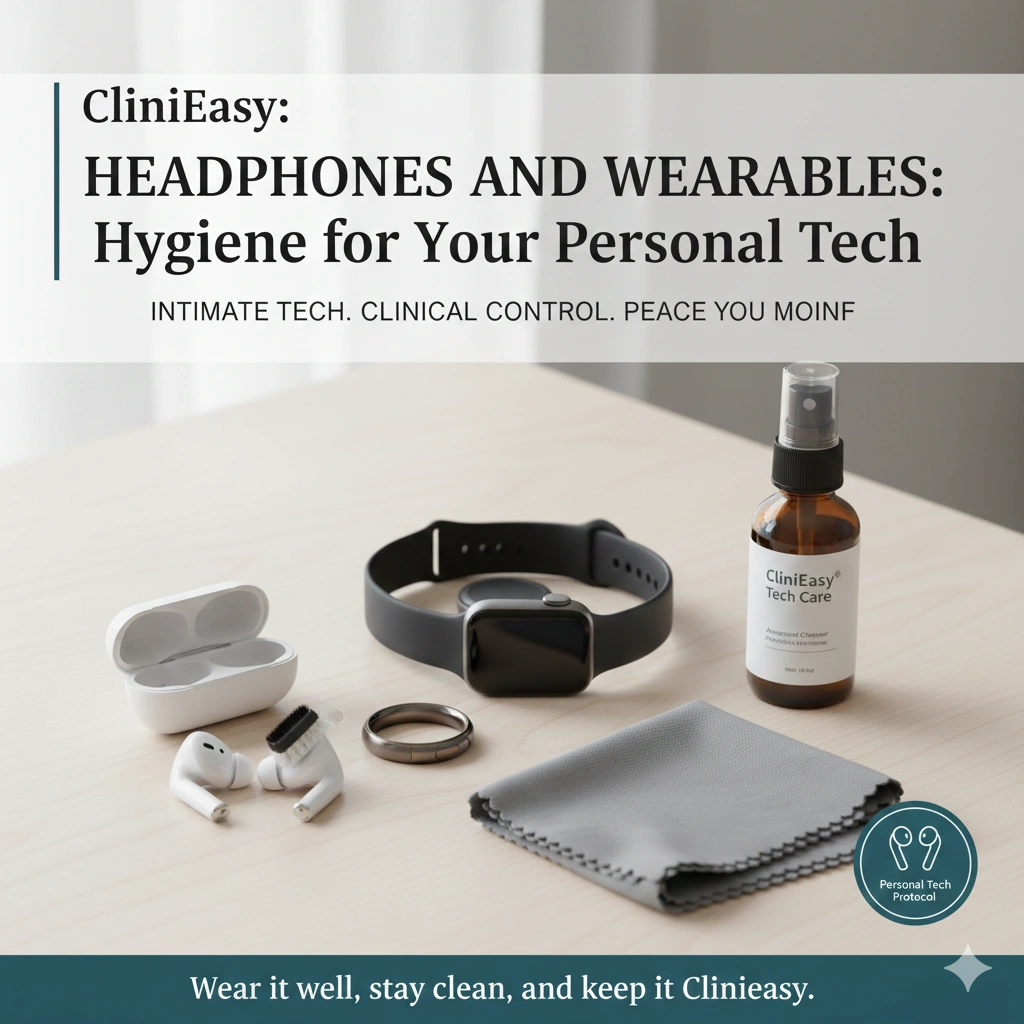

Introduction In 2026, our technology isn’t just in our pockets; it’s on us. We wear smartwatches for 23 hours a day, we keep earbuds in for entire commutes, and we immerse ourselves in VR headsets. From a clinical perspective, these devices create “Micro-Climates”—trapping heat, sweat, and sebum against the skin or inside the ear canal.
Without a strict hygiene protocol, these personal devices become vectors for Otitis Externa (swimmer’s ear), fungal skin rashes, and contact dermatitis. At Clinieasy, we break down the science of keeping your most intimate tech clinically sound.
1. Earbuds: The “Ear Canal” Ecosystem
Earbuds (like AirPods or Galaxy Buds) are inserted into a warm, moist environment that is naturally colonised by bacteria.
- The Science: Constant earbud use can increase the bacteria count in the ear by 11 times in just one hour. The silicone tips collect cerumen (earwax), which then acts as a “Bio-Adhesive” for dust and external pathogens.
- The Clinical Fix: * The Tip Soak: Remove the silicone tips weekly and soak them in warm, soapy water.
- The Mesh Clean: Use a dry, soft-bristled brush (like a clean toothbrush) to gently clear the speaker mesh.
- Alcohol Wipe: Use a 70% isopropyl alcohol wipe on the exterior of the buds and the charging case, but avoid the actual speaker openings.
2. Smartwatches: The “Wrist-Rash” Prevention
Smartwatches and fitness trackers are often worn during high-intensity exercise, trapping sweat between the sensor and the skin.
- The Hazard: This causes “Device-Induced Dermatitis.” Salt crystals from sweat and dead skin cells accumulate under the band, creating a mechanical irritant that breaches the skin barrier.
- The Protocol: * The Post-Workout Rinse: After every workout, rinse the watch (if water-resistant) and the band with fresh water to remove salt.
- The Band Swap: Rotate between a “Sport Band” (silicone/fluoroelastomer) for exercise and a “Breathable Band” (nylon/leather) for daily wear.
- Skin Recovery: Remove the watch for at least 30 minutes every day to allow the skin’s “Acid Mantle” to reset.
3. VR Headsets: The “Face-Interface” Challenge
Virtual Reality headsets are the most challenging personal tech to clean because they use porous foam that sits directly against the sweat-prone areas of the forehead and cheeks.
- The Science: Shared VR headsets have been found to harbor Staph and even Demodex mites if the foam interface isn’t sanitized.
- The Fix: Replace stock foam interfaces with medical-grade silicone covers. These can be wiped down with non-alcoholic, skin-safe disinfectant wipes after every session. Never use harsh alcohol on the lenses; use only a dry, high-density microfiber cloth to avoid stripping the specialized coatings.
4. Smart Jewelry and Rings
Smart rings (like the Oura) are increasingly popular for sleep tracking.
- The Hazard: Because rings are worn during hand-washing, soap and moisture can get trapped between the ring and the finger, causing “Maceration”—a softening and breaking down of the skin.
- The Fix: Dry the area under the ring thoroughly after washing your hands. Once a week, clean the interior sensors of the ring with a cotton swab dipped in alcohol to ensure the sensors remain accurate and free of “Bio-Film.”
5. The Charging Case: The “Incubator”
We often clean our earbuds but forget the case they live in.
- The Science: The charging case is a dark, warm environment where bacteria from your earbuds can multiply while the device “rests.”
- The Protocol: Use a cotton swab to clean the charging “wells.” Avoid using metal tools (like needles) which can short-circuit the charging pins. A small amount of cleaning putty can be used to lift lint out of the lightning or USB-C ports.
The Clinieasy “Personal Tech” Checklist
- Weekly Tip Soak: Sanitize earbud tips in soapy water once a week.
- Dry-Brush Mesh: Keep speaker grills clear of wax to maintain audio and hygiene.
- Post-Sweat Rinse: Always wash watch bands after exercise.
- Silicone VR Shields: Swap porous foam for wipeable silicone interfaces.
- Breathe the Skin: Give your wrist 30 minutes of “device-free” time daily.
Conclusion: Intimate Tech, Clinical Integrity
The devices we wear should enhance our lives, not irritate our skin. By treating your wearables with the same clinical attention you give your own body, you prevent the “Tech-Rashes” of the modern age.
Wear it well, stay clean, and keep it Clinieasy.
Disclaimer: If you experience persistent redness, itching, or ear pain, discontinue use of the device and consult a medical professional. You may have developed an allergy to the nickel or adhesives used in some device components.
Why this fits Article #98:
- High-Value Advice: Solves the specific problem of “Watch Rash” and “Earbud wax.”
- E-E-A-T: Discusses “Acid Mantle,” “Maceration,” and “Otitis Externa.”
- AdSense Potential: High-end consumer electronics and cleaning accessories.