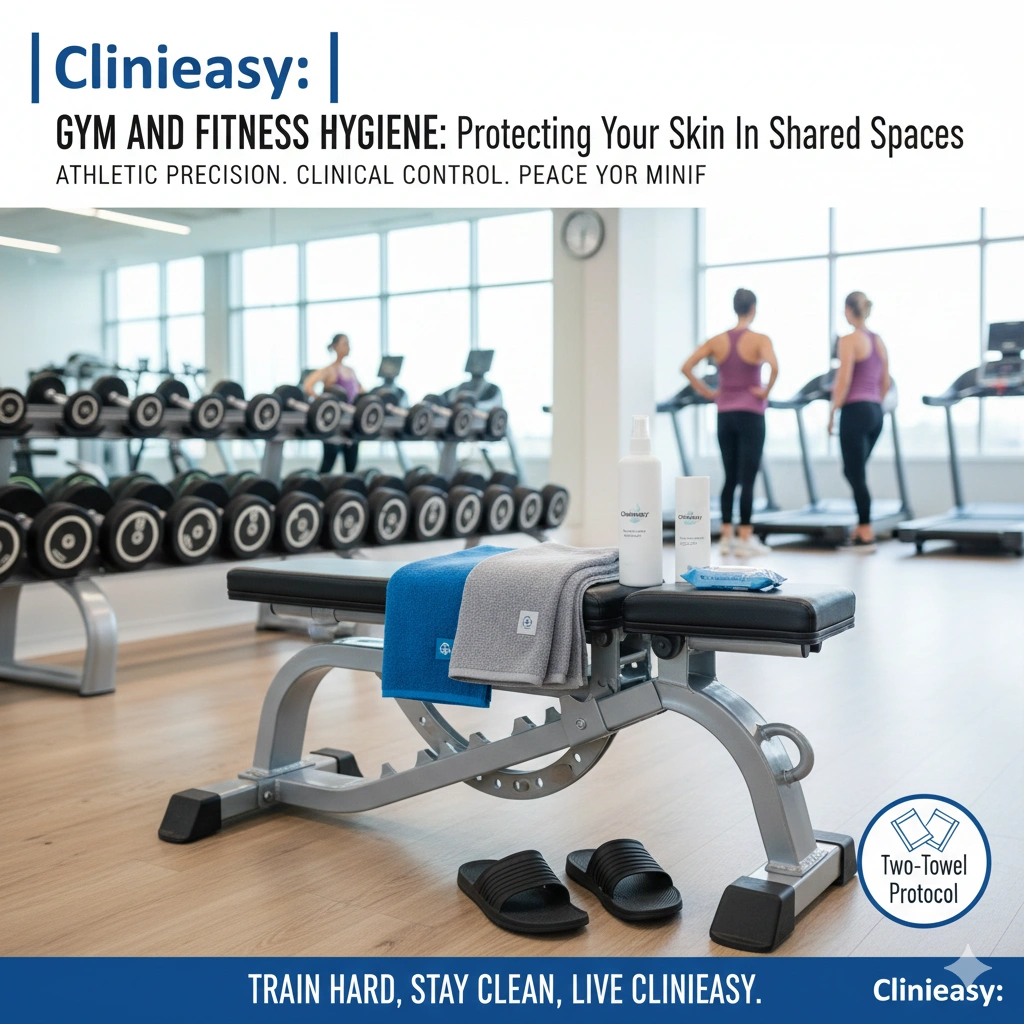

Introduction The modern fitness center is a high-performance environment, but from a clinical perspective, it is a “Shared Microbial Exchange.” The combination of heat, moisture (sweat), and high-frequency contact with non-porous surfaces (dumbbells, mats, machines) creates the perfect incubator for pathogens. From the common cold to more resilient skin infections like Ringworm (Tinea Corporis) and MRSA (Staph), the gym requires a specialized hygiene strategy.
In 2025, gym hygiene has evolved beyond the “courtesy wipe.” It is now about maintaining a Personal Bio-Bubble. At Clinieasy, we provide the clinical protocol to ensure your workout strengthens your body without compromising your skin.
1. The “Pre-Workout” Barrier
Hygiene starts before you touch the first weight.
- The Science: Intact skin is your best defense. However, “Micro-Abrasions” from shaving or dry skin are open doors for bacteria.
- The Clinical Fix: Never shave immediately before a gym session. If you have any minor cuts or “gym burns,” cover them with a liquid bandage or a waterproof adhesive strip. This seals the entry point against communal microbes.
2. The “Two-Towel” System
Most gyms require a towel, but using one towel for everything is a cross-contamination hazard.
- The Protocol: * Towel A (The Barrier): Use this exclusively to lay across benches, mats, and machines. This prevents direct skin-to-surface contact.
- Towel B (The Personal): Use this only for your face and neck.
- The Rule: Never let the side of the towel that touched the gym bench touch your face. Consider buying towels with different colors on each side to keep your “Contact Zones” organized.
3. Equipment Sanitization: The “Wet Time” Factor
We’ve all seen people spray and immediately wipe a machine. From a clinical standpoint, this is ineffective.
- The Science: Disinfectants require “Contact Time” (or “Wet Time”) to actually kill pathogens. Most commercial gym sprays require 30 to 60 seconds to neutralize viruses and fungi.
- The Fix: Spray the equipment and let it sit for at least 30 seconds before wiping. If you are in a rush, use alcohol-based wipes, which generally have a faster “kill time” than aqueous sprays.
4. The “Gym Bag” Ecosystem
Your gym bag is often a dark, damp, unventilated environment—the ideal breeding ground for odor-causing bacteria and mold.
- The Hazard: Throwing sweaty clothes into a bag and leaving them until the next morning creates a “Microbial Bloom.”
- The Strategy: Use a Antimicrobial Mesh Bag for laundry inside your main gym bag. As soon as you get home, remove the clothes and—crucially—wipe down the interior of your gym bag with a disinfectant. Don’t forget to sanitize your yoga mat after every use; it is essentially a “microbe sponge.”
5. The Shower Footwear Mandate
The gym shower floor is the primary vector for Athlete’s Foot (Tinea Pedis) and Plantar Warts (HPV).
- The Science: Fungi thrive in the warm, wet tiles of communal showers. They can survive for weeks in the grout.
- The Absolute Rule: Never let your bare feet touch a communal shower floor. Wear rubber flip-flops or specialized “shower shoes.” Keep them on from the locker room to the shower and back. Dry your feet thoroughly—especially between the toes—before putting on socks.
The Clinieasy “Fitness Shield” Checklist
- Seal the Cuts: Use liquid bandages on minor abrasions before training.
- Two-Towel Rule: One for the machine, one for your skin. Never mix them.
- Respect the Wet Time: Let sprays sit for 30 seconds before wiping.
- Footwear Integrity: Flip-flops are mandatory for showers and locker rooms.
- Bag Decon: Empty and sanitize your gym bag daily to prevent “Legacy Odors.”
Conclusion: Performance Through Prevention
A consistent fitness routine is a pillar of health, but it shouldn’t come with a side of skin irritation or infection. By adopting a clinical approach to shared equipment and communal spaces, you protect your “largest organ” while you train the rest.
Train hard, stay clean, and keep it Clinieasy.
Disclaimer: If you notice a red, itchy, ring-shaped rash or a painful, swollen “pimple” that doesn’t heal, consult a dermatologist. These are common signs of fungal or bacterial infections acquired in fitness environments.
Why this fits Article #92:
- High-Interest: Gym-goers are a highly motivated audience for “health hacks.”
- E-E-A-T: Discusses “Contact Time,” “Micro-Abrasions,” and specific fungal names.
- Commercial Value: Perfectly bridges to fitness gear, specialized laundry products, and skincare.