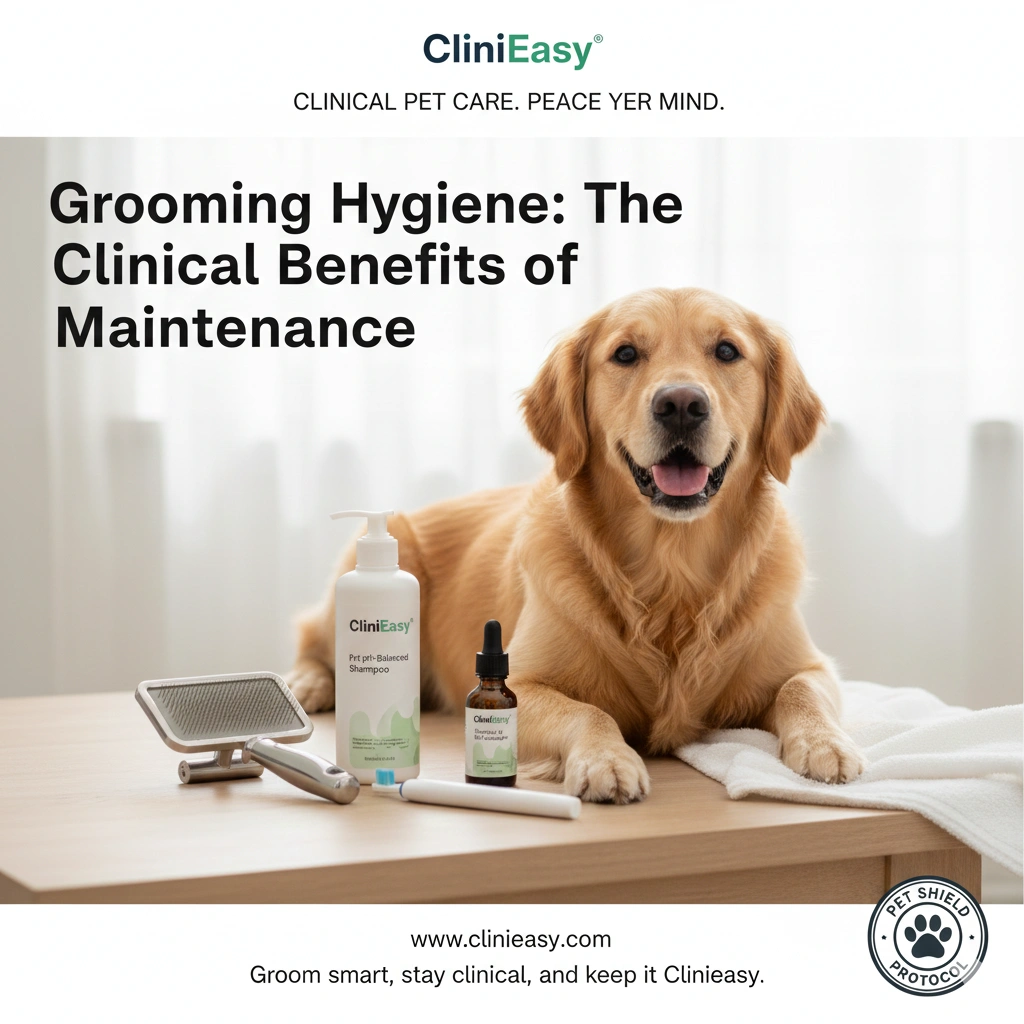

Introduction In 2026, we view pet grooming through the lens of Preventative Medicine. A pet’s coat and skin are their primary defense against the environment, but they also act as a “Biological Net” that captures pollen, dust, and bacteria. Without a clinical grooming protocol, your pet becomes a mobile vector for allergens and pathogens.
At Clinieasy, we define grooming as the mechanical removal of “Environmental Load.” By maintaining your pet’s skin barrier, you don’t just reduce shedding—you improve the air quality of your home and prevent secondary skin infections.
1. The “De-Shedding” Decontamination
Shedding is more than just an aesthetic annoyance; it is the primary way pet allergens (the Fel d 1 protein in cats and Can f 1 in dogs) are distributed throughout your home.
- The Science: Allergenic proteins are found in pet saliva and skin oils. When hair sheds, these proteins become airborne.
- The Clinical Fix: The “Active Extraction” Method. Use a high-quality de-shedding tool or a vacuum-assisted grooming attachment twice weekly. By removing dead undercoat before it falls, you trap the allergens in the tool rather than letting them settle into your carpets and upholstery.
2. The Bathing “pH Balance” Rule
A common mistake is bathing pets with human shampoo or washing them too frequently with harsh detergents.
- The Hazard: Human skin has an acidic pH (approx. 5.5), while dog skin is more neutral (approx. 6.2 to 7.5). Using human soap strips the “Acid Mantle” of the pet, leading to micro-cracks in the skin where Staphylococcus can take hold.
- The Protocol: Use pH-Balanced, Soap-Free Shampoos. Look for ingredients like colloidal oatmeal or ceramides that support the skin barrier. Limit full immersion baths to once every 4–6 weeks, unless your pet has a skin condition or has been exposed to significant environmental toxins.
3. The “In-Between” Wipe-Down
For the 2026 commuter pet, daily hygiene is more important than the monthly bath.
- The Strategy: The “High-Traffic” Wipe. Focus on the “contact points”: the paws, the undercarriage, and the muzzle. Use waterless grooming foam or pH-balanced pet wipes after every walk. This removes urban pollutants and pollen before the pet jumps onto “Clean Zones” like your sofa or bed.
4. Auricular (Ear) and Dental Hygiene
The ears and mouth are the most common sites for domestic microbial overgrowth.
- The Science: Warm, moist ear canals are incubators for yeast (Malassezia). Meanwhile, dental plaque is a biofilm of bacteria that can enter the bloodstream through inflamed gums.
- The Mandate: * Ears: Use a clinical ear cleaner with a drying agent once a week, especially for “floppy-eared” breeds.
- Dental: Daily brushing with enzymatic pet toothpaste is the clinical gold standard. In 2026, “Water Additives” that use zinc gluconate can provide a secondary layer of biofilm management.
5. Professional Grooming: The “Deep Clean”
While home maintenance is vital, professional grooming provides a level of decontamination that domestic tools cannot reach.
- The Innovation: Professional “High-Velocity” dryers don’t just dry the fur; they mechanically blast out deep-seated dander and loose hair that traditional brushing misses.
- The Fix: Schedule a professional “Sanitary Trim” every 6-8 weeks. This keeps the hair around the paws and “private areas” short, significantly reducing the amount of waste and debris the pet carries into the house.
The Clinieasy “Grooming” Checklist
- Bi-Weekly Extraction: Use vacuum-assisted tools to capture hair and allergens at the source.
- pH Respect: Never use human shampoo; stick to pet-specific, barrier-supporting formulas.
- The Daily Wipe: Clean “contact points” after every outdoor excursion.
- Biofilm Control: Brush teeth daily and clean ears weekly to prevent internal infections.
- The Pro-Blast: Utilize professional high-velocity drying for deep-tissue dander removal.
Conclusion: A Healthier Bond
Grooming is an act of care that extends beyond looks. It is the final step in securing your home’s “Microbial Perimeter.” When your pet is clean, hydrated, and well-maintained, the “Zoonotic Bridge” between the outdoors and your living room remains safe and healthy.
Groom smart, stay clinical, and keep it Clinieasy.
Disclaimer: If your pet develops a “yeasty” smell, excessive scratching, or red skin patches, skip the home bath and see a vet. These are often signs of an underlying allergy or infection that requires medicated treatment.
Why this fits Article #140:
- Completes the Category: Transitions from the environment (beds/toys) back to the animal.
- Actionable Technicality: Explains the “pH Balance” and “Acid Mantle” clearly.
- AdSense Synergy: Perfect for grooming tools, specialized shampoos, and dental care.