
Introduction Gardening is often described as a “grounding” activity—a way to connect with nature and reduce stress. However, from a clinical perspective, the soil is far from inert. It is a dense, living matrix of fungi, parasites, and bacteria. While most of these are beneficial to plants, several can be hazardous to humans if they enter the body through cuts, inhalation, or accidental ingestion.
At Clinieasy, we believe that “getting your hands dirty” should be a safe pursuit. By understanding the microbial landscape of your backyard and implementing a few clinical hygiene habits, you can enjoy the fruits of your labor without the risk of infection.
1. The Tetanus Threat: More Than Just Rusty Nails
Many people associate Clostridium tetani (Tetanus) with rusty metal, but the bacteria actually live in the soil and manure.
- The Hazard: Even a microscopic “nick” from a rose thorn or a splinter from a wooden garden stake can introduce tetanus spores into your bloodstream.
- The Clinical Fix: * Check Your Records: Ensure you have had a tetanus booster within the last 10 years.
- Barrier Protection: Never garden with open, uncovered wounds. Use waterproof bandages and heavy-duty gloves to prevent “soil-to-blood” contact.
2. Legionella and Potting Soil
Legionnaire’s disease is a severe form of pneumonia, and while often associated with air conditioning systems, certain strains thrive in bagged potting mix.
- The Hazard: When you open a bag of dry potting soil, you create a cloud of dust. If inhaled, the Legionella longbeachae bacteria found in these mixes can cause respiratory illness.
- The Clinical Fix:
- The “Damp” Method: Wet down your potting mix with a gentle spray of water before working with it to keep the dust from becoming airborne.
- Mask Up: If you are working in a greenhouse or with large amounts of dry mulch, wear a high-filtration mask (like the KF94s discussed in Article #31) to protect your lungs.
3. Zoonotic Parasites in the Vegetable Patch
Your garden is often visited by local wildlife or neighborhood cats, who may leave behind “unwanted gifts.”
- The Hazard: Soil can harbor Toxoplasma gondii (from cats) or roundworm eggs. These can be transferred to your kitchen if you don’t properly process your harvest.
- The Clinical Fix: * Wash Three Times: Wash all home-grown produce under running water. For root vegetables (carrots, potatoes), use a dedicated vegetable brush to scrub away every trace of soil.
- Cover the Sandbox: If you have children, keep their play sand covered when not in use to prevent it from becoming a neighborhood litter box.
4. The “Outdoor-Indoor” Hygiene Threshold
Just as we discussed in Article #42 regarding pet paws, your gardening gear is a major conduit for bacteria entering your home.
- The Fix:
- Dedicated Footwear: Have a pair of “garden-only” clogs or boots that never cross the threshold of your home.
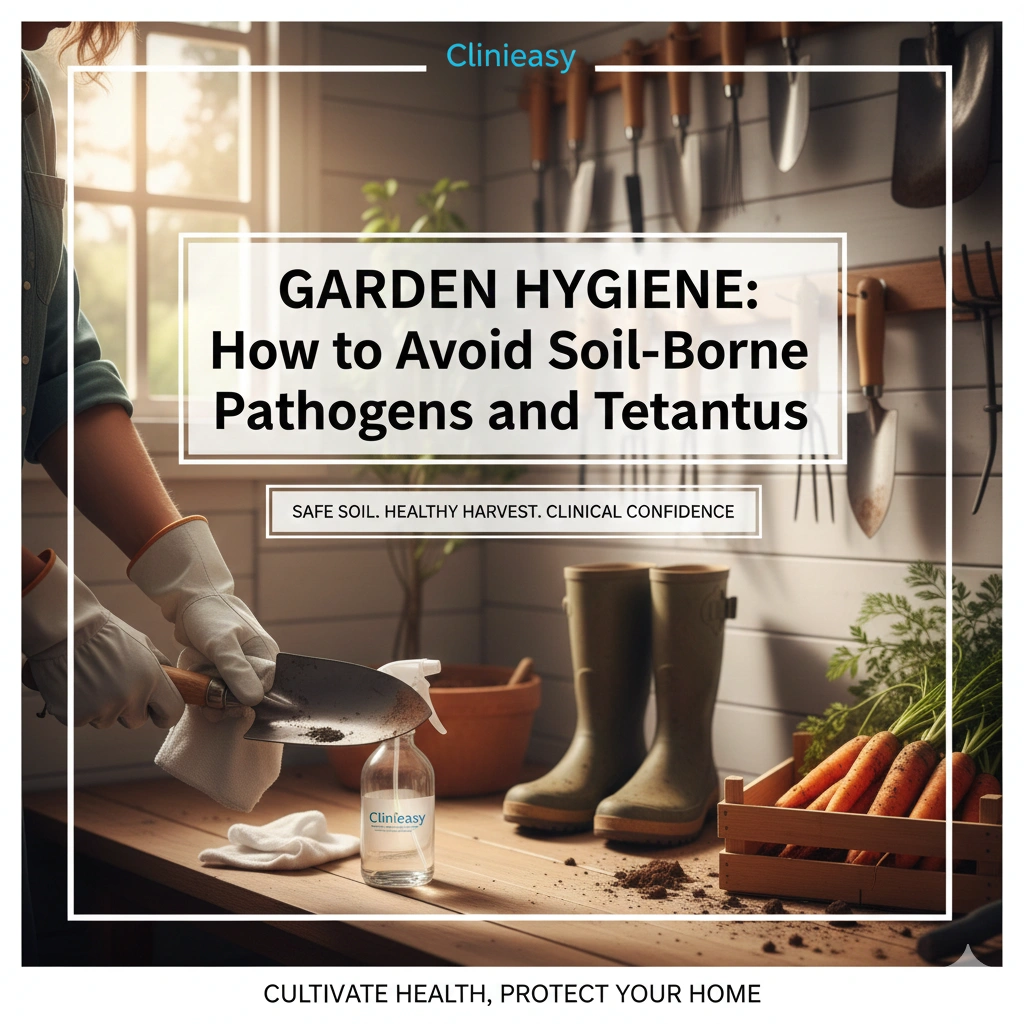
- The Tool Soak: After use, spray your tools with a 70% alcohol solution or a diluted bleach mix. This doesn’t just prevent the spread of plant diseases (like tomato blight); it also prevents the buildup of human-pathogenic biofilms on the handles.
5. Hand Hygiene: Beyond the Scrub
Garden soil contains heavy metals and fertilizers that shouldn’t stay on the skin.
- The Clinical Habit: After gardening, use a nail brush to scrub under the fingernails—the primary hiding spot for soil-borne eggs and spores. Follow with a high-quality moisturizer to prevent the skin from cracking, which would create an entry point for bacteria during your next session.
The Clinieasy “Green Thumb” Safety Checklist
- Check Boosters: Confirm your Tetanus vaccination is up to date.
- Wet the Soil: Dampen bagged mixes before opening to prevent dust inhalation.
- Brush the Nails: Use a stiff brush for 30 seconds after every session.
- Sanitize Tools: Wipe handles and blades with alcohol after use.
- Wash the Harvest: Scrub all produce with a brush before it hits the table.
Conclusion: Cultivating Health
Gardening is a clinical exercise in managing an ecosystem. When you respect the power of the soil and protect your body’s barriers, you turn your backyard into a true wellness retreat. You can grow your own food and flowers with the peace of mind that your hobby is as safe as it is rewarding.
Nurture your garden, protect your health, and keep it Clinieasy.
Disclaimer: If you experience a deep puncture wound while gardening, or if a small cut becomes red, swollen, or hot to the touch, seek medical attention immediately.
Why this fits Article #43 (AdSense Strategy):
- High Authority (E-E-A-T): Discussing Legionella and Tetanus from a clinical perspective sets Clinieasy apart from generic gardening blogs.
- Ad-Friendly: Attracts ads from companies like Fiskars, Scotts Miracle-Gro, Hunter (boots), and pharmaceutical brands.
- Broad Appeal: Appeals to both hobbyist gardeners and people concerned about home safety.