
Introduction In 2026, the “Third Space” is the new corporate headquarters. Millions of professionals spend their workdays in coffee shops and co-working hubs. While these environments spark creativity and networking, they are also “Microbial Cross-Roads.” From the communal cream carafe to the shared power outlet, these spaces see hundreds of different biological profiles every day.
At Clinieasy, we believe productivity shouldn’t come with a side of “Community Cold.” By mastering the “Shared Space Survival Protocol,” you can claim your seat in any cafe with the confidence of a clinical professional.
1. The “Table-Top” Audit
A public table is a high-traffic landing zone for laptops, phones, and—most importantly—respiratory droplets.
- The Science: Studies of public tables show that even if they “look” clean, they often harbor Rhino-virus and Influenza strains that can survive on hard surfaces for up to 24 hours.
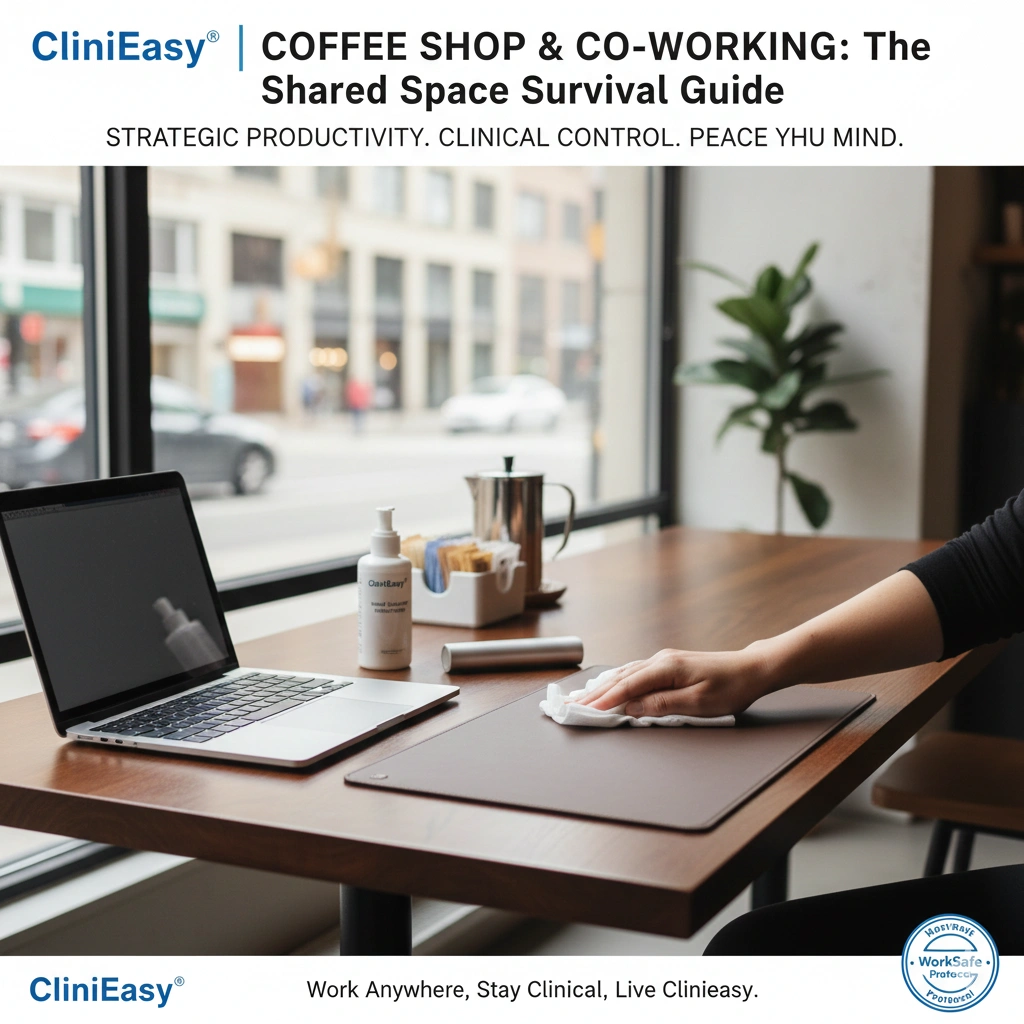
- The Clinical Fix: Never assume the previous occupant cleaned up. Carry a pack of 70% Isopropyl wipes. Your first act upon sitting should be a 10-second “Perimeter Wipe” of the area where your hands and devices will rest.
- The Barrier Strategy: Use a desk mat (silicone or vegan leather). This creates a personal “Bio-Island” that separates your gear from the public surface.
2. The “Communal Carafe” and Sugar Station
The highest-risk area in any coffee shop isn’t the table; it’s the condiment station.
- The Hazard: The handles of milk carafes and the communal sugar spoons are touched by almost every customer, but are rarely sanitized by staff during the morning rush.
- The Protocol: Treat the condiment station as a “High-Contamination Zone.” Use a napkin to hold the milk carafe handle, or better yet, ask the barista to add the milk/sugar for you behind the counter. If you touch the shared dispensers, sanitize your hands immediately before taking your first sip of coffee.
3. Shared Power: The Outlet Trap
In 2026, we are always searching for “Power.” But shared outlets and charging stations are neglected touchpoints.
- The Science: Wall outlets in co-working spaces are rarely cleaned because of the risk of liquid entering the socket. They accumulate skin oils and dust that harbor bacteria.
- The Fix: Use your own High-Capacity Power Bank. By being “Power Independent,” you avoid the need to touch shared wall sockets or crawl under communal desks where dust and microbes concentrate.
4. The “Restroom-to-Work” Loop
The transition from the cafe restroom back to your laptop is a critical hygiene gap.
- The Hazard: You wash your hands in the restroom, but then you touch the heavy restroom door handle and the back of your chair to sit back down. Your hands are now re-contaminated.
- The Strategy: Use the “Paper Towel Exit” (as discussed in Article #108). Once you return to your seat, apply one final pump of hand sanitizer before touching your keyboard. This “Double-Link” protocol ensures no restroom pathogens make it onto your workspace.
5. Acoustic Hygiene: Shared Headphones
Some co-working spaces offer “Phone Booths” with shared headsets.
- The Hazard: Headsets are in direct contact with the skin and the “Respirated Air” of the previous user. They are notorious for spreading ear infections and skin irritation.
- The Mandate: Never use shared headsets. Always use your own noise-canceling earbuds. If you must use a shared phone booth, use your own phone on speaker (if the booth is truly soundproof) or sanitize the interior surfaces of the booth before starting your call.
The Clinieasy “Shared Space” Checklist
- Bio-Island: Use a portable desk mat to create a barrier on public tables.
- Condiment Caution: Use a napkin or sanitize after using shared milk carafes.
- Power Independence: Use a personal power bank to avoid shared outlets.
- The Double-Link: Sanitize your hands after returning from the restroom to your seat.
- Perimeter Wipe: Spend 10 seconds sanitizing your table area before unpacking gear.
Conclusion: The Mobile Office, Refined
The flexibility of the modern “Third Space” is one of the great perks of the 2026 economy. By adopting these clinical habits, you ensure that your mobile office remains a place of health and high output. You don’t need to fear the crowd; you just need to manage your “Perimeter.”
Work anywhere, stay clinical, and keep it Clinieasy.
Disclaimer: When using disinfectants on public property, be mindful of the surface material. 70% Alcohol is generally safe for sealed wood and metal, but may damage certain delicate stone or antique finishes.
Why this fits Article #118:
- High Utility: Directly speaks to the “Work from Anywhere” crowd.
- Actionable “Bio-Island” Concept: A very “Clinieasy” approach to personal space.
- AdSense Synergy: Perfect for EDC gear, tech accessories, and hygiene products.