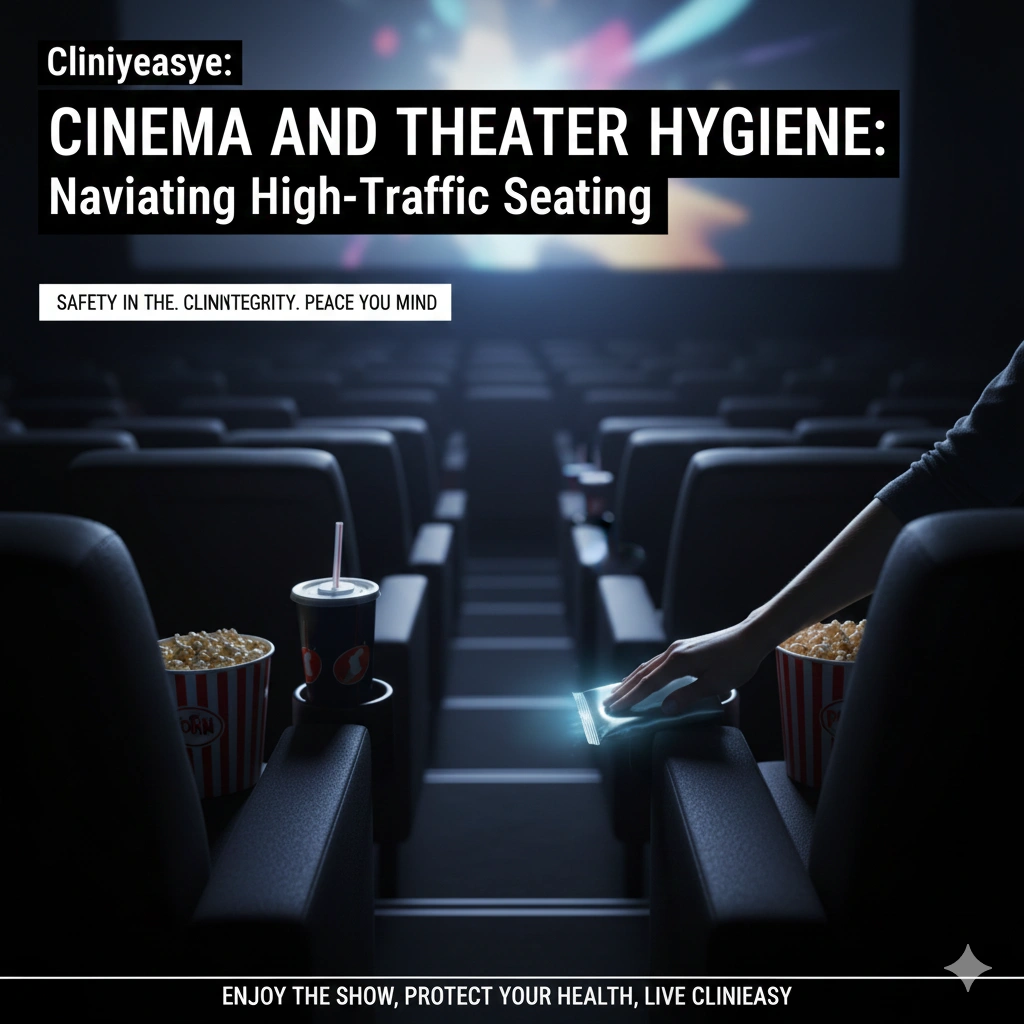

Introduction There is a unique magic to the cinema—the lights dimming, the immersive sound, and the shared experience of a story. But as the screen glows, a different kind of reality exists in the shadows. Movie theaters are the ultimate “high-turnover” environment. In a busy multiplex, a single seat might be occupied by four different people in a single day, with only minutes of cleaning time between screenings.
From a clinical perspective, cinemas present a triple-threat: soft porous surfaces (which are harder to sanitize than plastic), low light (which masks spills and debris), and prolonged contact (sitting in one spot for 2–3 hours).
At Clinieasy, we don’t want you to miss the blockbuster of the year. We want you to enjoy it without bringing home a “microbial souvenir.” Here is how to maintain a clinical barrier in the front row.
1. The Armrest: The Shared Boundary
The armrest is the most frequently touched surface in the theater. It is where your bare skin meets the previous occupant’s skin oils, perspiration, and potential viral shedding.
- The Science: Studies on public seating show that armrests can harbor respiratory viruses and skin bacteria like Staphylococcus for hours.
- The Clinical Fix: This is one of the few places where a portable 70% alcohol wipe is your best friend. A quick, 5-second wipe of the armrests before you sit down removes the “contact risk” and allows you to relax your arms for the next two hours without a second thought.
2. The Fabric Seat: The “Sponge” Factor
Most cinema seats are upholstered in fabric or faux-leather. Unlike the hard surfaces of a clinic, these materials are “bio-absorbent.”
- The Hazard: Fabric traps skin cells, food crumbs, and dust mites. In 2025, while many theaters have upgraded to antimicrobial fabrics, the deep layers of the cushion can still hold legacy particulates.
- The Strategy: Avoid wearing shorts or short sleeves that allow direct skin-to-fabric contact. Treat your “cinema outfit” as a protective layer. Once you return home, change out of these clothes immediately—don’t sit on your own bed or sofa in your “theater pants.”
3. The Popcorn Ritual: Hand-to-Mouth Logic
The cinema is one of the few places where we eat with our hands in the dark.
- The Hazard: You touch the door handle, the armrest, and the seat—then you reach into a bucket of popcorn. In the dark, we lose our visual “hygiene cues.”
- The Clinical Protocol: Use a hand sanitizer (60%+ ethanol) after you have settled into your seat and adjusted your position, but before you touch your food. This “Final Sanitize” ensures that anything you picked up while navigating the lobby doesn’t end up in your digestive system.
4. The Cup Holder: The Hidden Reservoir
The cup holder is often a “catch-all” for more than just drinks. It’s where people put used tissues, gum, and cell phones.
- The Science: Because cup holders are recessed, they often collect condensation and spills, creating a damp environment where mold can grow.
- The Fix: If your drink has a straw, ensure the straw doesn’t touch the sides of the holder. If you are placing a personal bottle there, wipe the bottle down once you leave the theater.
5. The Air Flow of the Multiplex
Modern theaters use high-powered HVAC systems to keep large crowds cool.
- The Benefit: Most 2025 theaters utilize MERV-13 or HEPA filtration to manage the “aerosol load” of a packed room.
- The Tip: If you are sensitive to air quality, try to book seats in the middle of the row. These areas usually have the most consistent air-mixing patterns compared to the “stagnant” corners against the walls.
The Clinieasy “Cinema Protocol” Checklist
- The Pre-Seat Wipe: Sanitize your armrests as soon as you sit.
- Skin Coverage: Wear long sleeves and pants to create a physical barrier.
- The “Final Sanitize”: Gel your hands after sitting, before eating.
- Straw Safety: Keep your drink’s “entry point” away from shared surfaces.
- Home Transition: Change your clothes as soon as you get home to keep “public” germs out of your sanctuary.
Conclusion: Enjoy the Show, Leave the Germs
Public spaces are part of a vibrant life, and with a few clinical “micro-habits,” they don’t have to be high-risk environments. By taking 30 seconds to prepare your space, you can focus on the movie, knowing your personal hygiene barrier is secure.
See the story, protect your health, and keep it Clinieasy.
Disclaimer: If you are immunocompromised, consider attending “Off-Peak” screenings (weekday mornings or late nights) when the theater occupancy is at its lowest, reducing the overall “pathogen density” of the room.
Why this fits Article #60:
- High Relatability: Almost everyone goes to the movies, making this a high-volume search topic.
- Visual Hook: The contrast between the “glamour” of the cinema and the “science” of the seating is a strong engagement driver.
- Cross-Linking: Links back to Article #1 (The Hand-to-Mouth connection) and Article #40 (The Entryway Reset).