
Introduction We perceive the bathroom as the place we go to get clean. We scrub the toilet, wipe the mirror, and mop the floor. But from a clinical perspective, many “clean” bathrooms are actually harboring colonies of bacteria in places you’d never think to look.
Because bathrooms are warm, humid, and filled with organic material (skin cells and moisture), they are the perfect incubators for mold, mildew, and pathogens like Staph and E. coli. At Clinieasy, we don’t just care about the surfaces that shine; we care about the surfaces that impact your health.
In this guide, we reveal the five most overlooked “biohazard zones” in your bathroom and provide the clinical steps to neutralize them.
1. The Shower Head: The Biofilm Reservoir
When was the last time you looked closely at your shower head? Over time, the inside of the nozzles develops a “biofilm”—a slimy layer of bacteria and mineral deposits.
- The Hazard: When you turn on the water, the spray aerosolizes these bacteria. Research has shown that opportunistic pathogens like Mycobacterium avium can live in shower heads, which can be harmful if inhaled by people with weakened immune systems.
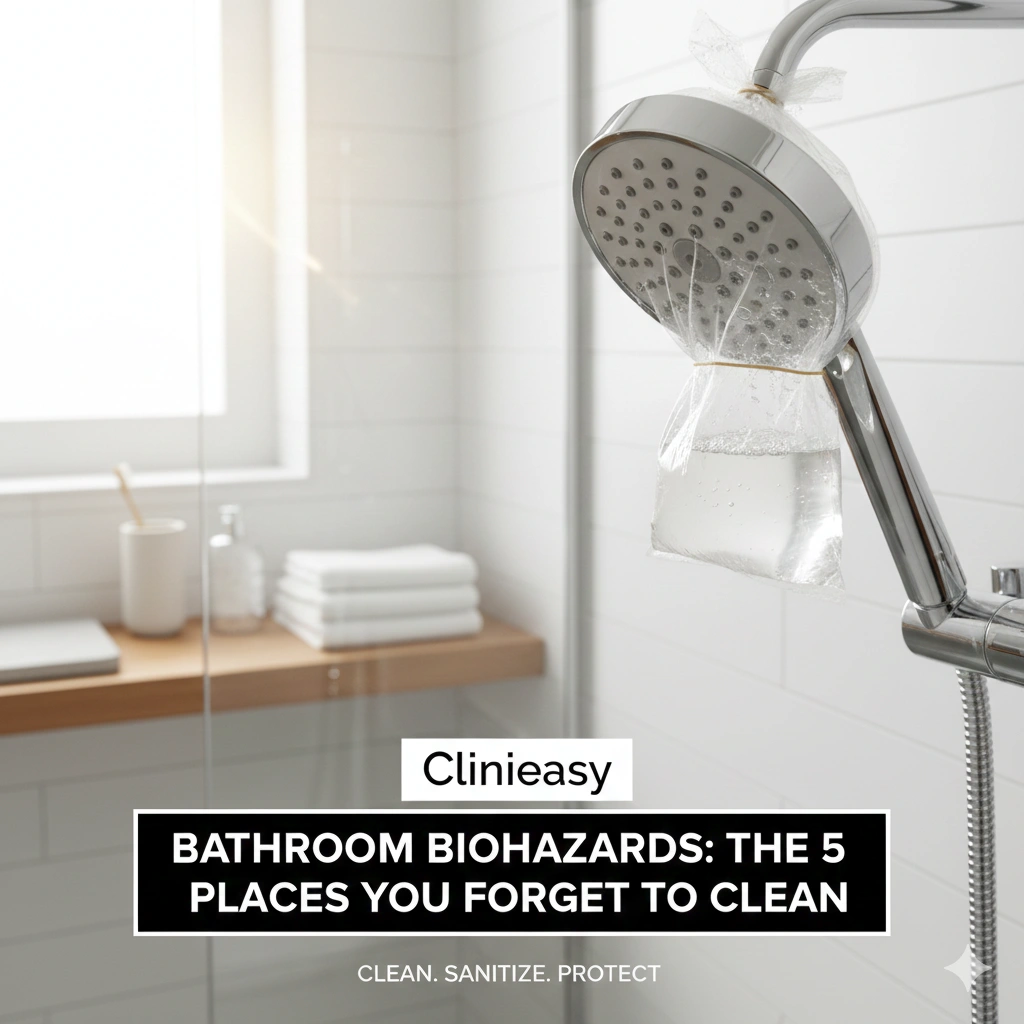
- The Clinical Fix: Once a month, fill a plastic bag with white vinegar and tie it around the shower head so the nozzles are submerged. Let it soak for several hours to dissolve the biofilm. Rinse with hot water.
2. The Toothbrush Holder: The “Slime” Zone
The toothbrush holder is statistically one of the top three germiest spots in the entire house.
- The Hazard: Water drips from your wet toothbrush down into the bottom of the holder. Combined with dust and the “toilet plume” (see Article #13), it creates a dark, stagnant pool where mold and bacteria thrive.
- The Clinical Fix: Don’t just rinse it. Run your toothbrush holder through the dishwasher once a week, or wash it with hot, soapy water and a bottle brush to ensure the bottom is scrubbed clean.
3. The Bath Mat: The Fabric Fungus Trap
Bath mats spend most of their lives damp, sitting on a dark floor.
- The Hazard: They are the perfect breeding ground for Tinea (the fungus that causes Athlete’s Foot) and various molds.
- The Clinical Fix: * Wash: Launder fabric mats in hot water every 3 to 5 days.
- Dry: Always hang the mat up to dry after every shower rather than leaving it flat on the floor.
- Upgrade: Consider a diatomaceous earth (stone) bath mat, which dries instantly and doesn’t harbor bacteria like fabric.
4. The Shower Curtain Liner
That pink or orange “stain” at the bottom of your plastic liner isn’t just soap scum; it’s a bacterium called Serratia marcescens.
- The Hazard: While usually harmless to healthy people, it can cause infections in open wounds or respiratory issues if allowed to spread significantly.
- The Clinical Fix: You don’t need to throw the liner away! Most plastic liners can be washed in the washing machine on a gentle cycle with two towels (to act as scrubbers) and a cup of vinegar. Hang it back up to air dry.
5. The Toilet Handle and Light Switch
We scrub the toilet bowl, but we often forget the “touch points” that we handle before we wash our hands.
- The Hazard: The toilet handle is a primary site for fecal-oral bacterial transfer.
- The Clinical Fix: These should be part of your “Daily Reset.” Wipe them down every evening with a disinfecting wipe or a microfiber cloth sprayed with 70% isopropyl alcohol.
The Clinieasy “Bathroom Deep-Clean” Routine
To maintain a clinical standard, follow this monthly rotation:
- Soak the shower head in vinegar.
- Sanitize the toothbrush holder in the dishwasher.
- Launder the shower curtain and bath mats on high heat.
- Disinfect all high-touch handles and switches.
Conclusion: Hygiene Beyond the Surface
A bathroom that looks clean isn’t always healthy. By focusing on these hidden “biohazard zones,” you are moving from aesthetic cleaning to clinical hygiene. You aren’t just making your bathroom shine; you are actively removing the reservoirs of bacteria that can compromise your family’s health.
Disclaimer: Use caution when using vinegar on plated shower heads (like gold or oil-rubbed bronze), as prolonged soaking can damage some finishes.
Why this fits Article #22 (AdSense Strategy):
- High Engagement: People love “gross-out” facts that lead to a solution. It increases time-on-page.
- Ad Targeting: Attracts ads for bathroom cleaners, shower heads, antimicrobial bath mats, and disinfectants.
- Expertise: Discussing “biofilms” and specific bacteria (Serratia marcescens) boosts your E-E-A-T score with Google.