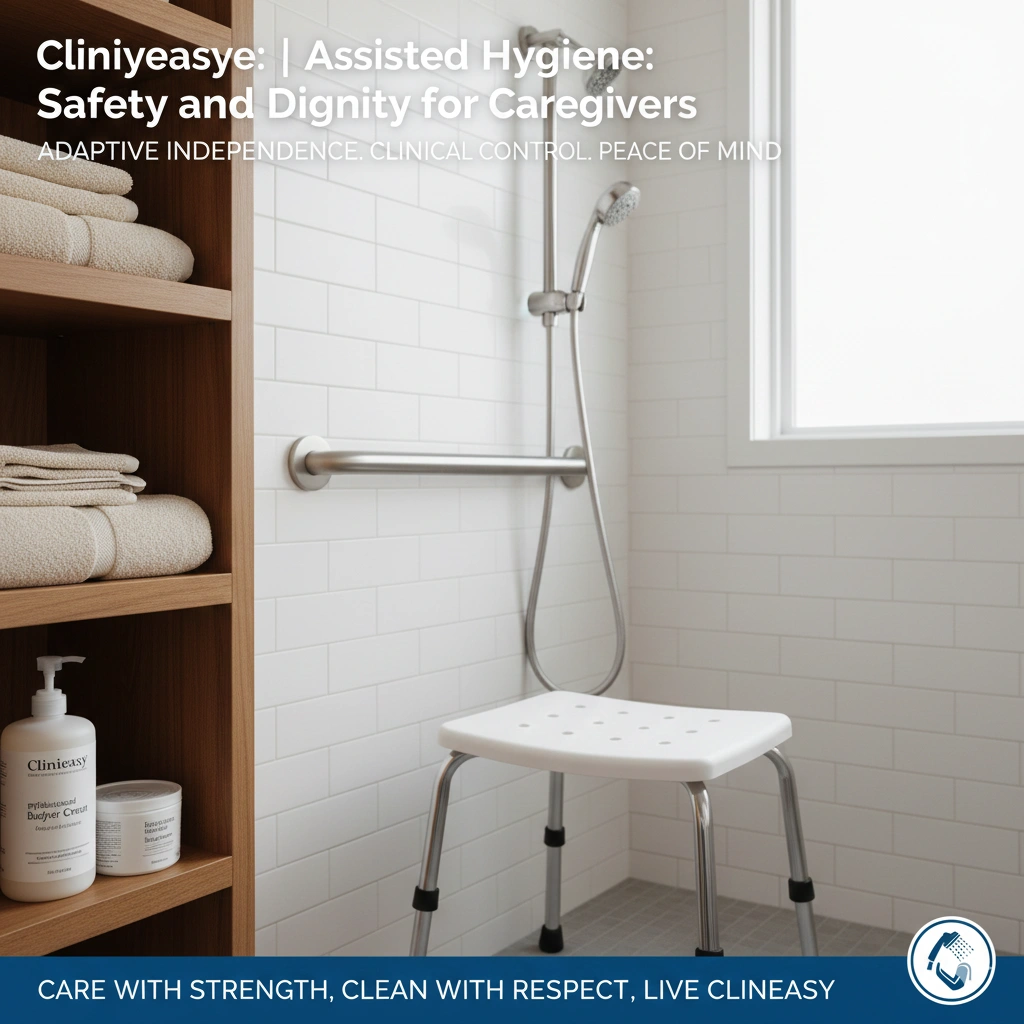

Assisting a loved one or patient with hygiene is one of the most intimate and challenging tasks in caregiving. From a clinical perspective, the bathroom is the highest-risk environment in the home—a combination of wet surfaces, limited space, and physical exertion. For the senior, it can be a source of anxiety and a perceived loss of independence; for the caregiver, it is a task that requires both physical “Body Mechanics” and psychological tact.
In 2025, the philosophy of assisted hygiene has shifted toward “Adaptive Independence.” The goal is to maximize the senior’s participation while minimizing the risk of falls or skin injury. At Clinieasy, we provide a protocol that prioritizes the safety of the caregiver and the dignity of the individual.
1. The “Pre-Flight” Environment Check
Safety begins before a single drop of water is turned on.
- The Science: “Environmental Trip Hazards” account for the majority of caregiver injuries.
- The Clinical Fix: Clear the floor of all rugs (even “non-slip” ones can have edges that catch). Ensure the room is pre-heated to $22^\circ\text{C}$ to $24^\circ\text{C}$ ($72^\circ\text{F}$ to $75^\circ\text{F}$). Because seniors lose body heat rapidly when wet, a cold room can cause “shivering-induced falls.”
- The Setup: Place all soaps, towels, and clean clothes within arm’s reach. A caregiver should never have to turn their back or walk away from a senior in the shower.
2. Dignity Through “Partial Exposure”
Maintaining dignity is not just a moral choice; it is a clinical one. When a patient feels exposed, they become tense, increasing the risk of resistance or sudden movements.
- The Strategy: The “Towel Barrier” Technique. Allow the senior to remain covered with a large, dry towel or a “bath cape” while sitting on the shower chair. Wash one limb at a time, uncovering only the area being cleaned, then recovering it immediately. This maintains body heat and emotional comfort.
3. Body Mechanics: Protecting the Caregiver
Caregiver burnout and back injuries often stem from improper positioning during bathing.
- The Hazard: Bending over a low tub or reaching across a shower stall puts immense strain on the lumbar spine.
- The Fix: Use a long-handled sponge to reach the lower legs and back, reducing the need for the caregiver to bend. If assisting from outside the tub, stay in a “Wide Stance” with knees slightly bent. Always “Communicate the Move”—tell the senior exactly what you are doing before you touch them to avoid “startle responses.”
4. The No-Rinse Revolution
In 2025, “Bathing” doesn’t always mean a shower. For seniors with severe mobility issues or “Aquaphobia” (fear of water, common in dementia), a traditional shower can be traumatic.
- The Science: No-Rinse Cleansing Foams and Pre-Moistened Warm Cloths are clinically formulated to emulsify oils and lift bacteria without the need for a basin of water.
- The Protocol: Use a “One-Cloth-Per-Zone” approach. Use a fresh, warmed, no-rinse cloth for each body part to prevent cross-contamination (e.g., never use the same cloth for the feet and the face).
5. Sanitizing the Support Gear
The equipment used for assisted hygiene—shower chairs, grab bars, and handheld sprayers—can become reservoirs for mold and bacteria if not managed.
- The Hazard: Porous rubber “feet” on shower chairs trap soapy water, leading to fungal growth.
- The Fix: After every use, spray the shower chair and grab bars with a 10% bleach solution or a medical-grade disinfectant. Allow the equipment to air-dry completely. Periodically check the “Tips” of the chair legs for wear; a slippery chair is a lethal hazard.
The Clinieasy “Assisted Care” Checklist
- Thermal Prep: Heat the room before undressing the senior.
- The Towel Shield: Use towels to keep the senior covered and warm during the process.
- Wide-Base Stance: Protect your back by maintaining proper body mechanics.
- No-Rinse Alternate: Use no-rinse foams for “low-energy” hygiene days.
- Equipment Reset: Disinfect shower chairs and bars after every session.
Conclusion: The Art of Clinical Compassion
Assisted hygiene is an essential component of geriatric health. When performed with clinical precision, it prevents skin infections and preserves the senior’s well-being. When performed with dignity, it strengthens the bond between caregiver and patient.
Care with strength, clean with respect, and keep it Clinieasy.
Disclaimer: If a senior becomes combative or highly distressed during bathing, stop the process. Safety is the priority. Consult a healthcare provider about “distraction techniques” or specialized “low-stress” hygiene schedules.
Why this fits Article #82:
- High E-E-A-T: Discusses “body mechanics,” “emulsifying oils,” and “aquaphobia.”
- Urgent Problem/Solution: Addresses the very real fear of falls and caregiver injury.
- Affiliate Goldmine: Naturally links to high-ticket items like shower chairs and specialized cleansers.