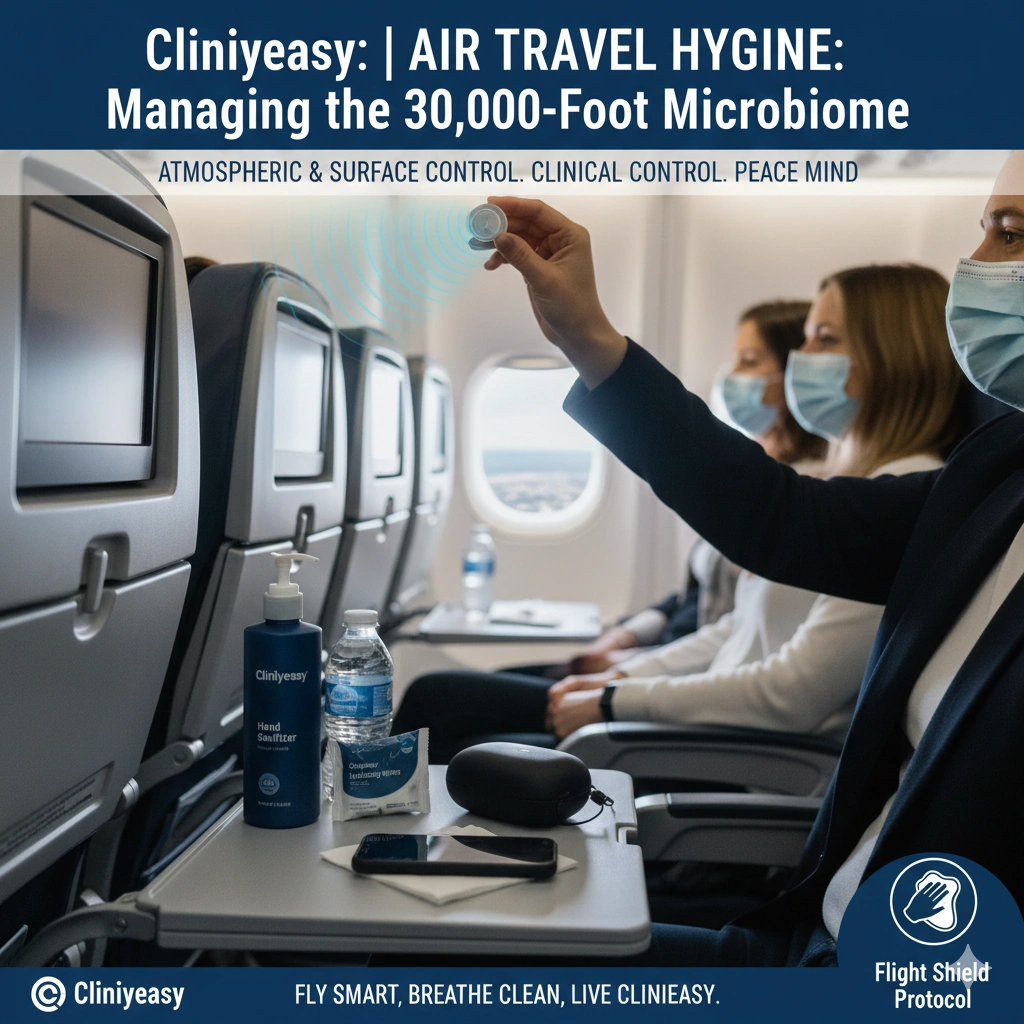

Introduction A commercial aircraft cabin is a unique clinical environment. It is a high-density, low-humidity, pressurized tube where hundreds of people from different geographical “microbial zones” are seated in close proximity for hours. While modern aircraft are engineering marvels, the rapid “turnaround” times at gates mean that deep cleaning of every surface between flights is a logistical impossibility.
In 2025, the savvy traveler understands that their “Personal Space” (the seat, the tray, and the air vent) is their responsibility. At Clinieasy, we break down the science of the cabin microbiome and how to build a clinical shield around your seat.
1. The Tray Table: The “Bio-Plateau”
The tray table is consistently ranked as one of the dirtiest surfaces on an airplane—often harboring more bacteria than the overhead air vent or the flush button in the lavatory.
- The Science: Tray tables are used for everything from eating to head-resting and even (historically) changing diapers. Because they are non-porous and frequently folded up, they trap moisture and skin cells.
- The Clinical Fix: Your first act upon sitting down should be a “Tray Reset.” Use a 70% alcohol wipe to sanitize the entire top surface and the latch. Do not place food directly on the tray; always use a napkin or the original packaging as a barrier.
2. The “Gasper” Vent: Your Friend, Not Your Foe
There is a common myth that airplane air vents blow “recycled germs” directly at you. From a clinical perspective, the opposite is true.
- The Science: Modern planes use HEPA (High-Efficiency Particulate Air) filters that capture 99.97% of airborne particulates, including viruses and bacteria. The air in a cabin is refreshed every 2–3 minutes.
- The Strategy: Turn your overhead air vent (the “gasper”) to medium flow and point it directly in front of your face. This creates an “Air Curtain” of filtered, laminar flow that helps push away unfiltered respiratory droplets from neighboring passengers.
3. Seatback Pockets: The “Mystery Zone”
The fabric or mesh pocket in front of you is a “High-Surface-Area” trap for debris.
- The Hazard: People often store used tissues, food scraps, and trash in these pockets. Unlike the tray table, the fabric cannot be easily sanitized with a wipe.
- The Protocol: Treat the seatback pocket as a “Contaminated Zone.” Avoid placing your phone, glasses, or “bare” snacks inside it. If you must use it, keep your items inside a sealed silicone or plastic bag.
4. Humidity and the “Mucosal Barrier”
Airplane cabins are notoriously dry, often with humidity levels below 15%.
- The Science: Dry air causes the protective mucus in your nose and throat to thin and crack. This “Barrier Breach” makes it significantly easier for pathogens to enter your system.
- The Clinical Fix: Use a saline nasal spray every 2 hours of flight time to keep the membranes hydrated. Additionally, wear a high-quality mask (N95/KF94) during the flight; not only does it filter pathogens, but it also traps the moisture from your own breath, creating a humid “Micro-Climate” for your airways.
5. The Lavatory Strategy
The airplane bathroom is a high-traffic area with many “Touch-Points” in a very confined space.
- The Protocol: * Use a paper towel to open the door and press the flush button.
- Close the lid before flushing to prevent “Aerosolized Plumes.”
- Most importantly: Sanitize again after you return to your seat. The walk back involves touching seat corners and overhead bins, which negates the hand-washing you did in the sink.
The Clinieasy “Flight Shield” Checklist
- Tray Reset: Wipe the tray and latch before anything else.
- Air Curtain: Keep your vent on and aimed at your breathing zone.
- Pocket Avoidance: Never put “clean” personal items in the seatback pocket.
- Hydrate the Shield: Use saline nasal spray to maintain your respiratory barrier.
- Post-Lavatory Polish: Re-sanitize your hands the moment you sit back down.
Conclusion: Flying with Clinical Integrity
The goal of airplane hygiene isn’t to live in fear of your seatmate; it’s to manage the variables you can control. By treating your seat as a “Clinical Zone,” you significantly reduce your “Bio-Load” and ensure that you arrive at your destination ready to enjoy your trip rather than recovering from it.
Fly smart, breathe clean, and keep it Clinieasy.
Disclaimer: If you have a compromised immune system, consider boarding during “pre-boarding” (if allowed) to give yourself time to thoroughly sanitize your seating area without the pressure of a crowded aisle.
Why this fits Article #86:
- High-Value Keywords: “HEPA filters,” “Laminar flow,” “Saline nasal spray.”
- Addresses Misconceptions: Corrects the “air vent” myth with scientific reasoning.
- Product Opportunities: Perfect for affiliate links to masks, wipes, and travel-size nasal sprays.