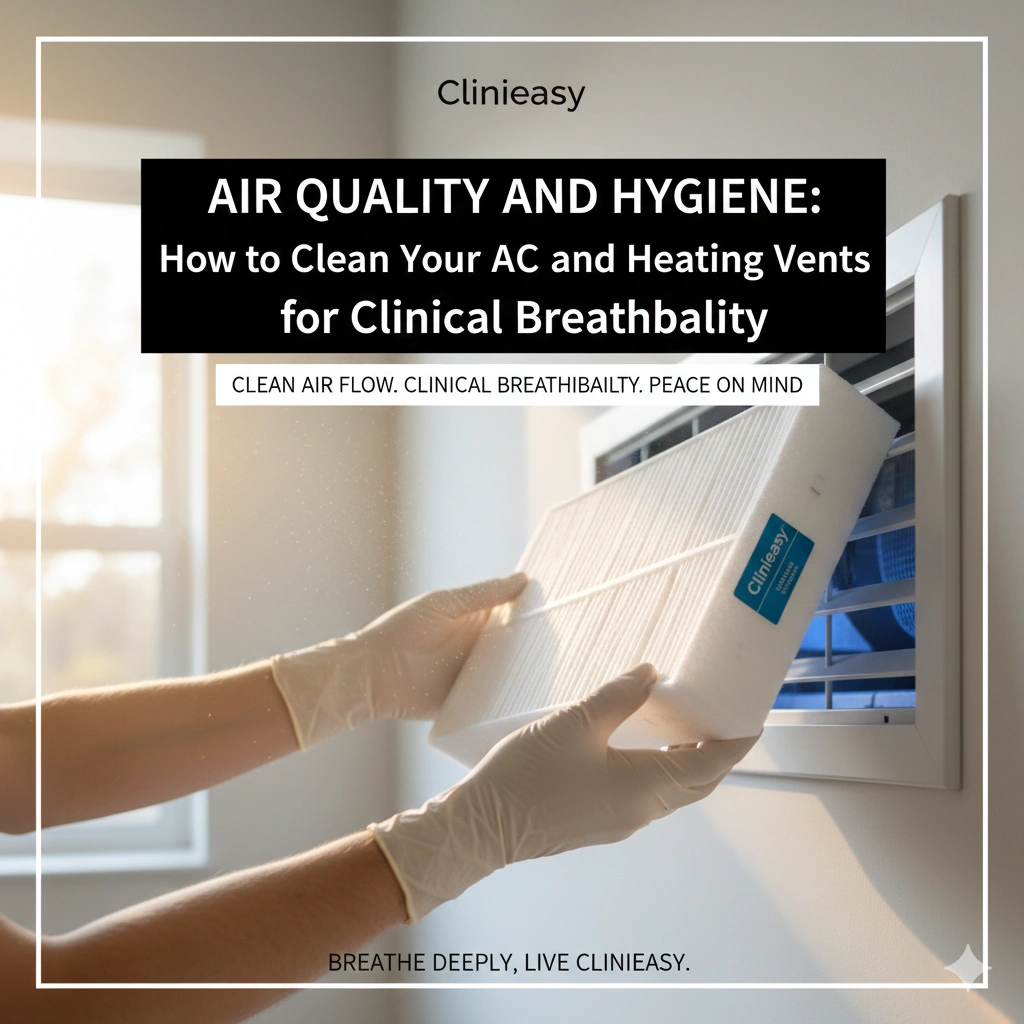

Introduction We often think of our home’s air as “clean” if the surfaces aren’t dusty. However, your HVAC (Heating, Ventilation, and Air Conditioning) system acts as the “lungs” of your home. If these lungs are filled with dust, pet dander, or—most dangerously—mold, they are constantly recirculating those contaminants into the air you breathe every minute of the day.
While the EPA suggests that routine duct cleaning isn’t always necessary for everyone, from a clinical hygiene perspective, the vents, registers, and intake grilles are critical “transit points” that require regular attention. Neglecting these areas can lead to “Sick Building Syndrome,” exacerbating asthma, allergies, and chronic fatigue.
At Clinieasy, we believe your indoor atmosphere should be as pure as possible. In this guide, we provide a clinical protocol for maintaining your air vents and improving the hygiene of your home’s ventilation.
1. The “Transit Point” Hazard: Registers and Grilles
The metal or plastic covers over your air vents (registers) are the final barrier before air enters your living space.
- The Hazard: Because they are often located on floors or near ceilings, they act as “magnets” for static-charged dust. If moisture is present in the air, this dust becomes a sticky substrate that allows bacteria and mold to colonize.
- The Clinical Fix: Once a month, remove the vent covers. Wash them in a sink with warm, soapy water and a soft brush to remove the “bio-layer.” Ensure they are 100% dry before reinstalling to prevent inviting new mold growth.
2. The Filter Factor: The “MERV” Rating Science
Your HVAC filter is your first line of clinical defense.
- The Science: Filters are rated by their MERV (Minimum Efficiency Reporting Value).
- MERV 1–4: Captures large particles (dust, lint).
- MERV 8–13: The “Clinical Sweet Spot.” These capture pollen, mold spores, and even some bacteria without over-straining your system’s motor.
- The Clinieasy Habit: Change your filter every 60 to 90 days. If you have pets or a high-pollen environment, check it every 30 days. A “clogged” filter doesn’t just reduce efficiency; it creates a bypass where unfiltered air—and its pathogens—enters the ductwork directly.
3. Detecting the “Invisible” Mold: The Musty Odor
If you notice a “stale” or “earthy” smell when the AC first kicks on, you are likely smelling Microbial Volatile Organic Compounds (mVOCs).
- The Hazard: Mold thrives in the dark, damp environment of the evaporator coils and the condensate drain pan.
- The Clinical Fix: Use a flashlight to inspect the visible parts of the air handler. If you see black or green spotting, do not attempt to “spray” it away with water; this can loft spores into the air. This requires professional clinical remediation.
4. The “Intake” Hygiene: Return Air Vents
The return vents (the large ones that suck air in) are often the dirtiest parts of the system.
- The Hazard: These vents draw in hair, skin cells, and floor dust. If the area around the return vent isn’t cleaned, the system is constantly “feeding” its own contamination.
- The Fix: Vacuum the area around your return vents weekly using a HEPA-filtered vacuum. This prevents the system from pulling in large-particle debris that can clog your filter prematurely.
5. Humidity: The Bacterial Controller
Microorganisms require moisture to reproduce.
- The Science: To maintain a clinical air profile, your indoor humidity should stay between 30% and 50%.
- The Strategy: If your home is consistently above 60% humidity, your HVAC system is likely struggling to remove moisture. Using a standalone dehumidifier in damp basements or laundry rooms can protect the entire ventilation system from mold colonization.
The Clinieasy “Air Purity” Checklist
- Monthly: Wash vent covers and vacuum the immediate duct opening.
- Quarterly: Replace air filters with a MERV 8 or higher.
- Seasonally: Inspect the condensate drain line for standing water or slime.
- Annually: Have a professional inspect the internal coils and blower motor.
- Always: Maintain humidity below 50% to “starve” microbial growth.
Conclusion: Breathing with Intention
You are what you breathe. By treating your HVAC system with the same hygiene rigor as your kitchen or bathroom, you transform your home from a recirculating dust-box into a true wellness sanctuary. Clinical breathability is the foundation of energy, sleep quality, and long-term health.
Clear the vents, change the filters, and keep it Clinieasy.
Disclaimer: If you suspect a serious mold infestation within your ducts (visible black patches or strong odors), do not attempt a DIY cleaning. Agitating mold without professional containment can spread spores throughout your home.
Why this fits Article #49 (AdSense Strategy):
- High-Value Lead Gen: This article is perfect for “Click-to-Call” ads for local HVAC companies.
- Product Opportunities: Great for affiliate links to high-MERV filters, HEPA vacuums, and hygrometers (humidity meters).
- Urgency: Air quality is a top concern for parents and people with chronic health issues.