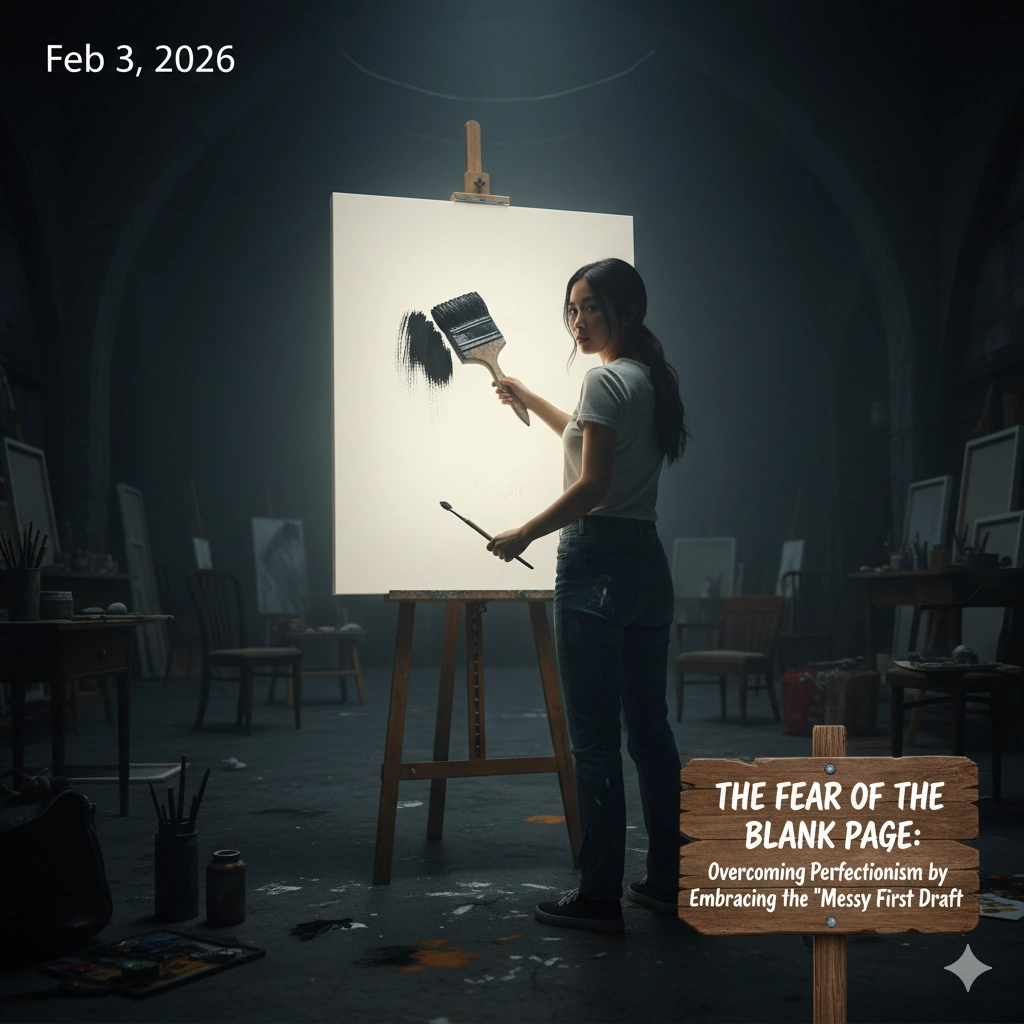

Whether you are writing an article, designing a game, or starting a business, the blank page is often the most intimidating stage. We want our first attempt to be perfect, so we wait for the “perfect idea” or the “perfect moment.” “The Fear of the Blank Page” explores why perfectionism is actually a form of procrastination. To create something great, you must first be willing to create something “bad.” By lowering the stakes and embracing the mess, you unlock the momentum needed to reach excellence.
The Perfectionism Trap
Perfectionism is not a standard of high quality; it is a shield. We use it to protect ourselves from the vulnerability of making a mistake. When we tell ourselves “it’s not ready yet,” we avoid the risk of being judged. However, creativity is an iterative process. You cannot edit a blank page. The goal of the first draft isn’t to be good; the goal of the first draft is simply to exist.
Three Strategies to Just Get Started:
- The “Five-Minute” Rule:
- Tell yourself you will only work for five minutes. Set a timer. The hardest part of any task is the transition from “not doing” to “doing.” Once the timer goes off, you’ll usually find that the initial fear has vanished, and you’re ready to keep going.
- The Brain Dump:
- Don’t worry about grammar, structure, or logic. Write down every fragment of an idea, no matter how “stupid” it feels. Think of this as gathering the raw clay; you can worry about sculpting it into a masterpiece later.
- The “Placeholder” Technique:
- If you get stuck on a specific section—like a headline or a difficult paragraph—just write [INSERT BETTER IDEA HERE] and move on. Don’t let a single roadblock stop the entire flow. Keep the momentum moving forward and return to the difficult parts once the rest of the draft is finished.
Permission to be Bad
The secret to being a prolific creator is giving yourself permission to produce “rubbish.” Greatness is found in the editing, the refining, and the persistence—not in the first spark. When you stop trying to be perfect, you become free to be creative.
What’s Coming Next…
In our next installment, “The Power of Constraints,” we’ll explore how limiting your options can actually make you more creative.