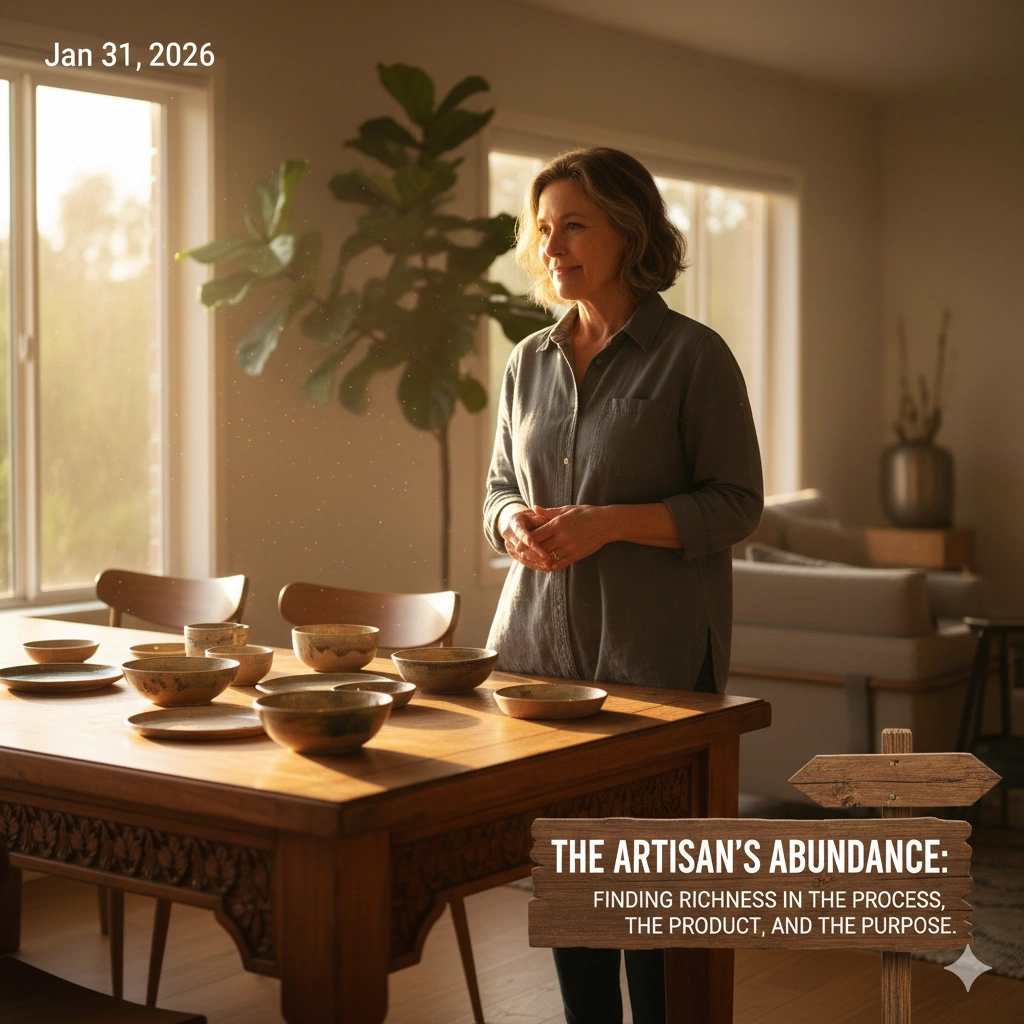

In a society that often measures success solely by financial gain or speed of achievement, “The Artisan’s Abundance” proposes a different metric. It explores the deep, multifaceted richness that comes from engaging in slow, intentional work. This abundance isn’t found in a bank account, but in the psychological “flow” of creation, the lasting quality of a handmade object, and the profound sense of connection that arises when we contribute something unique and meaningful to the world.
Beyond the Price Tag: The Value of Meaning
A mass-produced item has a price, but a handcrafted one has a story. The abundance of the artisan lies in the realization that their value is not just in what they sell, but in what they experience during the making. This includes the satisfaction of problem-solving, the quiet joy of seeing a vision take physical form, and the pride of mastery. This is an internal wealth that cannot be outsourced or automated.
Three Dimensions of Artisanal Abundance:
- The Wealth of “Flow”:
- There is a unique mental state called “flow”—where time seems to disappear and you are completely immersed in your task. Engaging in craftsmanship is one of the most reliable ways to achieve this state. This deep focus is a form of abundance that provides mental clarity, reduces stress, and leaves you feeling revitalized rather than drained.
- The Legacy of Quality:
- Abundance is found in things that last. Choosing to create (or own) high-quality, durable items reduces the constant need for “more.” When we surround ourselves with objects that grow more beautiful with age and use, we cultivate a sense of stability and appreciation that disposable goods can never provide.
- The Connection of Contribution:
- True abundance comes from knowing your work matters to someone else. Whether it’s a customer who cherishes a piece of jewelry or a family member who loves a meal you spent hours preparing, the exchange of a handcrafted gift creates a human connection. This sense of belonging and purpose is the ultimate form of richness.
A Life Well-Crafted
The artisan’s path is not always the easiest, but it is often the most rewarding. By seeking abundance in the quality of your effort and the integrity of your work, you build a life that feels substantial, intentional, and deeply fulfilling.
Series Wrap-Up
Thank you for following The Modern Artisan. We hope this series has inspired you to find the “maker” within yourself and to appreciate the beauty and soul in the handcrafted world around you.