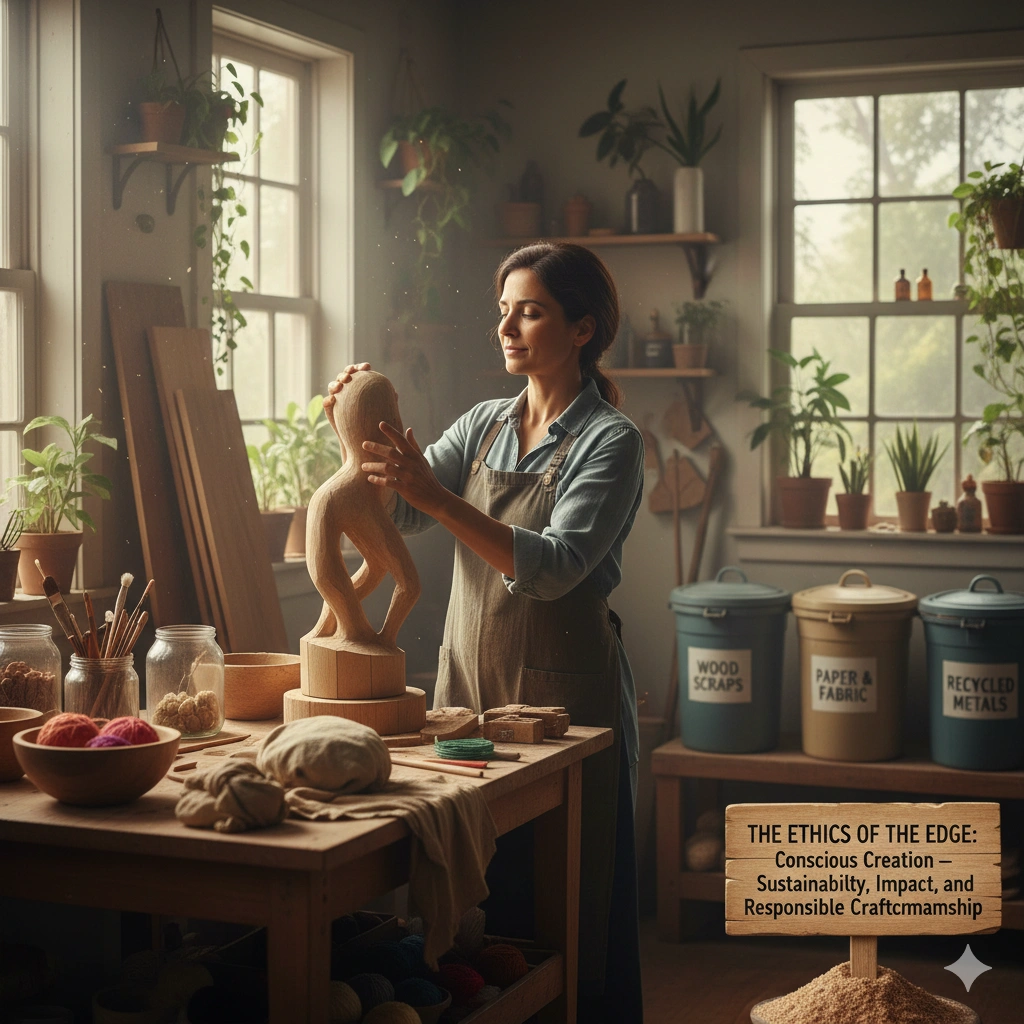

In a world increasingly aware of its environmental and social challenges, the modern artisan faces a critical question: how can we create beautiful things without contributing to harmful practices? “The Ethics of the Edge” explores the responsibilities that come with craftsmanship, advocating for conscious creation—a process where sustainability, ethical sourcing, fair labor, and minimal environmental impact are woven into the very fabric of the work. This article encourages artisans to consider not just the beauty of their output, but the integrity of their entire creative journey.
Beyond Aesthetics: The Ripple Effect of Creation
Every material choice, every production method, and every labor decision has a ripple effect, extending far beyond the workbench or studio. Fast fashion’s environmental toll, irresponsible mining practices for precious metals, or the exploitation of labor in distant factories all underscore the hidden costs of unconscious creation. The modern artisan strives to understand and mitigate these impacts.
Three Pillars of Conscious Creation:
- Material Sourcing with Integrity:
- Investigate the origin of your raw materials. Are they sustainably harvested, recycled, or upcycled? Are ethical labor practices ensured throughout the supply chain? This might mean choosing organic cotton, reclaimed wood, conflict-free minerals, or locally sourced components. Transparency in sourcing becomes part of the “maker’s mark.”
- Longevity and Repairability:
- Design and build products that are made to last, reducing the cycle of consumption and waste. Provide clear instructions for care, and where possible, offer repair services or guidance. The ethos of “buy once, buy well, repair if needed” stands in stark contrast to disposable culture.
- Mindful Waste Management:
- Implement practices to minimize waste throughout your creative process. This could involve using scraps for smaller projects, composting organic waste, recycling packaging, or designing products with end-of-life considerations in mind. Every offcut and byproduct is an opportunity for mindful stewardship.
Crafting a Better Future
By embracing the “Ethics of the Edge,” the modern artisan becomes more than just a creator of objects; they become a steward of resources, a proponent of fair practices, and a silent advocate for a more sustainable and equitable world. Their work, infused with conscious intent, becomes a powerful statement for a better future.
What’s Coming Next…
In our final installment, “The Artisan’s Abundance,” we’ll explore how the deep satisfaction and unique value of handcrafted work can lead to a richer, more meaningful life, beyond mere financial gain.