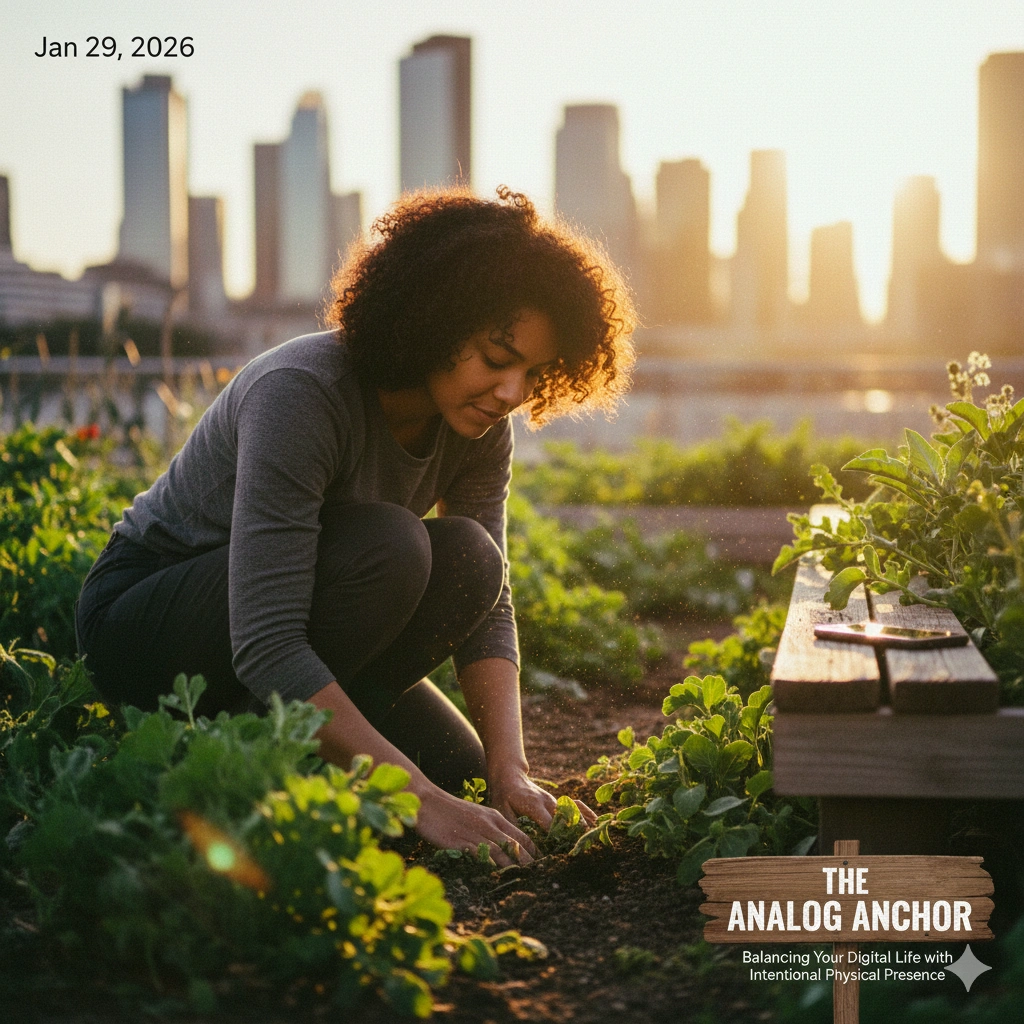

In our hyper-connected world, the “real” world can sometimes feel like a secondary experience. “The Analog Anchor” is about the vital importance of grounding ourselves in physical reality to maintain mental and emotional balance. It’s the practice of intentionally choosing activities that engage our five senses, move our bodies, and foster face-to-face connection—creating a heavy, stable “anchor” that prevents us from being swept away by the fast-moving currents of the digital realm.
The Need for Tactile Reality
Digital interactions are often shallow and fast-paced. Our brains, however, evolved to interact with a physical environment. When we neglect tactile experiences—the feel of soil in a garden, the smell of rain, the weight of a physical book, or the nuance of a real-life conversation—we lose a fundamental part of our human experience. Analog activities provide a “slow” contrast that allows our nervous systems to regulate and recharge.
Three Ways to Drop Your Analog Anchor:
- Engage in “Single-Task” Hobbies:
- Choose a physical hobby that requires your full attention and doesn’t involve a screen. Whether it’s woodworking, cooking a complex meal, painting, or knitting, these activities induce a state of “flow” that is rare in the digital world. The tangible result—a finished loaf of bread or a hand-painted card—provides a unique sense of accomplishment.
- Prioritize Face-to-Face “Deep Time”:
- Schedule regular, device-free time with friends or family. Put your phones in a basket or another room. Focus entirely on the person in front of you—their tone of voice, their expressions, and the shared space you inhabit. This deep connection is the most powerful antidote to digital loneliness.
- The Daily “Nature Immersion”:
- Spend time in nature every day, even if it’s just a ten-minute walk through a local park. Observe the seasonal changes, listen to the birds, and feel the weather on your skin. Nature provides a sensory complexity and a sense of scale that digital environments simply cannot replicate.
A Harmonious Balance
Digital well-being isn’t about escaping technology; it’s about integrating it into a life that is fundamentally rooted in the physical world. By dropping your analog anchors, you ensure that your devices remain tools for your life, rather than the place where your life solely happens.
Series Wrap-Up
Thank you for following The Art of Digital Well-being. We hope these strategies help you navigate the digital age with more intention, clarity, and peace.