Advertisement
For many, travel is viewed as an act of taking—taking photos, taking in sights, taking home memories. "The Art of the Open Hand" suggests a different model: travel as a two-way street. True exploration is a constant exchange. When we move through a new culture with an "open hand"—ready to give as much as we receive—we transform from observers into participants, building bridges of genuine respect and lasting connection. Beyond the Transaction: Travel as Exchange When we pay for a meal or a room, we fulfill a financial contract, but the human contract remains open. Reciprocity isn't always about money; it’s about the exchange of stories, the sharing of skills, the offering of genuine gratitude, and the willingness to be vulnerable. Three Ways to Practice the Art of the Open Hand: Share Your Own Story: When locals ask about your home, don't just give the tourist-brochure version. Share a genuine detail about your family, your work, or a challenge you face. This vulnerability invites them to do the same, moving the conversation from a surface-level interview to a real human connection. Offer a Useful Skill: Are you a photographer? Offer to send a high-quality portrait to the shopkeeper you’ve been chatting with. Are you a teacher or a tech-wiz? Perhaps you can offer a moment of informal help. Look for small, non-intrusive ways to leave behind something of value that isn't just a tip. The Practice of "Radical Gratitude": Go beyond a polite "thank you." If someone has been particularly helpful, take the time to explain why their kindness mattered to you. A handwritten note (even in your own language) left for a host or a sincere, eye-to-eye expression of appreciation carries immense weight across cultures. The Full Circle of Exploration The "open hand" philosophy recognizes that we are all, in some way, ambassadors of our own cultures. By approaching the world with generosity and a spirit of return, we ensure that our travels don't just change us—they leave a positive, respectful ripple in the places we’ve been. Series Wrap-Up Thank you for following The Modern Explorer's Toolkit. From the minimalist backpack to the open heart, these tools are designed to help you navigate the world not just as a tourist, but as a conscious, connected citizen of the planet.
  • Personal Hygiene
  • The Global Citizen’s Language

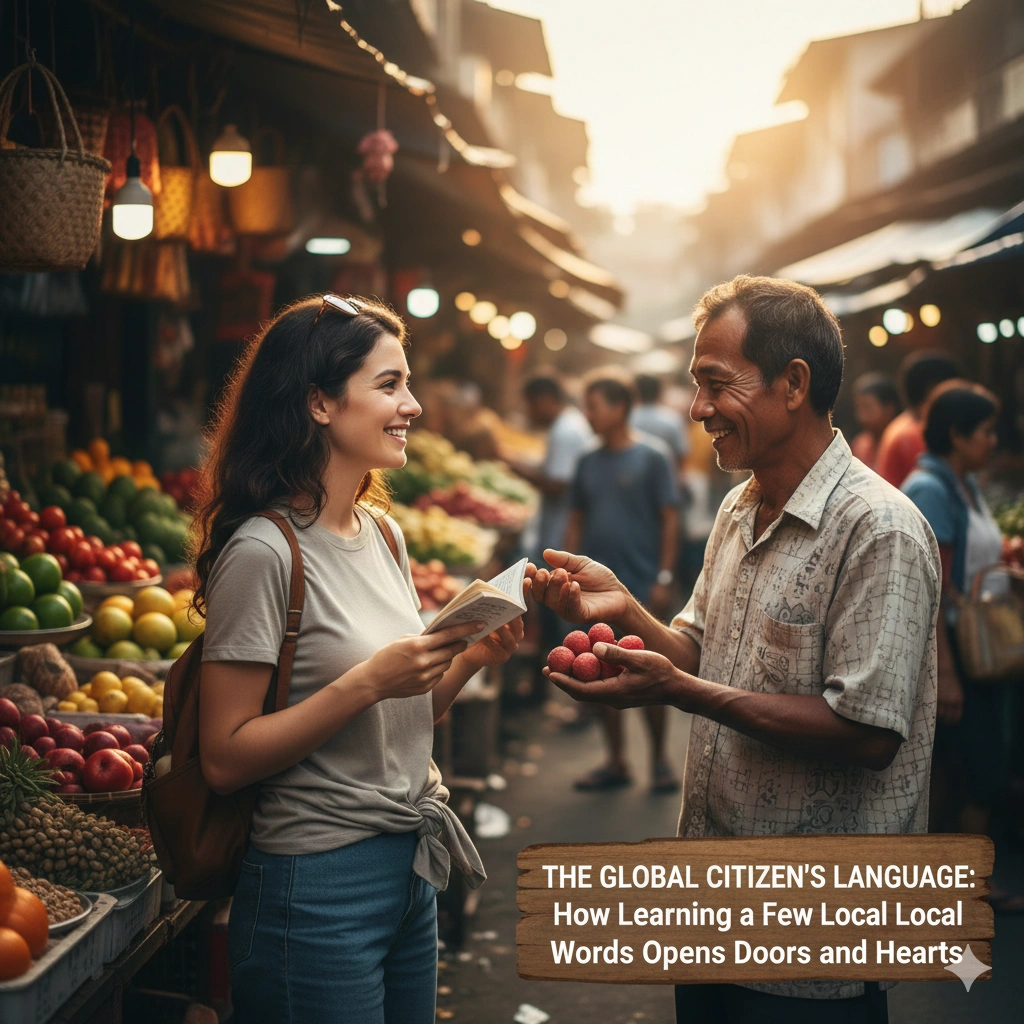
    In an increasingly globalized world, English often serves as a common denominator, but relying solely on it can build an invisible wall between a traveler and the true heart of a culture. “The Global Citizen’s Language” is about the profound impact of making an effort to learn even a handful of local words and phrases. It’s not about fluency; it’s about respect, humility, and the instantaneous human connection that transcends linguistic barriers.

    Beyond Translation Apps: The Power of Intent

    While translation apps are undeniably useful, they lack the warmth and genuine effort conveyed by a traveler attempting to speak a local tongue. Even a mispronounced “hello” or a fumbling “thank you” can elicit a smile, bridge a gap, and transform an impersonal interaction into a memorable human exchange. It signals that you are not just a consumer of experiences, but a respectful guest.

    Three Strategies for Embracing the Local Language:

    1. Master the “Magic Words”:
      • Before you even arrive, learn the basic greetings (“hello,” “goodbye,” “please,” “thank you,” “excuse me”), how to ask for help, and simple phrases for ordering food or coffee. These are the social lubricants that make daily interactions smoother and more pleasant.
    2. Immerse in the Auditory Landscape:
      • Listen intently to how locals speak. Pay attention to intonation, rhythm, and common expressions. Spend time in local cafes or parks just absorbing the sounds of the language, without necessarily needing to understand every word. This attunes your ear and mind.
    3. Embrace Imperfection and Humour:
      • Don’t fear making mistakes. Locals almost always appreciate the effort, and a humorous attempt at communication can often lead to laughter and a deeper connection. Carry a small notebook to jot down new words, and don’t be afraid to point or use gestures to supplement your fledgling vocabulary.

    The Gift of Understanding

    Learning a language, even just a little, is like gaining a new pair of eyes. It allows you to glimpse nuances in culture, humor, and daily life that would otherwise remain hidden. It transforms you from an outsider looking in, to a participant, however humble, in the local narrative.

    What’s Coming Next…

    In our final installment, “The Art of the Open Hand,” we’ll explore the power of reciprocity, generosity, and genuine exchange in building meaningful connections across cultures.

    Leave a Reply

    Your email address will not be published. Required fields are marked *

    2 mins