Advertisement
For a long time, sustainable travel was about "doing less harm"—reducing waste, offsetting carbon. But a new generation of travelers, empowered by innovative technology, is aiming for a "net-positive" impact. The "Eco-Centric Nomad" uses advanced tools to contribute more to a destination than they consume, leaving places better than they found them. This is the future of truly responsible exploration. Beyond Carbon Offsets: Active Regeneration The shift is from guilt-driven compensation to proactive contribution. Travelers aren't just paying for trees to be planted elsewhere; they're actively participating in local conservation efforts, supporting regenerative agriculture, and empowering local communities directly through new tech platforms. Three Ways Technology Enables Net-Positive Travel: Hyper-Local Impact Investing Platforms: New apps are connecting travelers directly with verified, small-scale local environmental and social projects. Instead of donating to large NGOs, you can invest directly in a community garden in Chiang Mai or a coral reef restoration project in Belize, seeing the tangible impact of your contribution through real-time updates and even VR tours. Gamified Clean-Up & Citizen Science: Geo-tagging and gamification are turning clean-up efforts into engaging activities. Apps can guide travelers to specific areas that need litter removal, or allow them to upload photos of biodiversity sightings (e.g., unique flora or fauna) that contribute to global scientific databases. Decentralized Energy & Water Tracking: Smart accommodations are integrating personal energy and water consumption dashboards. Travelers can see their real-time environmental footprint, and some platforms offer rewards or discounts for staying below certain thresholds, fostering conscious resource use. The True Local Footprint The Eco-Centric Nomad realizes that every dollar spent, every interaction made, and every choice taken leaves a footprint. By leveraging technology, this footprint can become a force for good, transforming tourism into a powerful engine for global well-being. What’s Coming Next... In our final installment, "The Journey to the Edge," we’ll explore how extreme technology is enabling human exploration beyond Earth and into the deepest oceans, redefining the very meaning of "travel."

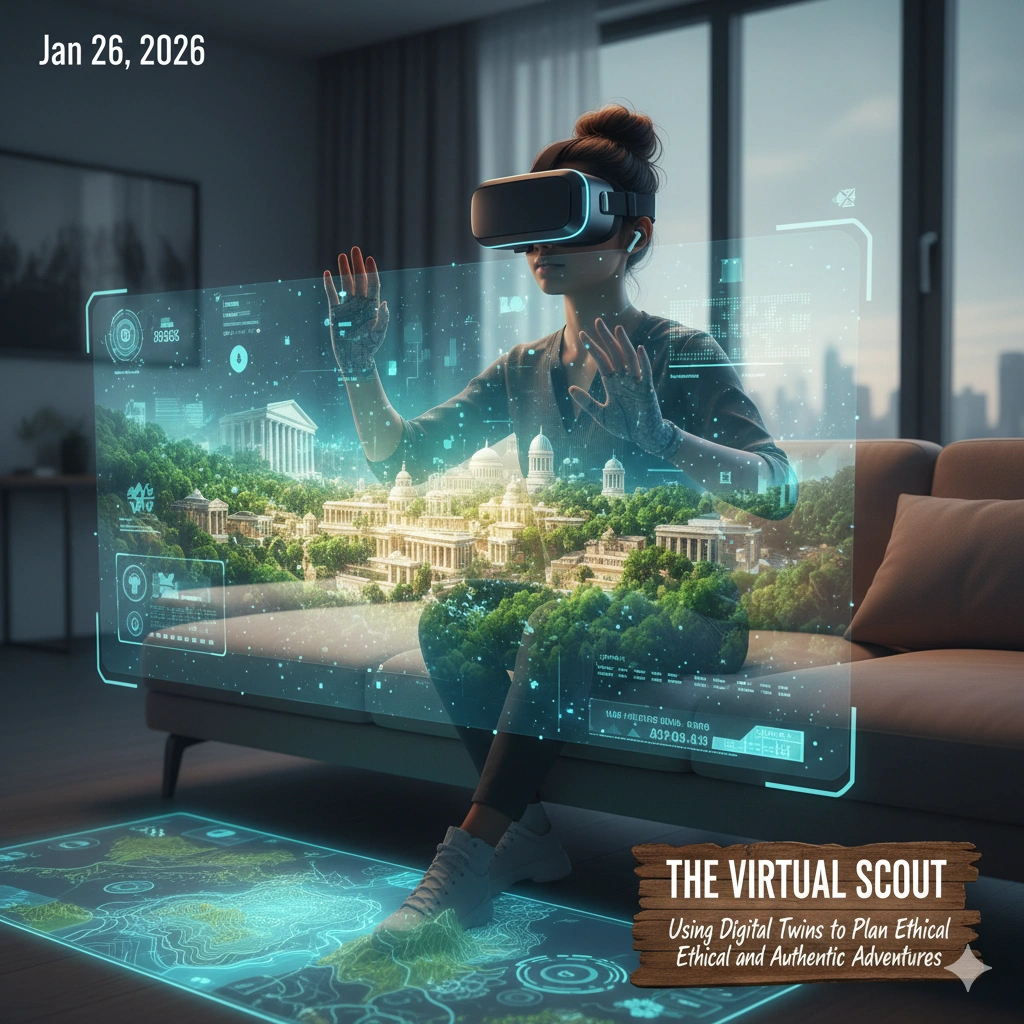
As global tourism faces the challenges of over-tourism and environmental impact, a new tool is emerging to help us travel smarter: the Virtual Scout. By utilizing high-fidelity “Digital Twins”—exact 3D replicas of cities and landmarks—travelers can now explore a destination in Virtual Reality (VR) before they ever book a flight. This isn’t about replacing the physical trip; it’s about “pre-visiting” to ensure our real-world presence is as respectful and rewarding as possible.

Beyond the 360-Degree Video

The “Virtual Scout” goes beyond simple photos. Using AI and satellite data, these digital environments allow you to navigate real streets, check the true accessibility of a hotel, or see how crowded a landmark gets at 10:00 AM. It’s the ultimate “try before you buy” for the conscious explorer.

Three Ways VR is Revolutionizing Travel Planning:

  1. Combating Over-Tourism:
    • By virtually visiting “bucket list” locations first, many travelers realize they can find the same beauty in lesser-known, nearby areas. This helps redistribute tourism traffic to communities that actually want and need the economic boost, rather than overwhelming already crowded sites.
  2. Radical Accessibility Mapping:
    • For travelers with mobility challenges, a “Virtual Scout” mission is a game-changer. You can physically navigate a virtual version of a cobblestone street or a train station to check for ramps and elevator locations, removing the anxiety of the unknown and ensuring a smooth real-world journey.
  3. Cultural Sensitivity Training:
    • Future booking platforms are integrating “VR orientations” that immerse you in local customs—like how to dress for a temple or how to order in a local market—before you arrive. This builds confidence and ensures that when you land, you are a guest, not just a tourist.

The Ethics of the Digital Twin

While VR offers a window into the world, it’s a tool for preparation, not a substitute for the soul-stirring unpredictability of real travel. The Virtual Scout handles the logistics so that when you finally step onto that plane, your mind is free to focus on the magic of the moment.

What’s Coming Next…

In our next installment, “The Eco-Centric Nomad,” we’ll dive into the emerging tech that helps travelers achieve a “Net-Positive” impact on the destinations they visit.

Leave a Reply

Your email address will not be published. Required fields are marked *

2 mins