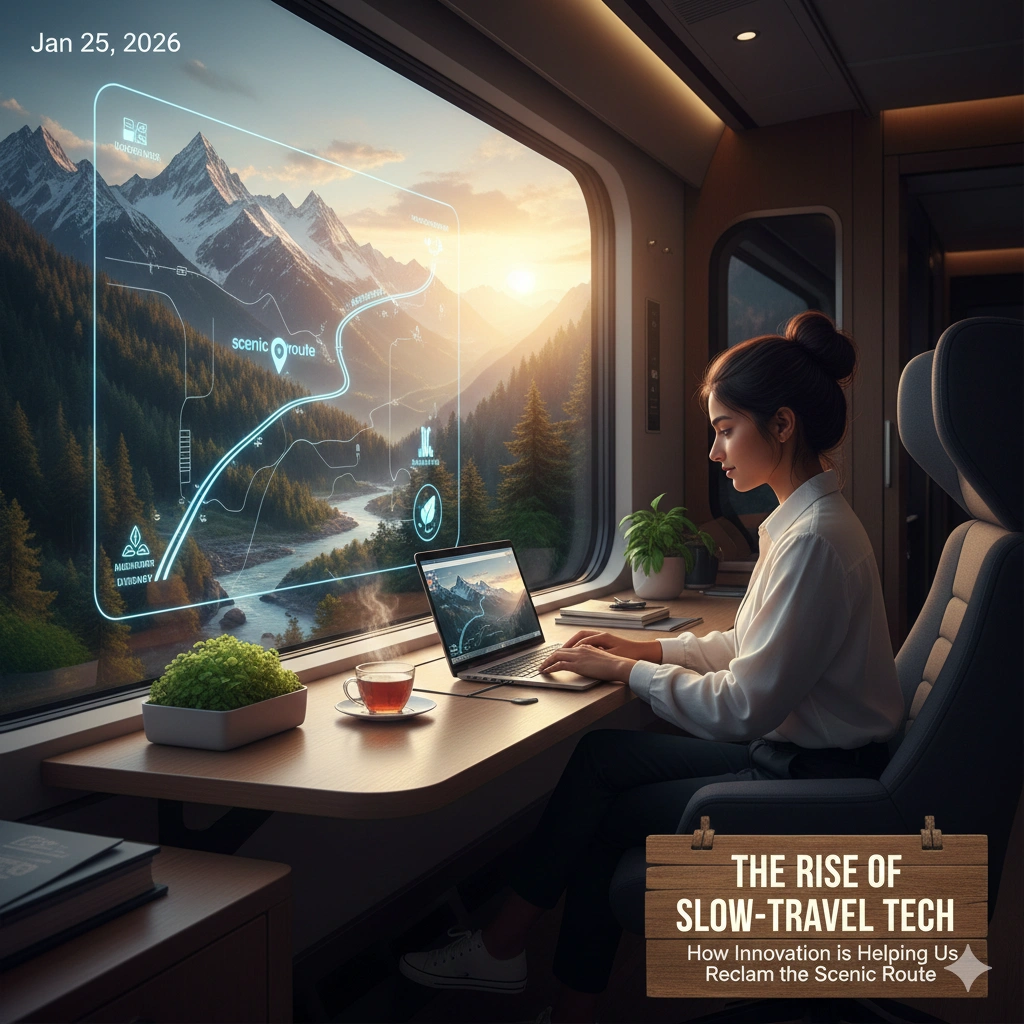

For decades, travel technology was obsessed with one thing: speed. More flights, faster check-ins, shorter layovers. But a new movement is emerging. “Slow-Travel Tech” isn’t about getting to the destination faster; it’s about making the journey so engaging and seamless that you no longer feel the need to rush. From high-tech sleeper trains to apps that prioritize beauty over brevity, the future of travel is looking a lot more patient.
The Renaissance of the Rail
While airlines struggle with sustainability and airport fatigue, the rail industry is having a high-tech makeover. New generations of night trains are being designed as “moving hotels,” equipped with high-speed satellite Wi-Fi and ergonomic workspaces, allowing nomads to cross continents while they sleep or work, turning transit time into productive or restful time.
Three Ways Technology is Encouraging Slow Exploration:
- “Detour” Navigation:
- New navigation algorithms are moving beyond the “fastest route” default. Upcoming apps allow users to select for “most scenic,” “historical significance,” or “quietest path.” This technology encourages travelers to wander through villages and country roads they would have otherwise bypassed on a highway.
- The Digital Green Pass:
- As carbon tracking becomes integrated into booking platforms, AI is helping travelers visualize the environmental impact of their choices in real-time. This is pushing a shift toward “multi-modal” travel—combining trains, electric ferries, and bikes—making the slower, greener path the more rewarded one.
- On-Demand Local Expertise:
- Real-time gig-economy platforms are connecting travelers with local guides for micro-experiences—like a one-hour walking tour of a specific neighborhood’s street art. This allows for deep, granular discovery of a place rather than a surface-level blur.
From Point A to Point B—And Everything In Between
Slow-travel tech proves that being “connected” doesn’t have to mean being “distracted.” By removing the logistical friction of complex overland travel, these tools allow us to fall in love with the landscape again. The journey is no longer a gap between two points; it’s the main event.
What’s Coming Next…
In our next installment, “The Virtual Scout,” we’ll look at how VR and digital twins are allowing us to “try before we buy,” helping travelers plan more ethical and responsible trips by exploring destinations virtually first.