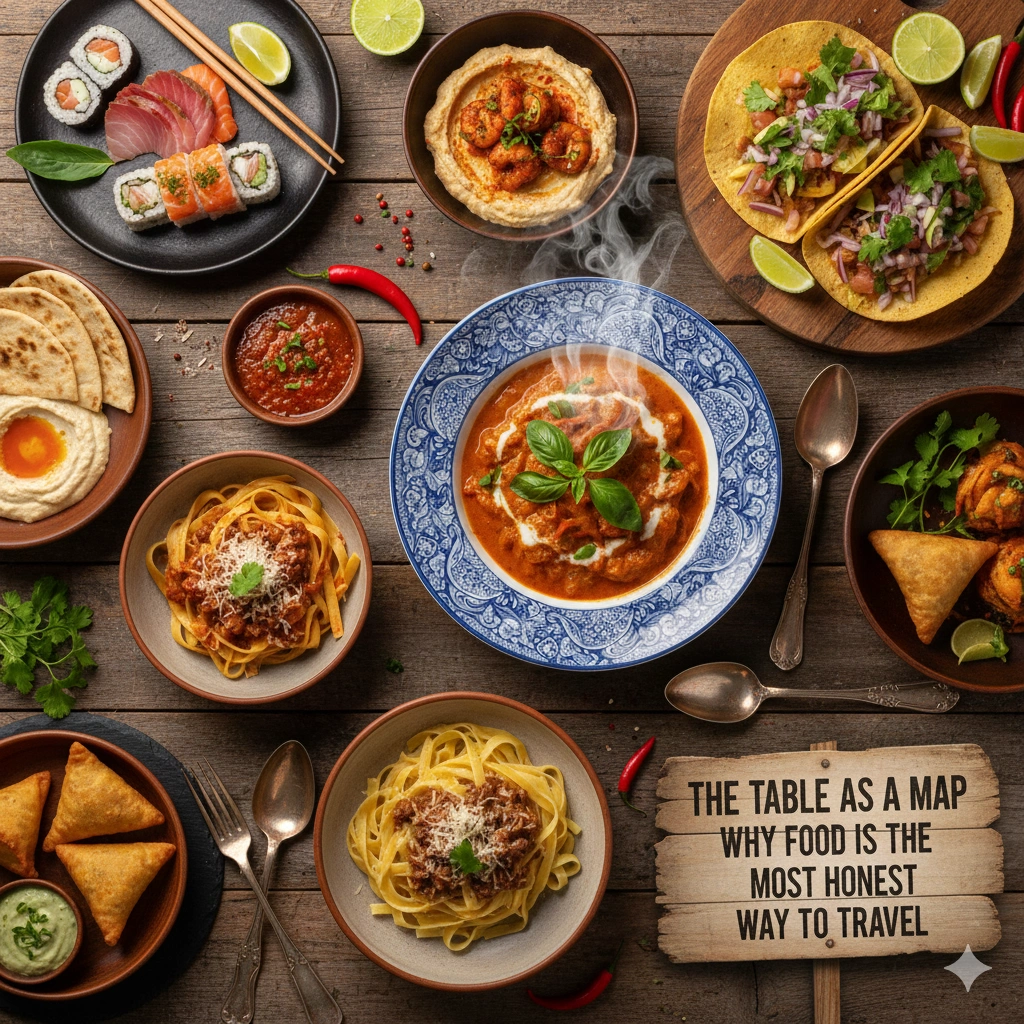

You can visit a museum to see a country’s past, but to understand its present, you have to sit down and eat. Every dish is a map—its ingredients tell the story of the land, its spices speak of ancient trade routes, and its preparation reveals the values of the people who call that place home.
More Than Just a Meal
In many cultures, the act of eating is a sacred social contract. When you move beyond the “tourist menu” and seek out the local haunts, you aren’t just consuming calories; you are consuming a narrative that has been perfected over generations.
Three Ways Culinary Exploration Deepens Your Journey:
- The History on Your Plate:
- Why is there cinnamon in a savory Mexican mole? Why is ginger so prevalent in English sweets? Food provides a sensory history lesson on colonization, migration, and the “Spice Wars” that shaped the modern world.
- Breaking the Language Barrier:
- You don’t need to be fluent in a language to share a smile over a delicious street taco or a steaming bowl of laksa. Food is a universal language that facilitates connection when words fail.
- Supporting the Local Ecosystem:
- Eating at “farm-to-table” establishments or local markets ensures your travel budget directly supports local farmers and small-scale producers, keeping traditional culinary techniques alive.
The “Street Food” Litmus Test
The most authentic flavors are rarely found behind white tablecloths. They are found in the steam rising from a night market stall or the crowded bench of a family-run “hole-in-the-wall.” To eat like a local is to respect the local way of life.
What’s Coming Next…
In our next installment, we’ll explore “The Art of the Market,” offering a guide on how to navigate local food markets like a pro to find the freshest, most authentic ingredients.