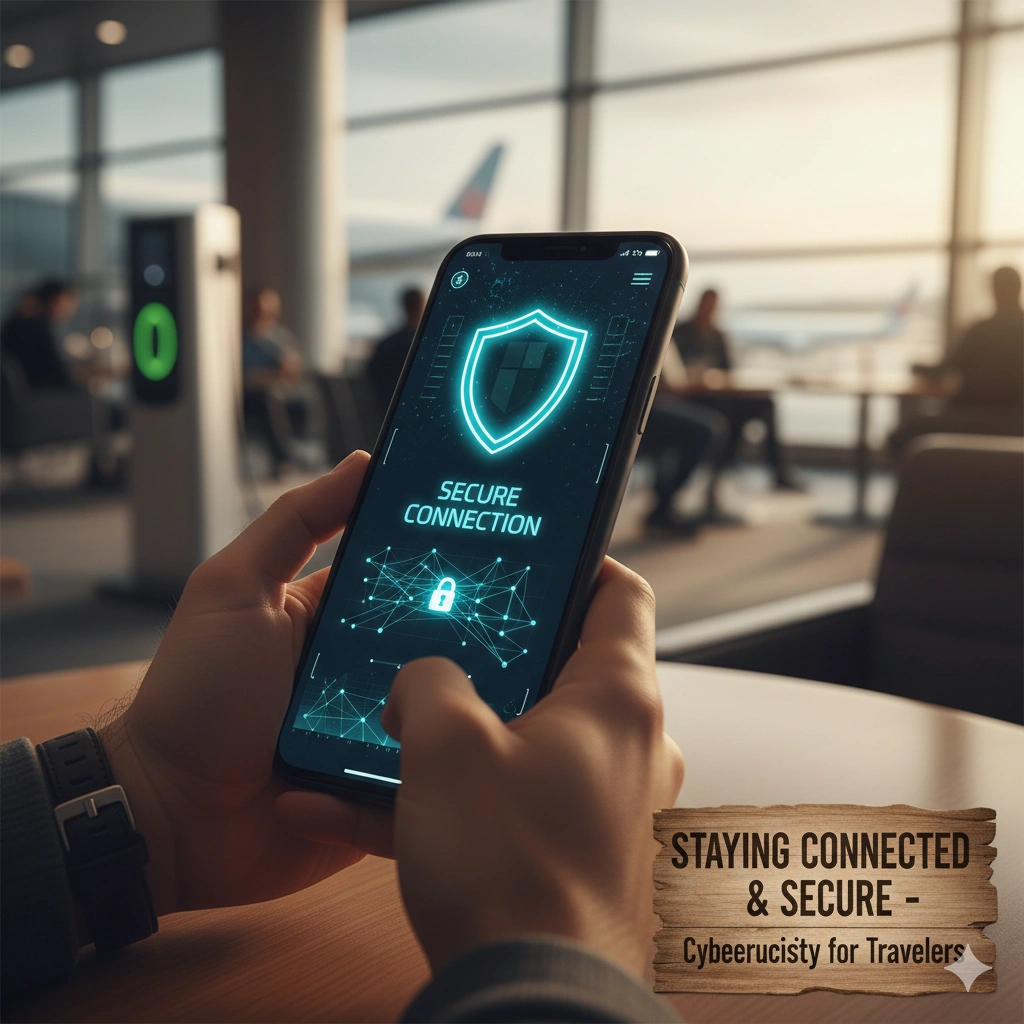

In an increasingly digital world, being connected while traveling is a necessity, not a luxury. From navigating with maps to sharing memories and managing bookings, a reliable internet connection is crucial. However, this convenience comes with risks. “Staying Connected (and Secure)” means protecting your personal data and devices from the unique threats of public networks and unfamiliar territories.
The Double-Edged Sword of Public Wi-Fi
Free public Wi-Fi in airports, cafes, and hotels is incredibly convenient, but it’s also a hotspot for cyber threats. These networks are often unsecured, making your data vulnerable to eavesdropping and theft.
Three Smart Strategies for Connectivity & Security:
- Embrace the eSIM & Local SIM Card:
- Ditch expensive international roaming. For short trips, an eSIM (embedded SIM) allows you to instantly purchase data plans for almost any country directly from your phone. For longer stays, a local physical SIM card is often the most cost-effective and reliable option. Both provide a secure, private connection that’s safer than public Wi-Fi.
- Your VPN is Your Digital Shield:
- A Virtual Private Network (VPN) encrypts your internet connection, creating a secure tunnel for your data. This is non-negotiable when using public Wi-Fi. A VPN makes it significantly harder for hackers to intercept your passwords, banking details, and personal information. Make sure it’s always on when you’re outside a trusted network.
- Digital Hygiene for Your Devices:
- Two-Factor Authentication (2FA): Enable 2FA on all your critical accounts (email, banking, social media) to add an extra layer of security.
- Device Passcodes: Always use strong passcodes/biometrics on your phone, laptop, and tablet.
- Backup Everything: Before you leave, back up your photos, documents, and important files to a cloud service. If a device is lost or stolen, your memories and data are safe.
- Avoid Public Charging Stations: “Juice jacking” is real. Malicious actors can load malware onto public USB charging stations. Carry your own power bank or only use your own charger with a wall outlet.
Travel Smarter, Not Just Harder
By taking these proactive steps, you can enjoy the benefits of global connectivity without exposing yourself to unnecessary risks. Your digital safety is just as important as your physical safety on any adventure.
What’s Coming Next…
In our next installment, we’ll explore “Smart Packing: Gadgets & Gizmos,” focusing on innovative tech accessories that make travel lighter, safer, and more enjoyable.