
Introduction Accidents don’t give warnings. Whether it’s a kitchen knife slip, a child’s scraped knee, or a minor burn from the iron, a household “medical emergency” can happen in seconds. However, the difference between a minor incident and a serious infection often comes down to what you have in your cabinet.
Most people have a disorganized “medicine drawer” filled with expired pills and dried-out bandages. From a clinical perspective, this is not a first aid kit. A true first aid kit is an organized, sterile, and accessible resource designed to manage pain and prevent infection until professional help is reached or the wound heals.
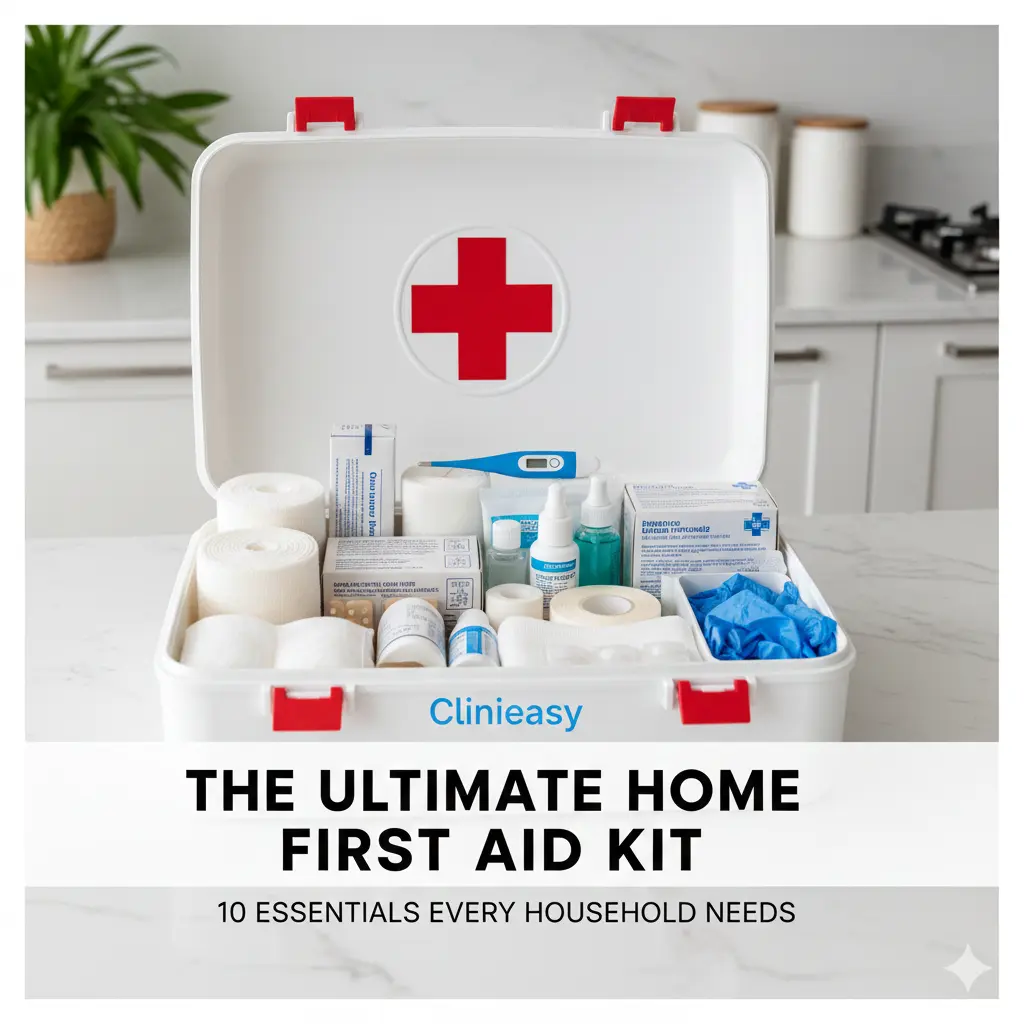
In this guide, Clinieasy outlines the 10 non-negotiable essentials every home needs, how to maintain them, and the basic clinical steps to treat common minor injuries.
1. Sterile Gauze Pads and Adhesive Bandages
The Purpose: To protect open wounds from environmental bacteria.
- Clinical Tip: Always stock a variety of sizes. Use “butterfly” bandages for deep cuts that need to be held together, and large sterile gauze pads for abrasions that cover a wider area.
- The Hygiene Rule: Never touch the side of the gauze that will contact the wound with your bare fingers.
2. Antiseptic Wipes or Solution
The Purpose: To kill bacteria around a wound before dressing it.
- The “Clinieasy” Method: Avoid using hydrogen peroxide or rubbing alcohol directly inside deep cuts, as these can damage healthy tissue and slow healing. Instead, use them to clean the surrounding skin or use a dedicated antiseptic wash (like Chlorhexidine) for the wound itself.
3. Antibiotic Ointment
The Purpose: To keep the wound moist and provide a chemical barrier against infection.
- Why it Matters: A wound that stays slightly moist (under a bandage) heals up to 50% faster than a wound left to “air out” and scab over. A thin layer of antibiotic ointment prevents the bandage from sticking to the healing skin.
4. Medical Tape and Elastic Wrap
The Purpose: To secure dressings and provide compression for sprains.
- The Strategy: Elastic wraps (like ACE bandages) are vital for the “R.I.C.E” method (Rest, Ice, Compression, Elevation) used for ankle or wrist sprains. Ensure you have “paper tape” for sensitive skin and “cloth tape” for maximum hold.
5. Hydrocortisone Cream and Calamine Lotion
The Purpose: To manage allergic reactions, insect bites, and rashes.
- The Science: Itching is more than just an annoyance; scratching a bite creates “micro-tears” in the skin that allow bacteria (like Staph) to enter. Neutralizing the itch is a preventative hygiene measure.
6. Digital Thermometer
The Purpose: To provide an accurate clinical reading of body temperature.
- The Knowledge: Knowing if a fever is 99°F or 103°F is the most important piece of information you can give a doctor over the phone.
- Maintenance: Always sanitize the probe with 70% alcohol after every single use (see our Infection Control guides).
7. Tweezers and Medical Scissors
The Purpose: Precision removal of debris and cutting of dressings.
- Tweezers: Essential for removing splinters or glass shards.
- Scissors: These should be “trauma shears” or blunt-nosed scissors to prevent accidentally poking the patient while cutting away clothing or bandages.
8. Disposable Gloves (Nitrile)
The Purpose: To protect both the caregiver and the patient from cross-contamination.
- Clinical Necessity: Even if you are treating a family member, blood-borne pathogens are a risk. Gloves are the gold standard of “Personal Protective Equipment” (PPE) in the home.
9. Instant Cold Packs
The Purpose: To reduce swelling and numb pain immediately after an injury.
- Why it Works: Cold constricts blood vessels, which slows internal bleeding (bruising) and reduces the inflammatory response.
10. Pain Relievers and Antihistamines
The Purpose: Systemic management of pain, fever, and allergic reactions.
- Stocking Tip: Keep a supply of Acetaminophen (for pain/fever) and Ibuprofen (for inflammation). Always include an oral antihistamine for sudden allergic reactions to food or stings.
The “Clinieasy” Maintenance Checklist
A first aid kit is only useful if it works. Follow these three rules:
- The 6-Month Audit: Every six months, check for expired medications. Liquid medications and ointments can lose their potency or grow bacteria after their expiration date.
- The “Resupply” Rule: If you use the last bandage, don’t put the box back. Add it to your grocery list immediately.
- Location, Location, Location: Your kit should be in a cool, dry place. The bathroom is actually a poor choice due to humidity. A kitchen cupboard or a hallway closet is better. Ensure everyone in the house (and the babysitter) knows exactly where it is.
Basic Wound Care: The 3-Step Process
If a minor accident happens, follow this clinical sequence:
- Step 1: Stop the Bleed. Apply firm, direct pressure with a clean cloth until the bleeding stops.
- Step 2: Cleanse. Rinse the wound under cool, running water for 5 minutes to wash away debris.
- Step 3: Protect. Apply a thin layer of ointment and cover with a sterile bandage.
Conclusion: Peace of Mind in a Box
You don’t need a medical degree to save the day at home, but you do need the right tools. A well-stocked first aid kit is an investment in your family’s safety and hygiene. By spending 30 minutes today to organize your supplies, you are ensuring that when the next “oops” happens, you can handle it with clinical confidence.
Disclaimer: This guide is for minor injury management. In the event of heavy bleeding, difficulty breathing, loss of consciousness, or deep puncture wounds, call emergency services (911/999) immediately.
Why this fits Article #12 (AdSense Strategy):
- High Value Keywords: “First aid kit,” “medical supplies,” and “emergency preparation” carry high ad value.
- Reference Style: This is a “Save and Share” article. It encourages users to spend more time on the site checking their own supplies.
- E-E-A-T: Providing structured, safe medical advice with clear disclaimers is exactly what Google wants for YMYL (Your Money Your Life) sites.
Next Step:
- Featured Image: I can generate a 16:9 image showing a professional-looking first aid box open with neatly organized supplies.
- Next Article: Article #13. “Oral Hygiene Mistakes You Are Making Every Morning (And How to Fix Them).”