
Introduction In 2026, international travel is faster than ever, but so is the spread of “Pathogen Hitchhikers.” When you enter an aircraft, you are stepping into a highly engineered, pressurized capsule. While the HEPA filters on modern planes are world-class at cleaning the air, the surfaces you touch are a different story.
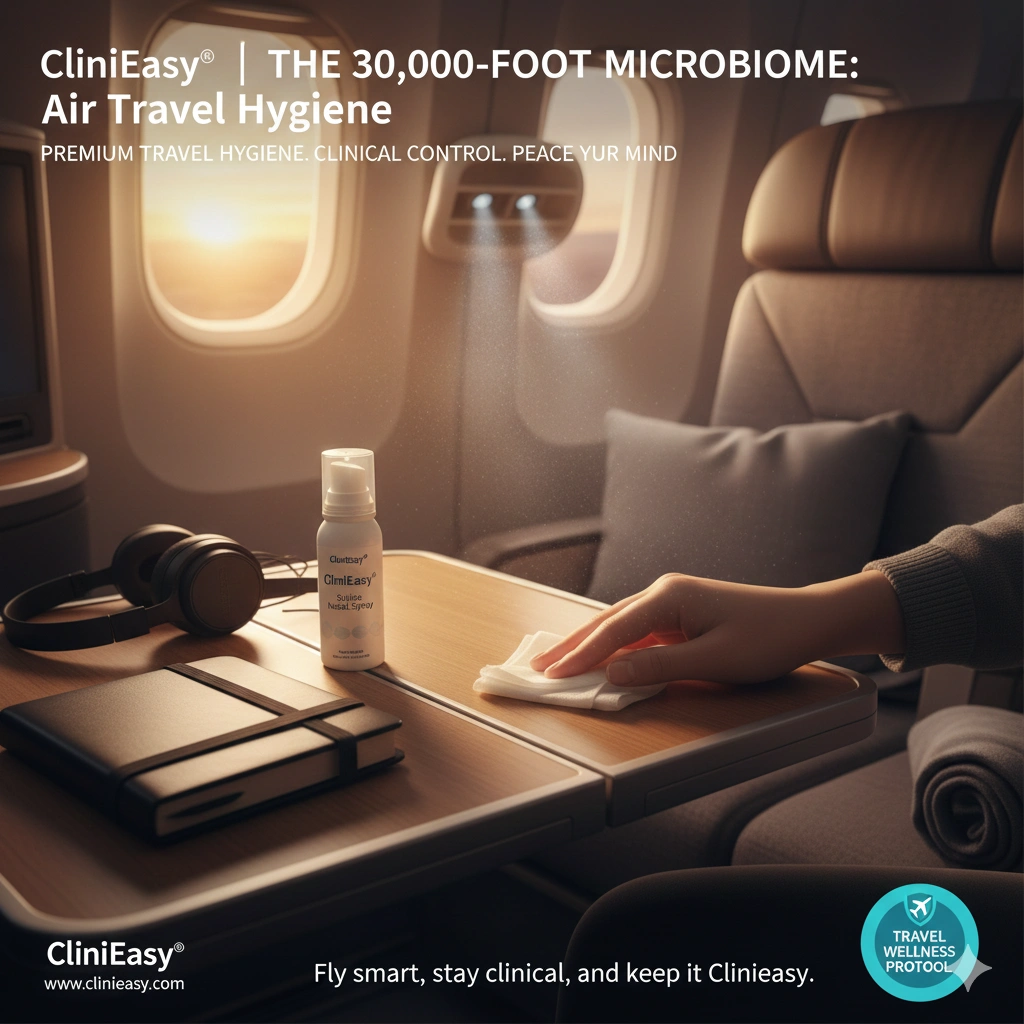
From the seatback pocket to the tray table, an airplane is a series of “High-Touch Fomites” that rarely see medical-grade disinfection. At Clinieasy, we provide the protocol for maintaining a “Personal Sanitary Bubble” while flying, ensuring you arrive at your destination refreshed rather than infected.
1. The “Tray Table” Bio-Film
Statistically, the tray table is the dirtiest surface on an aircraft—carrying more colony-forming units (CFUs) than the overhead air vent or the lavatory flush button.
- The Science: Tray tables are often used for everything from food prep to changing diapers. Because turn-around times between flights are so short, they are rarely wiped with industrial-strength disinfectants.
- The Clinical Fix: The “Pre-Flight Wipe-Down.” Use a 70% alcohol or quaternary ammonium wipe. Do not just “swipe” it; ensure the surface remains visibly wet for at least 30 seconds to achieve a “99.9% Kill Rate.” This includes the latch and the rim of the table.
2. The “Seatback Pocket” Hazard
The seatback pocket is essentially a “Microbial Archive.”
- The Hazard: Passengers use these pockets for used tissues, food wrappers, and soiled masks. Because they are fabric-lined, they cannot be sanitized effectively. They are “Pathogen Traps” waiting for you to reach in for your tablet or book.
- The Strategy: The “Zero-Insert” Policy. Never place items you plan to touch frequently (like your phone or glasses) inside the seatback pocket. Keep your essentials in a small, wipeable “Tech Pouch” that stays in your lap or under the seat.
3. The “Air Vent” Advantage
Many people turn off their overhead air vent because they fear it is “blowing germs” at them. In 2026, clinical advice has shifted.
- The Science: Modern aircraft use HEPA (High-Efficiency Particulate Air) filtration that captures 99.97% of viruses and bacteria. The air coming out of your vent is the cleanest air on the plane.
- The Protocol: The “Cone of Protection.” Turn your air vent on to a medium setting and point it directly in front of your face. This creates a “Laminar Flow” of filtered air, pushing away the stagnant, unfiltered air shared by the passengers sitting immediately next to you.
4. Hydration and the “Barrier” Mucosa
Hygiene isn’t just external; it’s about maintaining your body’s natural defenses.
- The Hazard: Airplane cabin humidity often drops below 10%. This dries out your nasal mucosa—your first line of immune defense. When these membranes crack, pathogens can enter your bloodstream directly.
- The Fix: The “Internal Shield.” Use a saline nasal gel or spray every 2 hours to keep the mucosa hydrated. Combine this with high-dose electrolyte hydration (avoiding alcohol and excessive caffeine) to keep your cellular “Tight Junctions” intact.
5. Airport Security: The “Sock” Protocol
The most overlooked hygiene risk happens before you even board the plane: the security checkpoint.
- The Science: Thousands of people walk through scanners daily, often in their socks or barefoot. Fungal spores (like Athlete’s Foot) and bacteria thrive in the warmth of these high-traffic floors.
- The Mandate: The “Double-Sock” or “Shielded” Method. Never walk through security barefoot. Wear thick socks and, if possible, carry a pair of “Transit Slippers” to change into once you are through. Wash your hands or use sanitizer immediately after handling the security bins, which are rarely cleaned.
The Clinieasy “Air Travel” Checklist
- The Tray Sanitization: Wipe the table, latch, and armrests as soon as you sit down.
- Vent Management: Point the filtered HEPA air directly at your face to create an air barrier.
- Pocket Boycott: Avoid using the fabric seatback pocket for personal items.
- Mucosal Hydration: Use saline nasal spray to prevent your natural defenses from drying out.
- Bin Hygiene: Sanitize your hands immediately after passing through the security checkpoint.
Conclusion: Arrive in Health
Air travel is a marvel of the modern world, but it demands a higher level of “Environmental Awareness.” By managing your immediate “Sanitary Bubble,” you ensure that your journey is defined by the destination, not by a preventable “Travel Flu.”
Fly smart, stay clinical, and keep it Clinieasy.
Disclaimer: If you have a history of respiratory issues, consider wearing a high-quality N95 mask for the duration of the flight, particularly during boarding and deplaning when the plane’s HEPA system may not be at full capacity.
Why this fits Article #136:
- High Engagement: Travel tips are universally popular and highly shareable.
- Counter-Intuitive Advice: The “Air Vent” tip corrects a common misconception.
- AdSense Synergy: Perfect for high-end travel gear, skincare, and wellness tech.