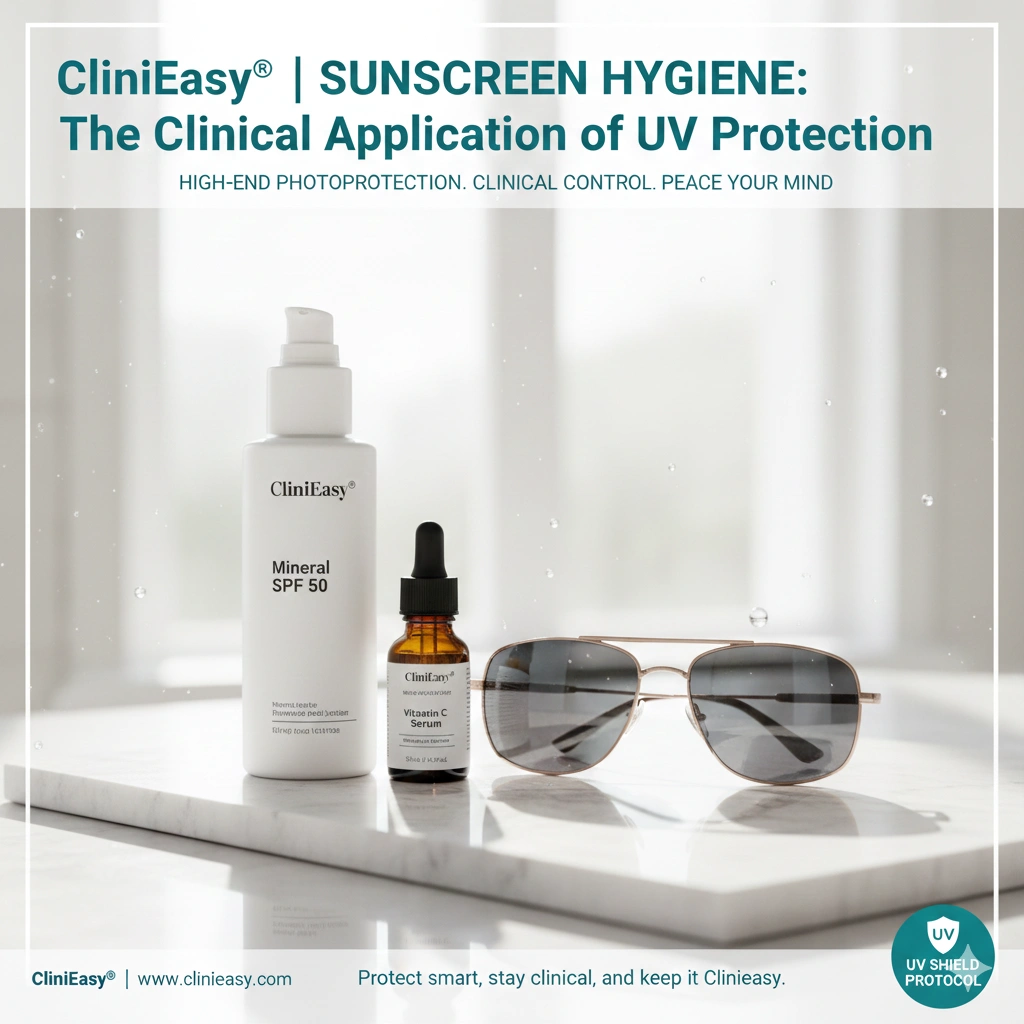

Introduction In 2026, we have moved beyond the “beach bag” mentality. We now understand that ultraviolet (UV) radiation is a constant environmental stressor that causes cumulative DNA damage. From a clinical perspective, sunscreen is a Topical Barrier, much like a sterile dressing. However, the efficacy of this barrier depends entirely on Hygiene Protocol.
Applying contaminated, expired, or improperly layered sunscreen can lead to a “False Sense of Security,” resulting in significant cellular damage. At Clinieasy, we provide the clinical standards for UV management.
1. The “Molecular Decay” of Expiration
Sunscreen is a complex chemical or physical suspension. It is not permanent.
- The Science: Chemical filters (like avobenzone) degrade over time, especially when exposed to heat. Even mineral filters (zinc oxide) can “clump” in the bottle, leading to uneven coverage where some areas of your skin receive SPF 50 while others receive zero.
- The Clinical Fix: The “Season Reset.” If your sunscreen spent last summer in a hot car or on a sandy towel, its molecular structure is compromised. In 2026, we recommend replacing open bottles every 6 months to ensure the active filters are still providing the rated protection.
2. The “Finger-to-Face” Contamination
Sunscreen bottles are high-touch objects often handled with sandy or sweaty hands.
- The Hazard: If you touch the nozzle with contaminated hands, you introduce bacteria into the moisture-rich environment of the lotion. This can lead to “Sunscreen Acne” (acne cosmetica) or even folliculitis.
- The Protocol: Use Touchless Application techniques. Dispense the sunscreen onto the back of a clean hand or a sanitized silicone applicator rather than touching the bottle’s opening directly. Always wash your hands before applying SPF to your face.
3. Mineral (Physical) vs. Chemical Hygiene
In 2026, the clinical preference has shifted toward Non-Nano Mineral Sunscreens.
- The Science: Chemical sunscreens work by absorbing UV and converting it to heat inside the skin. Mineral sunscreens sit on top of the skin and reflect UV.
- The Hygiene Edge: Mineral filters are more photostable (they don’t break down as quickly under light) and are less likely to cause the “allergic contact dermatitis” often associated with chemical filters. For sensitive or “Clinically Managed” skin, mineral is the gold standard.
4. The “Layering Logic”: Antioxidant Synergy
Sunscreen alone only blocks about 97–98% of UV rays. The remaining rays create Reactive Oxygen Species (ROS) in the skin.
- The Protocol: The Antioxidant Base-Layer. Apply a Vitamin C (L-ascorbic acid) serum before your sunscreen. This provides a “Secondary Chemical Defense” that neutralizes the free radicals that slip past your SPF barrier. This is the 2026 “Clinical Duo” for skin longevity.
5. The “Double-Cleanse” Removal
Sunscreen is designed to be “Persistent”—it is made to resist sweat and water.
- The Hazard: If not properly removed at night, SPF residues, combined with trapped sebum and pollutants, create a “Plug” in the pores. Standard water-based cleansers often fail to break down mineral waxes.
- The Strategy: The PM Decon. Use an oil-based cleanser or micellar water first to dissolve the SPF barrier, followed by a gentle pH-balanced wash. Hygiene isn’t complete until the barrier is fully removed, allowing the skin to breathe and repair overnight.
The Clinieasy “UV Shield” Checklist
- The 6-Month Rule: Toss any sunscreen that has been opened for more than half a year or exposed to high heat.
- Antioxidant Foundation: Always layer Vitamin C under your SPF for maximum DNA protection.
- Nozzle Purity: Avoid touching the dispenser tip to prevent bacterial inoculation.
- Mineral Priority: Opt for Zinc Oxide or Titanium Dioxide for more stable, non-reactive protection.
- Oil-Based Removal: Use a double-cleanse protocol to ensure no chemical residue remains overnight.
Conclusion: Defense as a Discipline
Sun protection is the ultimate act of preventative hygiene. By treating your sunscreen application as a clinical procedure—ensuring product purity, proper layering, and total removal—you are protecting your body’s largest organ from the most persistent environmental pathogen: radiation.
Protect smart, stay clinical, and keep it Clinieasy.
Disclaimer: No sunscreen provides 100% protection. Clinical hygiene also includes “Mechanical Protection” such as UPF 50+ clothing and seeking shade during peak UV hours (10 AM – 4 PM).
Why this fits Article #134:
- E-E-A-T: Explains the difference between ROS and molecular decay.
- Modern Trend: Highlights the “Vitamin C + SPF” synergy.
- AdSense Synergy: Perfect for high-end skincare, serums, and UV-protective ge