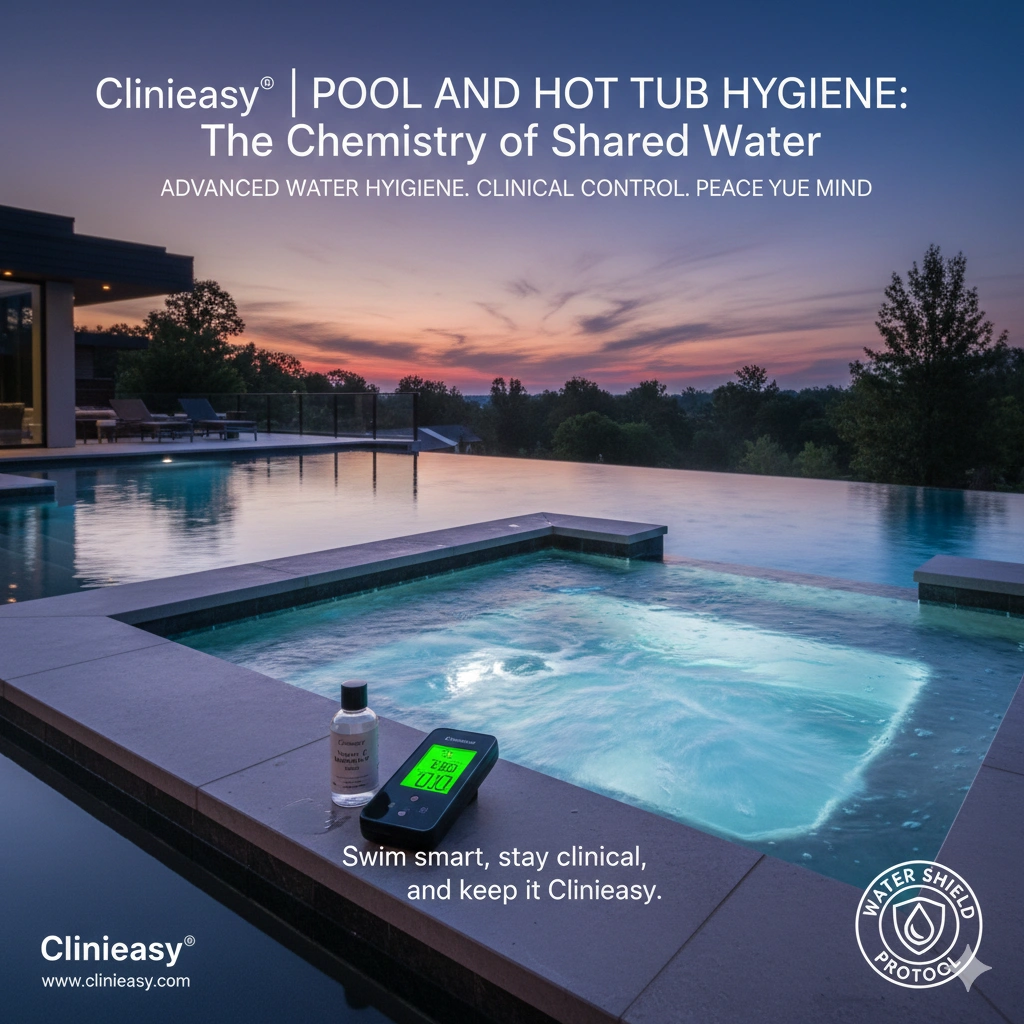

In 2026, we no longer view a swimming pool as just a place for leisure; we view it as a “shared chemical bath.” While the visual of crystal-blue water suggests purity, from a clinical perspective, recreational water is a dynamic environment where “Organic Loading” (sweat, skin cells, and oils) constantly battles with chemical sanitizers.
If the chemistry is unbalanced, you aren’t just swimming—you are exposing your skin, eyes, and lungs to Recreational Water Illnesses (RWIs). At Clinieasy, we provide the protocol for navigating shared water safely, focusing on “Microbial Clearance” and chemical balance.
1. The “Chlorine Smell” Fallacy
A common misconception is that a strong “bleach” smell indicates a clean pool. In 2026, we know the opposite is true.
- The Science: That distinct smell is caused by Chloramines. These form when chlorine reacts with organic contaminants (sweat, oil, and urea). A “smelly” pool means the chlorine has been “used up” and is no longer effectively killing pathogens.
- The Clinical Fix: A healthy, well-sanitized pool should have no detectable odor. If you smell “chlorine,” the pool actually needs more sanitizer or a “shock” treatment to break down the chloramines.
2. The “Cryptosporidium” Resilience
Even a well-maintained pool has a weakness: the “Crypto” parasite.
- The Hazard: Cryptosporidium is a parasite with an outer shell that makes it highly resistant to chlorine. It can survive in a properly chlorinated pool for up to 7 days. This is the leading cause of waterborne gastrointestinal illness.
- The Strategy: The 60-Second Pre-Rinse. Most “Crypto” and other pathogens are introduced to the water from the skin of the swimmers. Shifting the “Organic Load” by showering for just 60 seconds before entering the water reduces the introduction of contaminants by up to 80%.
3. Hot Tub Lung: The Aerosol Hazard
Hot tubs present a unique risk because of their temperature and the creation of steam.
- The Science: The warm, agitated water ($38°C–40°C$) is the perfect breeding ground for Mycobacterium avium. When the jets are turned on, these bacteria become aerosolized in the steam. Inhaling this “Pathogen Mist” can lead to “Hot Tub Lung”—a form of hypersensitivity pneumonitis.
- The Protocol: Ensure the hot tub has a continuous filtration and ozone/UV-C system. Never enter a hot tub where the water appears “cloudy” or “foamy,” as this indicates a total failure of the sanitization system.
4. The “Biofilm” in the Pipes
The most dangerous part of a pool or spa isn’t the water you see, but the pipes you don’t.
- The Hazard: Over time, bacteria create a Biofilm—a slimy, protective layer—on the inside of the plumbing. This biofilm shields them from chlorine and bromine.
- The Fix: The Quarterly Purge. Use a “Pipe Purge” chemical treatment every 3 months to strip internal biofilms. Additionally, clean your filters every 30 days using a dedicated “Filter Soak” solution; simply rinsing them with a hose is insufficient to remove the lipid-based buildup.
5. Post-Swim: The “Chemical Strip”
Hygiene doesn’t end when you leave the water.
- The Science: Residual chlorine and bromine remain on your skin and hair, continuing to strip away your “Acid Mantle” and natural oils. This can lead to “Pool Rash” (irritant dermatitis).
- The Protocol: Shower immediately after exiting. Use a Vitamin C-based rinse or a specialized “Swimmer’s Wash.” Vitamin C (ascorbic acid) instantly neutralizes chlorine on the skin, preventing prolonged chemical exposure and preserving your skin’s microbial balance.
The Clinieasy “Water Shield” Checklist
- The Nose Test: If you smell “chlorine,” the water is chemically overloaded with waste—do not enter.
- The 60-Second Shower: Rinse off the “Organic Load” before you jump in.
- Jet Safety: Ensure high-heat spas have visible ozone or UV-C secondary sanitation.
- The Pipe Purge: Clean the internal plumbing of home spas every 90 days.
- Neutralize the Skin: Use a Vitamin C rinse after swimming to stop chemical irritation.
Conclusion: Clarity Beyond the Surface
Recreational water is a luxury that requires clinical oversight. By understanding the chemistry of sanitization and the importance of pre-and-post-swim protocols, you turn a potential “Pathogen Bath” back into a healthy, restorative environment.
Swim smart, stay clinical, and keep it Clinieasy.
Disclaimer: If you develop an earache, a persistent cough, or a red, bumpy rash after using a public pool, consult a healthcare provider. These are common signs of RWI infections like “Swimmer’s Ear” or “Hot Tub Folliculitis.”
Why this fits Article #132:
- Unique Insight: The “Vitamin C rinse” tip is a high-value, pro-level hygiene secret.
- Safety First: Addresses “Hot Tub Lung,” a serious but often ignored condition.
- AdSense Synergy: Perfect for pool tech, water testing kits, and specialized skincare.