
We are often told to “eat more greens,” but from a clinical perspective, the produce aisle is a high-risk landscape. Unlike a steak, which is seared at high temperatures, a salad is a “Raw Biological System.” In 2026, the risk isn’t just dirt; it’s a combination of Agricultural Pathogens (Listeria, Salmonella), Persistent Pesticides, and the “Hand-to-Shelf” Transfer from other shoppers.
At Clinieasy, we treat produce not as “pre-cleaned,” but as “raw material” that requires a specific decontamination protocol.
1. The “Organic” Misconception
Many consumers believe that “Organic” means “Clean.”
- The Science: While organic produce has lower synthetic pesticide residues, it often uses natural fertilizers (manure), which can increase the risk of fecal coliform bacteria. Organic produce requires more clinical hygiene attention, not less.
- The Protocol: Treat all produce—whether organic, non-GMO, or conventional—with the same rigorous washing standard.
2. The “Friction and Flow” Method
In 2026, the clinical consensus has shifted away from “soaking” in still water.
- The Hazard: Soaking produce in a bowl of water can actually cause Cross-Contamination. If one leaf of spinach has E. coli, soaking it in a bowl simply bathes the entire batch in contaminated water.
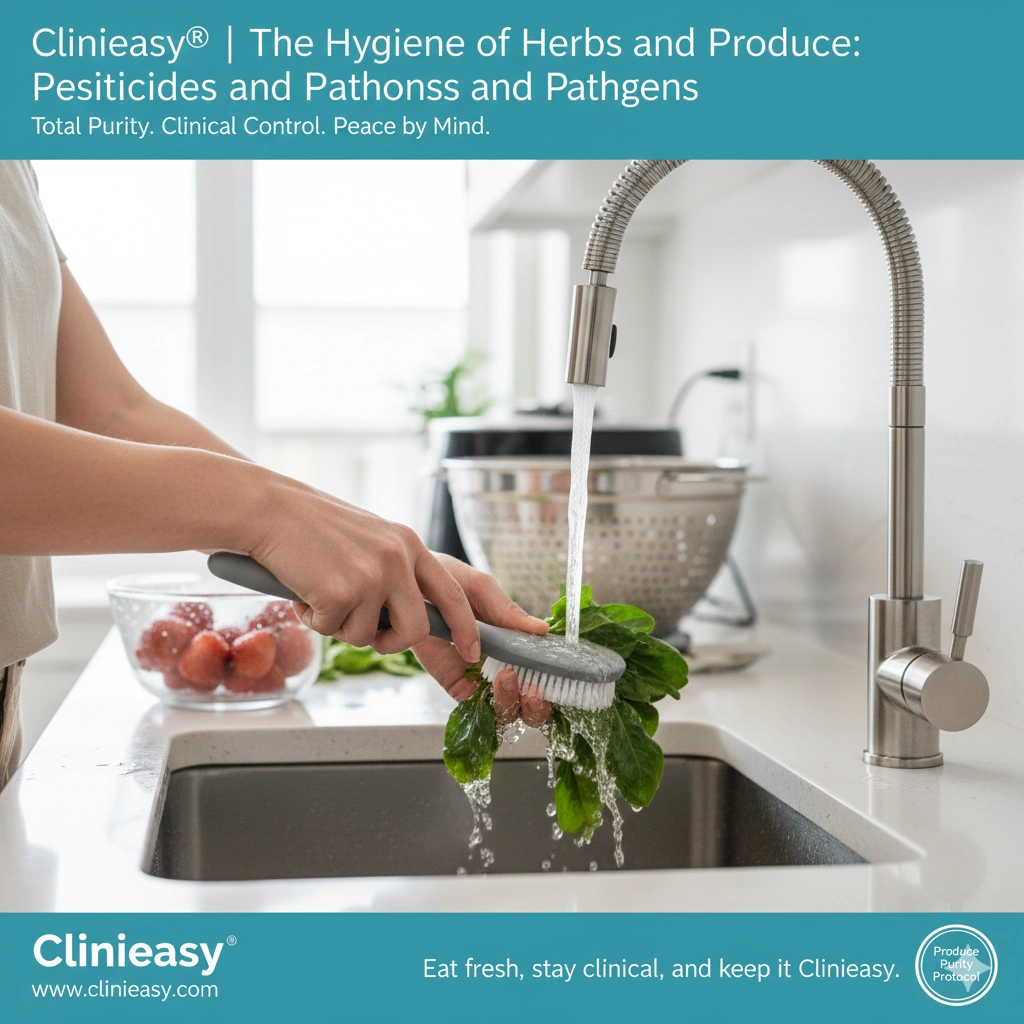
- The Clinical Fix: Use Mechanical Friction under cold, running water. For hard-skinned items (apples, cucumbers, potatoes), use a dedicated produce brush. For delicate items (berries, leafy greens), use a high-pressure spray. The physical force of the water is what dislodges 99% of surface pathogens.
3. The “Vinegar vs. Baking Soda” Debate
What should you add to your water?
- The Science: * Vinegar (Acetic Acid): Excellent for killing certain bacteria and removing “waxy” coatings.
- Baking Soda (Sodium Bicarbonate): Recent studies show that a 1% baking soda solution is the most effective DIY method for neutralizing common pesticides like thiabendazole and phosmet.
- The Strategy: Use a 10-minute soak in a baking soda solution for “The Dirty Dozen” (items with high pesticide loads like strawberries and spinach), followed by a rigorous 30-second rinse under running water to remove the residue.
4. Leafy Greens: The “Salad Spinner” Shield
Leafy greens are the most frequent cause of food poisoning outbreaks.
- The Protocol: * Discard the Outer Layers: The outer leaves of cabbage or lettuce have the highest environmental exposure.
- The Triple Rinse: Wash, spin, and wash again.
- The Spinner Hygiene: A salad spinner is a “Microbial Trap.” If you don’t sanitize the spinner itself with hot soapy water after every use, the centrifuge action will simply coat your next salad in the bacteria from the last one.
5. Ultrasonic and Ozone Technology
In 2026, Ultrasonic Produce Cleaners have become a staple in the “Clinical Kitchen.”
- The Technology: These devices use high-frequency sound waves to create “cavitation bubbles.” These bubbles implode on the surface of the fruit, reaching into the microscopic “pores” of the skin where brushes cannot reach.
- The Recommendation: If you consume a high volume of raw, skin-on produce, an ultrasonic cleaner is a worthy clinical investment to reduce pesticide exposure to near-zero.
The Clinieasy “Produce Purity” Checklist
- Brush the Skin: Use a dedicated brush for all firm-skinned fruits and vegetables.
- Running Water Only: Avoid the “communal bowl” soak; use constant flow to flush pathogens.
- Baking Soda Soak: Use a 1% solution for 10 minutes to neutralize pesticides.
- Sanitize the Spinner: Treat your salad spinner as a high-risk tool and wash it with $45°C+$ water.
- Dry Before Storage: Excess moisture leads to rapid mold growth. Use a clean paper towel to dry produce before placing it in the fridge.
Conclusion: Nature, Refined
Fresh produce is a gift to your health, but only if it arrives at your plate without “uninvited guests.” By applying a clinical washing protocol, you remove the chemical and biological barriers between you and your nutrition.
Eat fresh, stay clinical, and keep it Clinieasy.
Disclaimer: “Pre-washed” or “Triple-washed” bagged salads are still subject to contamination during the packaging process. For the highest safety standard, Clinieasy recommends a final rinse at home before consumption.
Why this fits Article #114:
- High-Value Education: Breaks down the science of Baking Soda vs. Vinegar.
- E-E-A-T: Discusses “Cavitation Bubbles” and “Pesticide Neutralization.”
- AdSense Synergy: Perfect for kitchen gadgets, organic brands, and wellness tech.