
Introduction Hydration is the cornerstone of metabolic health. However, in 2026, we have identified a quiet “Secondary Contamination” crisis. We invest in high-end filtration systems only to pour that water into “Biofilm-Laden” reusable bottles. From a clinical perspective, a water bottle that hasn’t been washed for 48 hours can harbor more bacteria than a pet’s food bowl.
The culprit is Biofilm—a slimy, protective matrix that bacteria build to shield themselves from simple rinsing. At Clinieasy, we treat water hygiene not as a “filter” issue, but as a Systemic Decontamination Protocol.
1. The “Biofilm” Anatomy
If the inside of your water bottle feels “slick” to the touch, you are feeling a mature bacterial colony.
- The Science: Bacteria from your mouth (including Staph and Streptococcus) enter the bottle every time you take a sip. These microbes cling to the walls and secrete “Extracellular Polymeric Substances” (EPS) to create a shield.
- The Clinical Fix: Rinsing is not enough. You need Mechanical Friction. Use a long-handled bottle brush and an alkaline dish soap to physically break the EPS shield. If you use a reusable straw or a “bite-valve,” use a dedicated pipe-cleaner brush; these are the primary reservoirs for black mold.
2. The “Active” Bottle: UV-C Technology
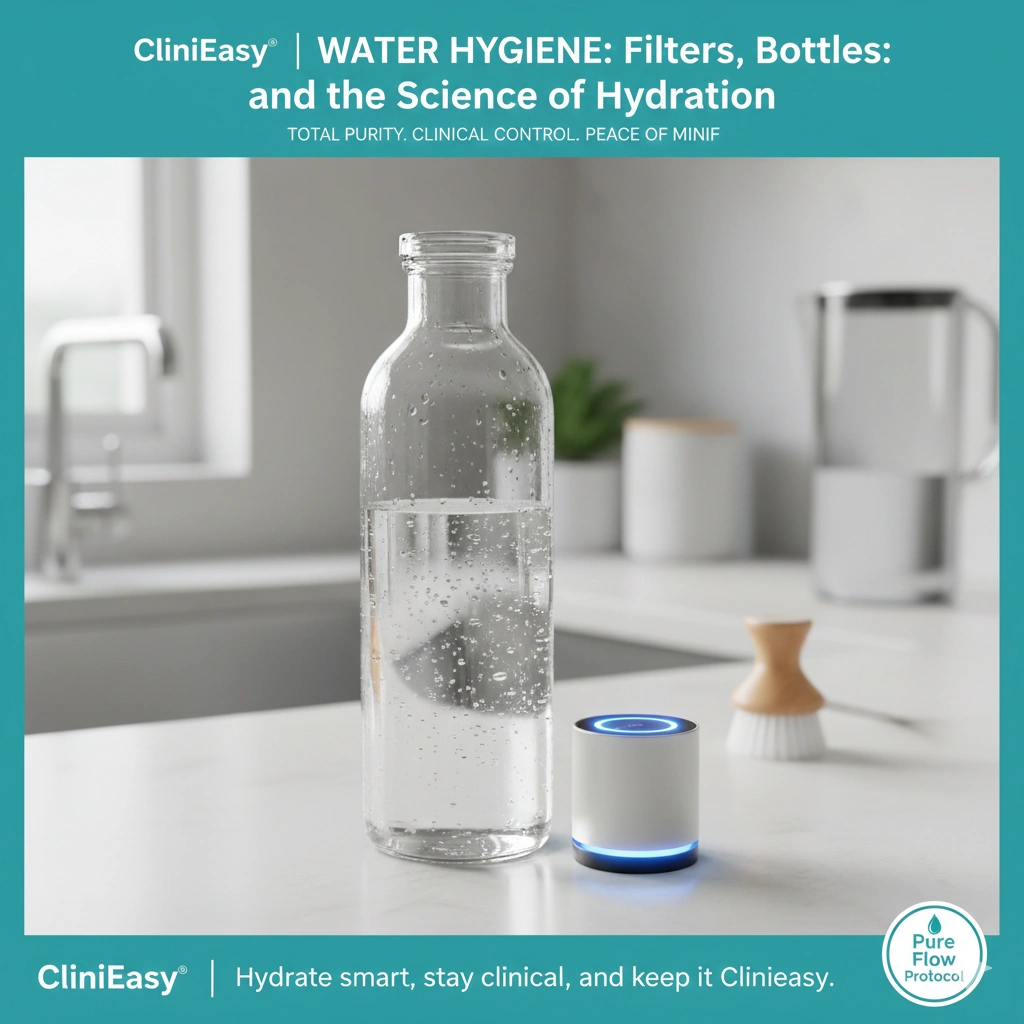
In 2026, the “Self-Cleaning” bottle has moved from a luxury to a clinical recommendation for travelers and commuters.
- The Technology: These bottles use UV-C LED lights integrated into the cap. These short-wave ultraviolet lights penetrate the DNA of bacteria and viruses, rendering them unable to replicate.
- The Protocol: While UV-C is highly effective at sanitizing the water, it cannot remove physical debris or dried saliva from the threads of the cap. You must still perform a physical wash once a week.
3. Filter Fatigue: The “Breeding Ground” Risk
Water filters (pitchers or under-sink units) are designed to trap contaminants. But if they aren’t changed, they become a source of contamination themselves.
- The Hazard: Carbon filters are porous and organic. Once the chlorine is removed from the water (which is what the filter is supposed to do), the “protection” is gone. If the filter sits damp in your fridge past its expiration date, it becomes an incubator for bacteria.
- The Fix: Never exceed the manufacturer’s “Gallon Limit.” In 2026, we recommend Smart Filters that lock the flow or change color when the filter is exhausted. If you haven’t used your filter pitcher for more than 3 days, discard the standing water and the filter—mold growth in saturated carbon is invisible but rapid.
4. Material Science: Glass vs. Plastic vs. Steel
Not all bottles are created equal in the eyes of a microbiologist.
- Plastic (BPA-Free): Even BPA-free plastics can develop “Micro-Scratches” over time. These scratches are deep enough to hide bacteria but too small for a brush to reach. Replace plastic bottles every 12 months.
- Stainless Steel: Non-porous and durable. However, ensure it is 316-Grade (Medical Grade) or 304-Grade to prevent metallic leaching into your water.
- Glass: The “Gold Standard” for hygiene. Glass is completely non-porous and can be “Heat-Sanitized” in a dishwasher without risk of chemical leaching.
5. The “Ice Cube” Variable
We often forget that ice is food.
- The Protocol: Ice trays and automatic ice makers are notorious for mold growth. Empty your ice bin once a month and wash the container. If you use a reusable ice tray, choose silicone and wash it in the dishwasher between every freeze cycle.
The Clinieasy “Pure Flow” Checklist
- Daily Friction: Use a bottle brush daily; do not rely on “rinsing.”
- Straw Decon: Clean bite-valves and straws with a dedicated pipe brush.
- Strict Filter Dates: Change carbon filters 1 week before they expire.
- The Glass Choice: Use glass bottles at home for the highest “Hygiene Floor.”
- Ice Bin Reset: Sanitize your freezer’s ice storage monthly.
Conclusion: Purity from Source to Sip
Hygiene is a chain. There is no point in drinking 9-step filtered water if the vessel you are using is contaminated with last week’s oral bacteria. By maintaining your equipment with clinical discipline, you ensure that every drop of water is the fuel your body deserves.
Hydrate smart, stay clinical, and keep it Clinieasy.
Disclaimer: If your water has a “musty” or “earthy” smell despite being filtered, it may indicate a mold issue within your plumbing or your filter housing. Consult a water quality professional if the smell persists after changing the filter.
Why this fits Article #113:
- Universal Topic: Almost everyone uses a reusable bottle or a filter.
- Scientific Depth: Explains “Biofilm” and “EPS,” which builds trust (E-E-A-T).
- AdSense Synergy: Perfect for “Water Tech,” “Hydration Products,” and “Wellness Accessories.”