
Introduction Bringing a new life into the home is a moment of profound joy, but it also marks the start of a delicate biological balancing act. An infant’s immune system is “naive”—it is learning to distinguish between friend and foe. In 2026, we have moved past the old advice of “scrubbing everything with bleach,” which we now know can increase the risk of childhood asthma and allergies.
Instead, the modern clinical nursery focuses on “Selective Bio-Management.” We want to protect babies from virulent pathogens while allowing them to interact with a healthy “Indoor Microbiome.” At Clinieasy, we provide the pediatric-grade protocol for the first year of life.
1. The “Non-Toxic” Sanitization Standard
Infants explore their world through their mouths. This means that any chemical used to clean a nursery will inevitably be ingested.
- The Science: Conventional disinfectants often contain VOCs (Volatile Organic Compounds) and phthalates that can irritate an infant’s developing respiratory tract.
- The Clinical Fix: Use HOCl (Hypochlorous Acid). As mentioned in our “Future of Hygiene” report, HOCl is a medical-grade disinfectant that is naturally produced by human white blood cells. It is 100 times more effective than bleach but as safe as saline. Use it on crib rails, changing tables, and toys.
2. Diaper Station: The “Zero-Aerosol” Zone
The changing table is the most biologically active area of the nursery.
- The Hazard: “Aerosolized Fecal Matter” can settle on nearby surfaces (and the baby’s face) during a diaper change.
- The Protocol: * The Barrier: Use a disposable or wipeable waterproof liner for every change.
- The Sanitizer: Keep a pump of alcohol-free, pediatric-approved hand sanitizer within reach for yourself, but never use it on the baby’s skin.
- The Disposal: Use a “Dual-Seal” diaper pail that prevents air exchange when opened.
3. Nursery Air Quality: The “Breathable Shield”
Babies breathe faster than adults, meaning they take in more air pollutants relative to their body weight.
- The Science: Dust, pet dander, and mold spores are significant triggers for early-onset respiratory issues.
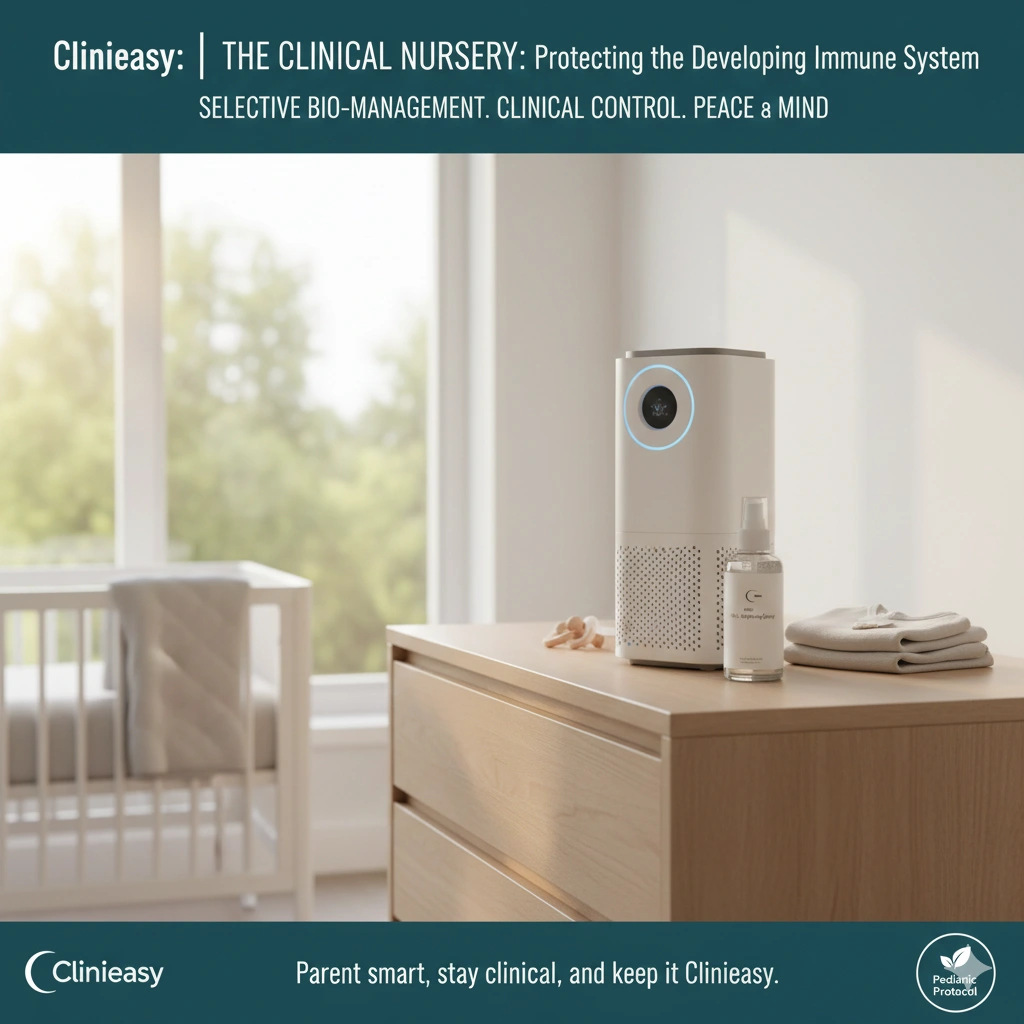
- The Strategy: Install a HEPA-13 grade air purifier in the nursery. Ensure it has a “Silent Mode” to protect the baby’s sleep cycles. Maintain humidity between 40% and 55%; too dry, and the baby’s nasal passages crack; too wet, and you invite dust mites and mold.
4. High-Touch Gear: Strollers and Car Seats
We often sanitize the nursery but forget the “Mobile Nursery”—the car seat and stroller.
- The Hazard: These items travel through public spaces (malls, parks, transit) and collect urban grime, which then sits in your home.
- The Fix: Treat the stroller wheels as “Outdoor Shoes.” Clean them with a disinfectant wipe before bringing the stroller inside. For the fabric of the car seat, use a steam cleaner once a month. Steam kills 99.9% of bacteria and dust mites without leaving chemical residues in the fabric fibers.
5. The “Microbiome Boost”: Safe Exposure
Clinical hygiene is not about living in a bubble.
- The Strategy: While we sanitize “High-Risk” areas (changing tables, kitchen floors), allow the baby to have supervised “Floor Time” on a clean, vacuumed rug. If you have a family dog, moderate interaction (with clean paws!) can actually help “train” the baby’s immune system to be less reactive to allergens later in life.
The Clinieasy “Nursery Shield” Checklist
- Switch to HOCl: Use Hypochlorous Acid for all toy and crib sanitization.
- HEPA Filtration: Keep a dedicated air purifier in the nursery 24/7.
- Steam Over Chemicals: Use steam to deep-clean car seats and stroller fabrics.
- Humidity Control: Use a hygrometer to keep the nursery air at 40-55%.
- Clean Entry: Sanitize stroller wheels before they enter the living space.
Conclusion: Foundations of Health
Hygiene in the nursery is about creating a foundation. By reducing the “Chemical Load” and managing the “Biological Load,” you give your child the best possible environment to grow, sleep, and thrive. You are not just cleaning a room; you are protecting a future.
Parent smart, stay clinical, and keep it Clinieasy.
Disclaimer: Always consult with your pediatrician before introducing new cleaning products or air treatments into a newborn’s environment. If your baby shows signs of a persistent cough or skin rash, seek medical advice immediately.
Why this fits Article #101:
- High Emotional Value: Parents prioritize their children’s health above all else.
- Scientific Authority: Introduces HOCl and HEPA-13 standards.
- AdSense Synergy: Connects perfectly to high-margin baby and nursery products.