
Introduction The public restroom is often viewed as the “final frontier” of personal hygiene. From airport terminals to highway rest stops, these high-traffic environments are clinical hotspots for fecal-oral and respiratory transmission. However, in 2025, many public restrooms have been redesigned with “Touchless Architecture.”
While the “ick factor” is high, the actual risk can be managed with a few key clinical observations. At Clinieasy, we strip away the myths and provide a tactical protocol for navigating the public restroom without compromising your “Bio-Shield.”
1. The “Toilet Plume” Paradox
The most significant hygiene event in a restroom occurs when a lidless toilet is flushed.
- The Science: A high-pressure commercial flush creates a “Toilet Plume”—an aerosolized mist of microscopic water droplets, bacteria (like E. coli), and viruses. These particles can remain suspended in the air for up to 20 minutes and settle on every surface within the stall.
- The Clinical Fix: If there is a lid, close it before flushing. If there isn’t (common in public stalls), turn your back and exit the stall immediately after pressing the flush button. Do not linger to adjust clothing or check your phone while the plume is at its peak concentration.
2. The Great Debate: Paper Towels vs. Air Dryers
In 2025, the debate over hand drying has been settled by clinical microbiology.
- The Science: High-velocity air dryers—especially the “trough” style where you dip your hands in—act as “Microbial Blasters.” They suck in the restroom air (laden with the aforementioned toilet plume) and blast it onto your clean, damp hands. Furthermore, they can aerosolize any bacteria left on your skin.
- The Strategy: Always choose Paper Towels. The mechanical friction of the paper removes significantly more bacteria than air drying alone. If only an air dryer is available, it is clinically safer to let your hands air-dry naturally or use a personal tissue.
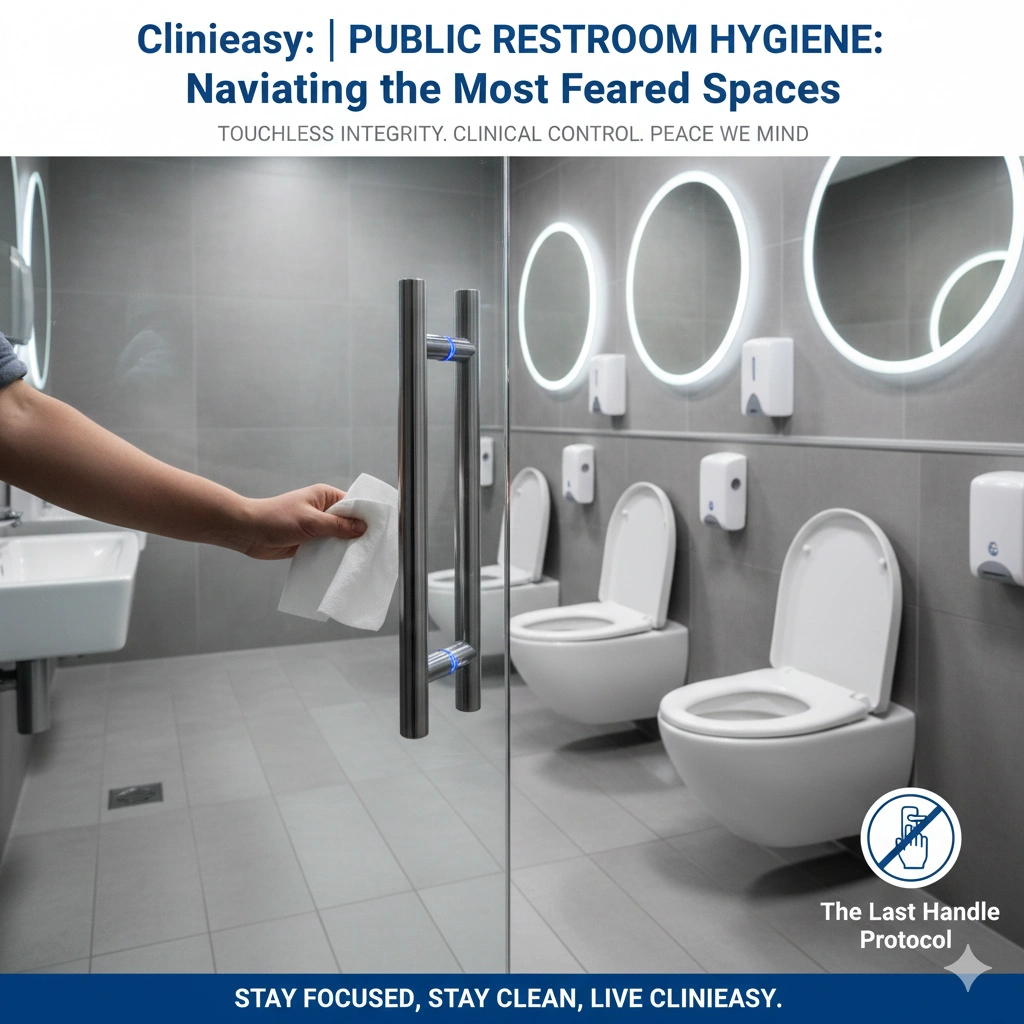
3. The “Last Handle” Protocol
The cleanest hands in the world are immediately compromised by the restroom exit door.
- The Hazard: The interior exit handle is a “Concentration Point” for everyone who didn’t wash their hands.
- The Fix: Use your paper towel (saved from the drying process) to grasp the door handle. In modern 2025 restrooms, look for “Foot-Pulls” or “Wave-to-Open” sensors. If you must touch the handle, sanitize your hands with a gel the moment you are outside the restroom.
4. Hook Usage and the Floor “No-Go” Zone
The floor of a public restroom is the most contaminated surface in the building, primarily due to “Gravity Settling” of the toilet plume and outdoor debris from shoes.
- The Rule: Never, under any circumstances, place your bag, purse, or jacket on the restroom floor. If the door hook is missing, keep your bag on your person. If you must set it down, use the “Clean Zone” of the paper towel dispenser top (if it’s flat and dry).
5. The Smartphone “Lock-Away”
Many people use their phones while in the restroom stall.
- The Clinical Warning: This is a primary vector for “Self-Inoculation.” The aerosolized plume settles on your screen, which you then touch throughout the day.
- The Protocol: Your phone should remain in your pocket or bag from the moment you enter the restroom until the moment you have exited and sanitized your hands.
The Clinieasy “Restroom Tactical” Checklist
- Exit the Flush: Move away from the toilet the moment you hit the button.
- Paper Over Air: Use paper towels for both drying and handling the door.
- The Hook Rule: Keep all personal belongings off the floor.
- No Phone Zone: Keep electronics stowed to prevent “Plume Contamination.”
- Post-Exit Sanitize: Perform a final gel “polish” once you are in the hallway.
Conclusion: Modern Restroom Mastery
A public restroom doesn’t have to be a source of stress. By understanding the dynamics of the “Toilet Plume” and the “Exit Handle,” you can navigate these spaces with clinical efficiency. Remember: your health is determined not by the room you enter, but by the protocols you follow while inside.
Stay focused, stay clean, and keep it Clinieasy.
Disclaimer: If you have an open wound on your hands, be extra vigilant about using paper towels as a barrier. Public restroom surfaces are high-risk areas for MRSA and other antibiotic-resistant bacteria.
Why this fits Article #89:
- High Utility: Highly searchable “how-to” content.
- Science-Backed: Explains the “Toilet Plume” and air dryer controversy.
- Universal Demographic: Appeals to everyone from commuters to parents.