
Introduction Incontinence is a common clinical reality for millions of seniors, but the hygiene challenges it presents go far beyond simple cleanup. From a clinical perspective, prolonged skin contact with urine and feces is a direct assault on the skin’s integrity. The combination of moisture, warmth, and shifting pH levels creates a “perfect storm” for Incontinence-Associated Dermatitis (IAD)—often mistakenly called “diaper rash” in adults.
In 2025, the standard of care has moved from reactive treatment to Proactive Barrier Management. Left unmanaged, IAD can quickly progress to painful skin erosions and secondary fungal or bacterial infections. At Clinieasy, we provide a rigorous clinical protocol for managing incontinence hygiene with dignity and dermatological safety.
1. The Chemistry of Skin Breakdown
To manage IAD, we must understand the chemistry of the “Insult.”
- The Science: Urine increases the skin’s pH, making it more alkaline. This disrupts the Acid Mantle and activates fecal enzymes (proteases and lipases) that literally begin to digest the skin’s protein structure.
- The Clinical Fix: Use pH-balanced perineal cleansers specifically formulated to neutralize ammonia and maintain a healthy skin acidity. Never use standard bar soap or “baby wipes” containing alcohol or fragrances, as these further strip the skin’s natural defenses.
2. The “Cleanse, Protect, Restore” (CPR) Protocol
In clinical settings, we follow a three-step cycle to maintain skin integrity in the presence of incontinence.
- Step 1: Cleanse. Gently remove waste using a soft, disposable cloth and a no-rinse cleanser. Do not scrub; scrubbing creates “Micro-Tears.”
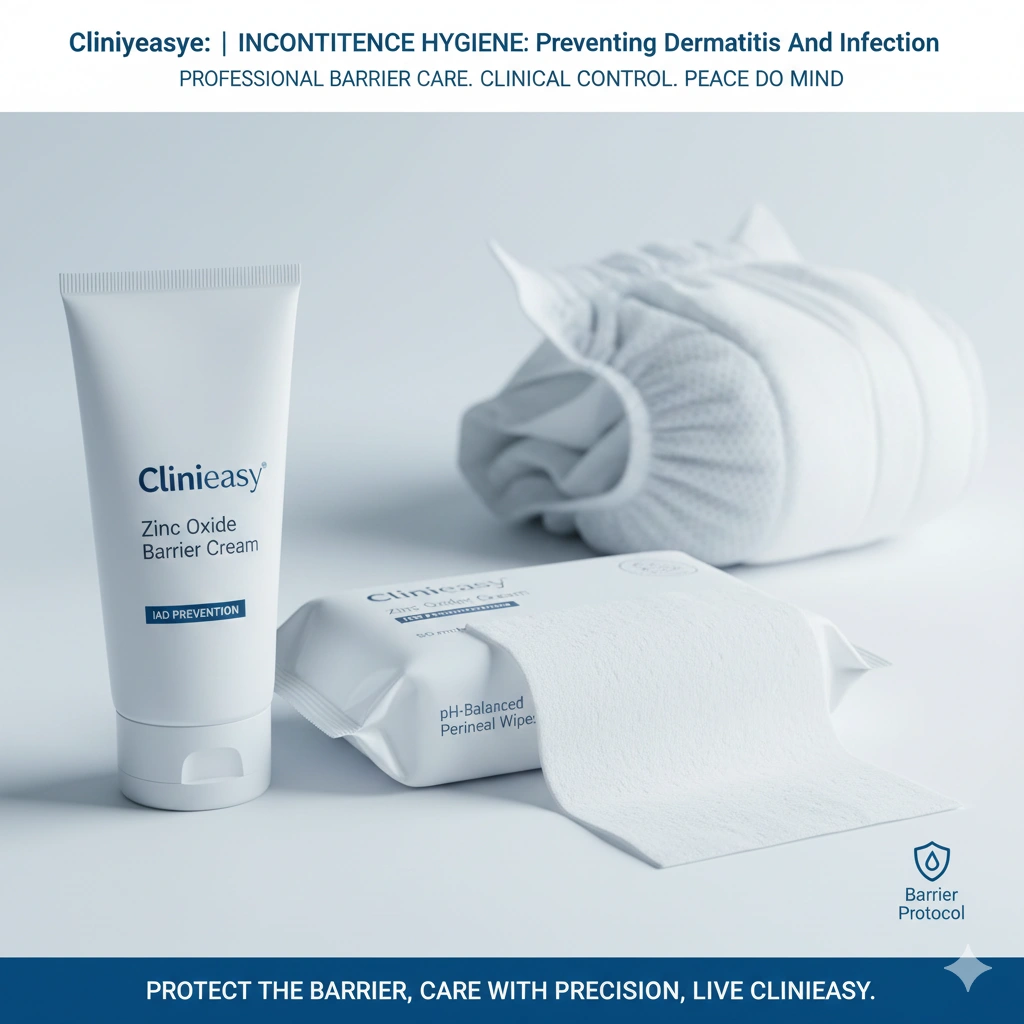
- Step 2: Protect. Apply a Barrier Film or Cream. Look for products containing Zinc Oxide (for high moisture) or Dimethicone/Petrolatum (for a breathable moisture shield). This acts as a “Sacrificial Layer” that the urine hits instead of the skin.
- Step 3: Restore. Use ceramide-based moisturizers during “dry periods” to rebuild the skin’s lipid barrier.
3. The Absorbency Paradox: “Wicking” vs. “Wetness”
Not all incontinence products are created equal. In 2025, high-tech polymers are the gold standard.
- The Hazard: Traditional “thick” pads can hold moisture against the skin, creating a humid environment that leads to Maceration (skin softening and whitening).
- The Strategy: Use products with High-Wicking Technology. These materials pull moisture away from the skin and lock it into a gel core, keeping the surface dry. Change products immediately upon soiling, but at a minimum, every 4 hours to prevent “Microbial Bloom.”
4. Managing Fungal Overgrowth
The warm, dark, and moist environment of incontinence products is a breeding ground for Candida albicans (Yeast).
- The Sign: If you notice a bright red rash with “satellite lesions” (small red spots away from the main rash), it is likely fungal.
- The Fix: Intersperse your barrier cream with an Antifungal Powder or Ointment as directed by a clinician. Crucially, ensure the skin is “Bone Dry” before applying any cream or putting on a new brief. Trapping moisture under a barrier cream is a common cause of treatment failure.
5. Odor Management and Dignity
Odors in incontinence care are often caused by the breakdown of urea into ammonia by bacteria.
- The Clinical Fix: Use Odour-Neutralizing Sprays that chemically bond with odor molecules rather than “masking” them with perfume. Ensure all soiled materials are placed in a Double-Sealed Waste System (like a diaper pail) that is emptied daily to maintain the clinical freshness of the living environment
The Clinieasy “IAD Prevention” Checklist
- Neutralize the pH: Use specialized perineal cleansers, not standard soap.
- Sacrificial Barrier: Apply a thick layer of Zinc Oxide or Dimethicone cream.
- Wick it Away: Choose high-tech polymer briefs over traditional cotton pads.
- Pat to Dry: Never rub the skin; moisture should be patted away gently.
- Frequent Audits: Check for soiling every 2–3 hours to minimize contact time.
Conclusion: Excellence in Daily Care
Managing incontinence with a clinical mindset reduces the risk of infection and significantly improves the senior’s quality of life. By treating the skin as a precious barrier that requires constant “reinforcement,” caregivers can prevent the painful cycle of dermatitis and keep the focus on comfort and dignity.
Protect the barrier, care with precision, and keep it Clinieasy.
Disclaimer: If skin becomes broken, blistered, or shows signs of “weeping,” consult a wound care nurse or physician immediately. Broken skin in the presence of incontinence is a high-risk portal for systemic infection.
Why this fits Article #83:
- High Professionalism: Uses clinical terminology (IAD, Maceration, Acid Mantle).
- High Search Intent: People searching for “adult diaper rash” need urgent, high-quality advice.
- AdSense Revenue: High-competition keywords for medical supplies and skincare.