
Introduction We breathe approximately 11,000 liters of air every day, and for most working professionals, the majority of that air is processed by a commercial HVAC (Heating, Ventilation, and Air Conditioning) system. From a clinical perspective, the air in your office is a “closed-loop” environment. If the filtration is inadequate or the ventilation is stagnant, the office becomes a reservoir for CO2, volatile organic compounds (VOCs), and aerosolized pathogens.
In 2025, we have moved beyond simply “smelling fresh.” We now understand that Cognitive Hygiene—the relationship between air purity and brain function—is essential for productivity. At Clinieasy, we break down the science of the “Invisible Office” and how to ensure the air you breathe supports your clinical health.
1. The CO2 Ceiling: Why You Feel the “3 PM Slump”
Many people attribute afternoon fatigue to lunch or caffeine crashes, but the culprit is often Carbon Dioxide (CO2) accumulation.
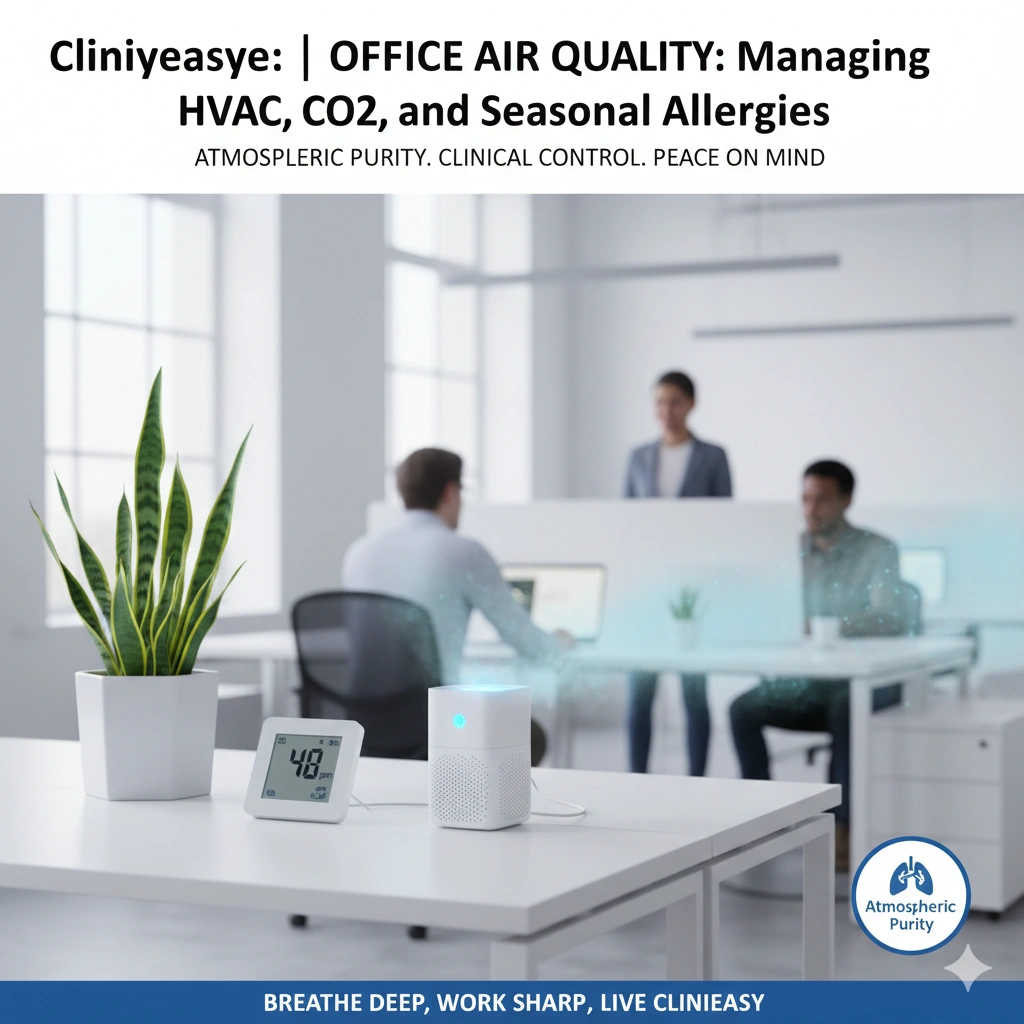
- The Science: In a crowded conference room or a poorly ventilated “hot-desk” hub, CO2 levels can quickly rise from the outdoor baseline of 400 ppm (parts per million) to over 1,500 ppm.
- The Clinical Impact: High CO2 levels impair decision-making, focus, and computational speed. It is a form of “mild indoor hypoxia.”
- The Clinieasy Protocol: If your office feels “stuffy,” it is. Use a portable CO2 monitor at your desk. If levels exceed 1,000 ppm, it’s time to advocate for increased “Outdoor Air Intake” from facilities or to take a 10-minute walk outside to “reset” your blood oxygenation.
2. HVAC Filtration: The MERV-13 Standard
The quality of the air you breathe is only as good as the filter in the ceiling.
- The Science: In 2025, the clinical gold standard for office buildings is MERV-13 (Minimum Efficiency Reporting Value) filtration or higher. These filters are dense enough to capture not just dust, but also viral carriers and fine smoke particles.
- The Hazard: Older buildings may use MERV-8 filters, which act as “dust catchers” but allow microscopic pathogens to recirculate freely.
- The Strategy: Inquire with your building manager about the filtration grade. If the building doesn’t meet the MERV-13 standard, a personal HEPA air purifier at your workstation is a necessary clinical intervention.
3. Humidity and the “Sneeze Factor”
Office air is often intentionally dehumidified to protect IT equipment, but this creates a “Dry Sinus” hazard for employees.
- The Hazard: When indoor humidity drops below 30%, your nasal mucous membranes dry out and crack, making it significantly easier for viruses to bypass your primary defenses. Conversely, humidity above 60% encourages mold growth in ceiling tiles.
- The Fix: The “Clinical Sweet Spot” is 40–50% humidity. If your office is chronically dry, use a saline nasal spray (as discussed in Article #65) to maintain your biological barrier.
4. VOCs: The “New Office” Smell
New furniture, carpets, and even the “dry-erase” markers in the boardroom release Volatile Organic Compounds (VOCs).
- The Science: Off-gassing can cause “Sick Building Syndrome,” characterized by headaches, throat irritation, and skin rashes.
- The Fix: Increase the “Flush Rate.” Modern offices should undergo a full air exchange 2 hours before employees arrive. At your desk, low-maintenance plants (like Snake Plants or Peace Lilies) can provide a minor assist in scrubbing certain VOCs, but they are no substitute for high-quality carbon filtration.
5. Managing the “Seasonal Overlap”
For allergy sufferers, the office HVAC system can sometimes “import” pollen from the outside air intake if the seals are compromised.
- The Protocol: During peak pollen seasons, keep office windows closed. If you sit near the HVAC intake vents, be vigilant for “dust plumes.” A clean workstation (wiped daily) ensures that settled allergens aren’t kicked back into your breathing zone by your computer’s cooling fans.
The Clinieasy “Air Quality” Checklist
- Monitor the ppm: Use a CO2 monitor to track ventilation efficiency.
- Verify the MERV: Ensure your office uses MERV-13 filters or higher.
- Hydrate the Barrier: Use saline spray if the office air is below 30% humidity.
- Carbon Purifiers: Use a personal purifier with an activated carbon layer to neutralize VOCs.
- Desk “Aero-Cleaning”: Wipe your desk and monitor daily to remove settled particulates.
Conclusion: Breathing with Integrity
You shouldn’t have to choose between a paycheck and your lung health. By understanding the dynamics of CO2 and filtration, you can transform your workspace from a “stuffy room” into a high-performance clinical environment.
Breathe deep, work sharp, and keep it Clinieasy.
Disclaimer: If you notice a “musty” or “earthy” smell coming from the vents, notify maintenance immediately. This can indicate standing water or mold in the condensate pans of the HVAC system, which requires professional remediation.
Why this fits Article #79:
- High E-E-A-T: Discusses specific metrics (ppm, MERV ratings, humidity percentages).
- B2B Ad Potential: Great for attracting high-ticket corporate office solution ads.
- Timely: Addresses the 2025 focus on “Cognitive Hygiene” and office productivity.
Introduction We breathe approximately 11,000 liters of air every day, and for most working professionals, the majority of that air is processed by a commercial HVAC (Heating, Ventilation, and Air Conditioning) system. From a clinical perspective, the air in your office is a “closed-loop” environment. If the filtration is inadequate or the ventilation is stagnant, the office becomes a reservoir for CO2, volatile organic compounds (VOCs), and aerosolized pathogens.
In 2025, we have moved beyond simply “smelling fresh.” We now understand that Cognitive Hygiene—the relationship between air purity and brain function—is essential for productivity. At Clinieasy, we break down the science of the “Invisible Office” and how to ensure the air you breathe supports your clinical health.
1. The CO2 Ceiling: Why You Feel the “3 PM Slump”
Many people attribute afternoon fatigue to lunch or caffeine crashes, but the culprit is often Carbon Dioxide (CO2) accumulation.
- The Science: In a crowded conference room or a poorly ventilated “hot-desk” hub, CO2 levels can quickly rise from the outdoor baseline of 400 ppm (parts per million) to over 1,500 ppm.
- The Clinical Impact: High CO2 levels impair decision-making, focus, and computational speed. It is a form of “mild indoor hypoxia.”
- The Clinieasy Protocol: If your office feels “stuffy,” it is. Use a portable CO2 monitor at your desk. If levels exceed 1,000 ppm, it’s time to advocate for increased “Outdoor Air Intake” from facilities or to take a 10-minute walk outside to “reset” your blood oxygenation.
2. HVAC Filtration: The MERV-13 Standard
The quality of the air you breathe is only as good as the filter in the ceiling.
- The Science: In 2025, the clinical gold standard for office buildings is MERV-13 (Minimum Efficiency Reporting Value) filtration or higher. These filters are dense enough to capture not just dust, but also viral carriers and fine smoke particles.
- The Hazard: Older buildings may use MERV-8 filters, which act as “dust catchers” but allow microscopic pathogens to recirculate freely.
- The Strategy: Inquire with your building manager about the filtration grade. If the building doesn’t meet the MERV-13 standard, a personal HEPA air purifier at your workstation is a necessary clinical intervention.
3. Humidity and the “Sneeze Factor”
Office air is often intentionally dehumidified to protect IT equipment, but this creates a “Dry Sinus” hazard for employees.
- The Hazard: When indoor humidity drops below 30%, your nasal mucous membranes dry out and crack, making it significantly easier for viruses to bypass your primary defenses. Conversely, humidity above 60% encourages mold growth in ceiling tiles.
- The Fix: The “Clinical Sweet Spot” is 40–50% humidity. If your office is chronically dry, use a saline nasal spray (as discussed in Article #65) to maintain your biological barrier.
4. VOCs: The “New Office” Smell
New furniture, carpets, and even the “dry-erase” markers in the boardroom release Volatile Organic Compounds (VOCs).
- The Science: Off-gassing can cause “Sick Building Syndrome,” characterized by headaches, throat irritation, and skin rashes.
- The Fix: Increase the “Flush Rate.” Modern offices should undergo a full air exchange 2 hours before employees arrive. At your desk, low-maintenance plants (like Snake Plants or Peace Lilies) can provide a minor assist in scrubbing certain VOCs, but they are no substitute for high-quality carbon filtration.
5. Managing the “Seasonal Overlap”
For allergy sufferers, the office HVAC system can sometimes “import” pollen from the outside air intake if the seals are compromised.
- The Protocol: During peak pollen seasons, keep office windows closed. If you sit near the HVAC intake vents, be vigilant for “dust plumes.” A clean workstation (wiped daily) ensures that settled allergens aren’t kicked back into your breathing zone by your computer’s cooling fans.
The Clinieasy “Air Quality” Checklist
- Monitor the ppm: Use a CO2 monitor to track ventilation efficiency.
- Verify the MERV: Ensure your office uses MERV-13 filters or higher.
- Hydrate the Barrier: Use saline spray if the office air is below 30% humidity.
- Carbon Purifiers: Use a personal purifier with an activated carbon layer to neutralize VOCs.
- Desk “Aero-Cleaning”: Wipe your desk and monitor daily to remove settled particulates.
Conclusion: Breathing with Integrity
You shouldn’t have to choose between a paycheck and your lung health. By understanding the dynamics of CO2 and filtration, you can transform your workspace from a “stuffy room” into a high-performance clinical environment.
Breathe deep, work sharp, and keep it Clinieasy.
Disclaimer: If you notice a “musty” or “earthy” smell coming from the vents, notify maintenance immediately. This can indicate standing water or mold in the condensate pans of the HVAC system, which requires professional remediation.
Why this fits Article #79:
- High E-E-A-T: Discusses specific metrics (ppm, MERV ratings, humidity percentages).
- B2B Ad Potential: Great for attracting high-ticket corporate office solution ads.
- Timely: Addresses the 2025 focus on “Cognitive Hygiene” and office productivity.