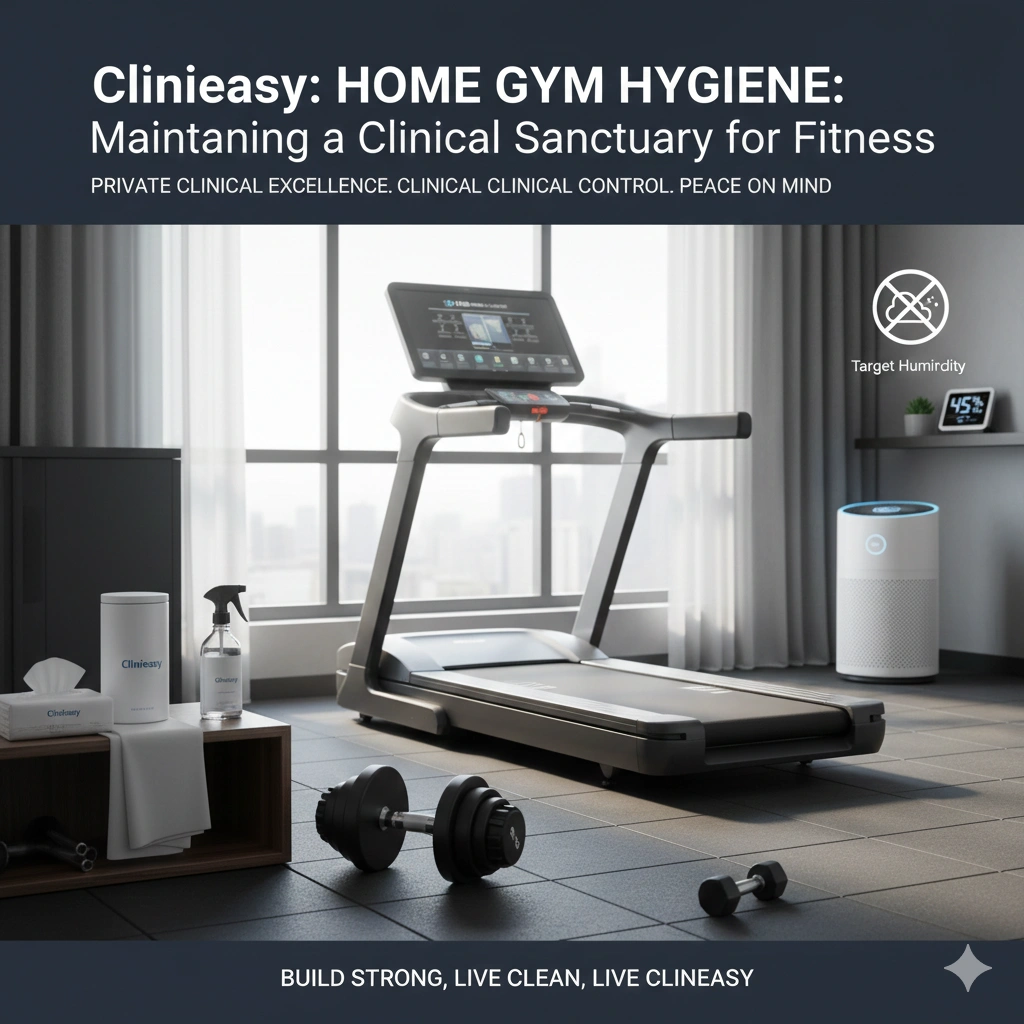

Introduction The home gym is the ultimate fitness luxury—no commute, no crowds, and no “shared” sweat. However, because it is a private space, hygiene standards often lapse. Without the professional cleaning staff of a commercial gym, a home workout space can quickly become a haven for dust, stagnant air, and microbial buildup.
In 2025, the home gym is no longer just a “bench in the garage.” It is a high-tech environment filled with touchscreens, porous rubber mats, and heavy-duty iron. To maintain the “Clinical Integrity” of your home, your gym must be treated as a separate ecosystem. At Clinieasy, we show you how to prevent your sanctuary from becoming a “Bio-Trap.”
1. The Rubber Floor: A “Micro-Porous” Challenge
Most home gyms use recycled rubber flooring or interlocking foam mats. While durable, these materials are micro-porous.
- The Science: Sweat, skin cells, and microscopic debris settle into the “pits” of the rubber. Over time, this creates a Bio-Load that can’t be removed with a simple broom. If the room is humid, this leads to the dreaded “old gym” smell—a sign of bacterial decomposition.
- The Clinical Fix: Use a pH-neutral, broad-spectrum disinfectant specifically formulated for rubber. Avoid bleach, which can degrade the material. At least once a month, perform a “Mechanical Scrub” with a stiff brush to lift deep-seated particulates before mopping.
2. Humidity and the “Mold Horizon”
Home gyms are often located in basements, garages, or repurposed spare rooms with limited ventilation.
- The Hazard: A single high-intensity workout can release up to 1.5 liters of water vapor into the air through sweat and respiration. In a small space, this spikes the relative humidity (RH) above 60%, the “threshold” for mold growth on drywall and equipment.
- The Strategy: The Dehumidifier Shield. Maintain a consistent RH of 40–50%. This inhibits mold and keeps your equipment (especially electronic consoles) from corroding.
3. Screen and Sensor Sanitization
Modern home fitness is digital. Peloton, Tonal, and mirror-style trainers rely on high-definition touchscreens.
- The Science: We touch these screens with “hot” hands mid-workout. Sweat and oils can damage the sensitive oleophobic (oil-repellent) coatings of the glass.
- The Protocol: Use only 70% isopropyl alcohol wipes or a dedicated screen cleaner applied to a microfiber cloth. Never spray directly onto the screen, as moisture can seep into the bezel and fry the internal sensors.
4. The Air Quality Variable
Because home gyms are often “closed systems,” the accumulation of CO2 and Volatile Organic Compounds (VOCs) from rubber flooring can affect your performance.
- The Fix: Implement a HEPA + Carbon Air Purifier. The HEPA filter catches skin dander and dust, while the activated carbon layer absorbs the chemical “rubber smell” (VOCs) and odors. If possible, ensure “Cross-Ventilation” by opening a window for 15 minutes post-workout to flush the CO2.
5. Cleaning Your “Self-Cleaning” Equipment
Items like adjustable dumbbells and cable machines have internal moving parts that trap dust and sweat.
- The Clinical Fix: Use Dry-Lubricant Sprays that don’t attract dust. Wipe down the external handles after every session, but once a quarter, use a vacuum with a brush attachment to remove dust from the internal mechanisms of your treadmill or weight stack.
The Clinieasy “Home Sanctuary” Checklist
- Mechanical Scrub: Deep-clean rubber mats monthly, not just a surface mop.
- Target Humidity: Keep your gym space at 40–50% humidity to prevent mold.
- HEPA Filtration: Run an air purifier during and for 30 minutes after your workout.
- Dedicated Footwear: Use “Indoor-Only” gym shoes to avoid tracking in outdoor parasites.
- Fan Management: Clean fan blades weekly; they are notorious for redistributing dust and dander.
Conclusion: Protecting Your Investment
Your home gym is an investment in your longevity. By applying these clinical hygiene protocols, you ensure that your workout environment supports your health rather than compromising it. A clean gym isn’t just about aesthetics; it’s about maintaining a space where you can push your limits in total safety.
Build strong, live clean, and keep it Clinieasy.
Disclaimer: If your home gym is in a garage or basement, be vigilant for “efflorescence” (white powdery salt) on walls, which can indicate moisture seepage. Moisture management is the #1 rule of home gym hygiene.
Why this fits Article #76:
- High ROI: Targets a demographic likely to purchase specialized cleaning and air-quality products.
- Practical & Technical: Provides specific advice on “pH-neutral cleaners” and “relative humidity.”
- Category Closer: Ends the Fitness series by bringing the focus back to the home.