
Introduction We often think of pet grooming as an aesthetic choice—making our companions look and smell “pretty.” However, from a clinical perspective, grooming is the most effective way to manage the “Bio-Load” your pet carries. Every time your pet walks outside, they act as a biological sweep, collecting environmental allergens, mold spores, and bacteria in their fur and between their paw pads.
In 2025, grooming is recognized as a primary pillar of preventative domestic health. By maintaining the “Clinical Integrity” of your pet’s coat, paws, and mouth, you prevent the transfer of outdoor pathogens into your bed, sofa, and air supply. At Clinieasy, we treat grooming as a medical reset for your pet.
1. The “Paw-to-Porch” Decontamination
Your pet’s paws are the primary gateway for pathogens entering your home.
- The Science: The skin between a dog’s paw pads is warm and moist, making it a perfect incubator for yeast (Malassezia) and bacteria picked up from pavement or soil.
- The Clinical Fix: Implement a mandatory Paw Wash after every walk. Use a dedicated “Paw Plunger” or a simple bowl of warm water with a drop of pet-safe antiseptic. This isn’t just about mud; it’s about removing invisible chemicals, fertilizers, and parasitic larvae before they are licked off or tracked onto your carpet.
2. Fur Management: The “Dander Trap”
Fur is a high-surface-area trap for allergens.
- The Hazard: As pets move, they shed hair and dander (dead skin cells). This dander carries proteins that are the primary cause of pet allergies in humans.
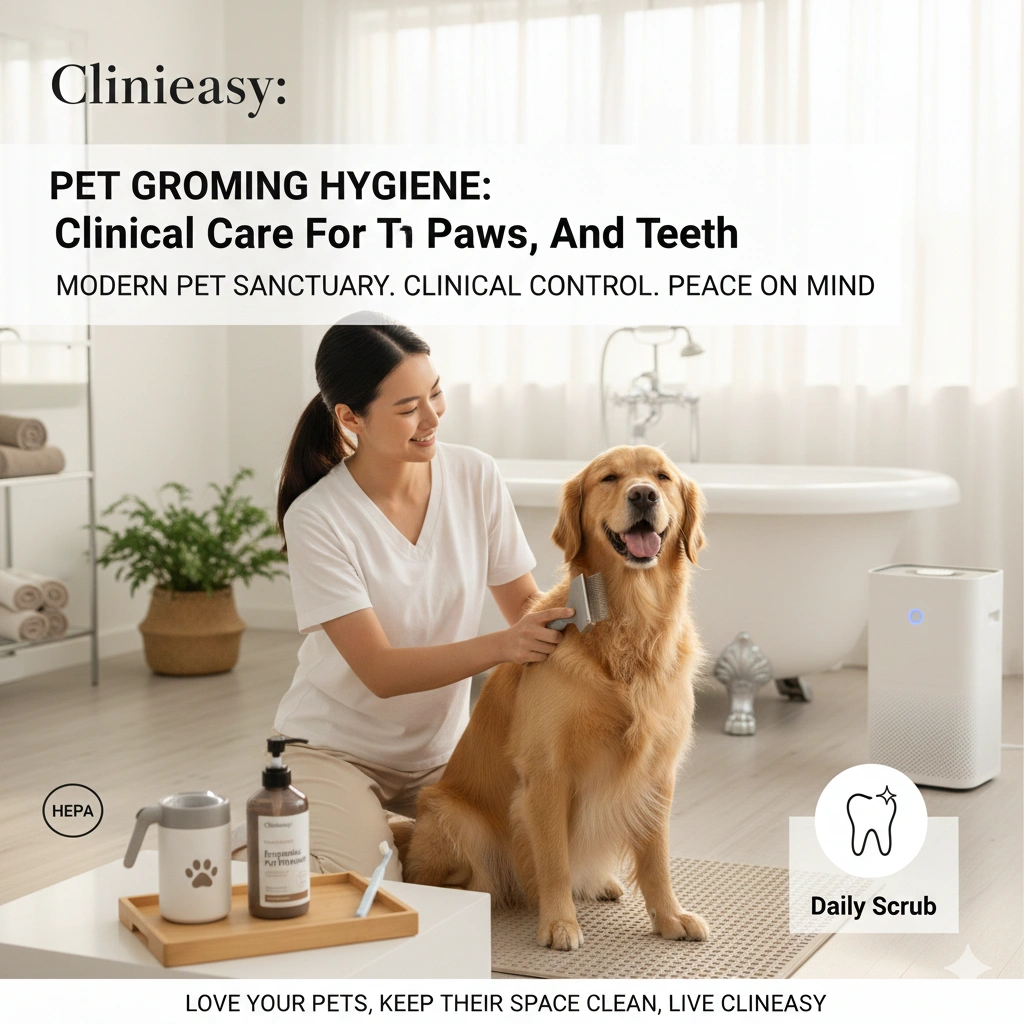
- The Strategy: Daily Deshedding. Use a high-quality deshedding tool to remove loose undercoat before it falls. Perform this grooming session outdoors or in a room with a HEPA air purifier. This prevents the “aerosolization” of dander throughout your living spaces.
3. Oral Hygiene: The Saliva Shield
A pet’s mouth is home to hundreds of species of bacteria. Without intervention, these bacteria form plaque, which hardens into tartar and leads to periodontal disease.
- The Science: Chronic dental infection in pets can lead to bacteria entering the bloodstream, potentially damaging the heart and kidneys. Furthermore, “pet kisses” can transfer these bacteria to human skin.
- The Clinical Protocol: Daily Tooth Brushing. Use an enzymatic pet-safe toothpaste. If brushing is impossible, use a clinical-grade dental water additive. Breaking down the oral biofilm daily reduces the “bacterial load” of your pet’s saliva.
4. The Medicated Bath: Resetting the Microbiome
While cats are self-grooming, dogs require regular bathing to remove the buildup of environmental pollutants and skin oils.
- The Fix: Use a Medicated or pH-Balanced Shampoo. Human shampoos are too acidic for pet skin and can strip the “acid mantle,” leaving the skin vulnerable to infection. Focus on the “high-contact” areas: the belly, the paws, and the area under the tail.
- The Drying Rule: Never leave a pet “damp-dry.” Use a high-velocity dryer or absorbent microfiber towels. A damp coat is a breeding ground for “wet dog smell,” which is actually the scent of bacteria and yeast proliferating in moisture.
5. Sanitizing the Tools
A common hygiene failure is using a dirty brush on a clean pet.
- The Hazard: Brushes, nail clippers, and combs collect skin oils and dander. If not cleaned, they re-deposit bacteria onto the skin during the next grooming session.
- The Fix: After every session, remove hair from brushes and soak tools in a 70% alcohol solution or a pet-safe disinfectant for 10 minutes.
The Clinieasy “Grooming Reset” Checklist
- Entryway Paw Wash: Clean paws immediately after every outdoor excursion.
- Outdoor Brushing: Remove dander before it enters the home.
- Enzymatic Dental Care: Brush teeth daily to manage the oral microbiome.
- Dry Thoroughly: Never leave fur damp; moisture equals microbial growth.
- Tool Sterilization: Sanitize all grooming hardware weekly.
Conclusion: The Cleanest Member of the Family
Grooming is an act of love, but it’s also an act of clinical necessity. By managing your pet’s hygiene with the same rigor you apply to your own, you create a home environment where the bond between human and animal is free from the burden of avoidable illness.
Groom with purpose, live in health, and keep it Clinieasy.
Disclaimer: If your pet has red, inflamed skin or a strong odor despite regular grooming, they may have a skin infection. Consult your veterinarian for a clinical diagnosis and specialized treatment.
Why this fits Article #73:
- High E-E-A-T: Explains the “acid mantle” of skin and the role of “enzymatic” toothpaste.
- Commercial Integration: Naturally encourages the purchase of specialized shampoos, brushes, and HEPA filters.
- Category Closer: Wraps up the Pet series by focusing on the “source” of the germs (the animal).