
Introduction Pet waste is more than just an unpleasant odor; from a clinical perspective, it is a significant biohazard. Feces contain a concentrated cocktail of bacteria, viruses, and parasites that can survive in the environment for extended periods, posing risks to both pets and humans. Neglected pet waste is a primary vector for diseases like Toxoplasmosis (from cat feces) and Giardia or E. coli (from dog feces).
In 2025, as urban green spaces become denser and our understanding of zoonotic disease (animal-to-human transmission) increases, proper pet waste management is a critical public health issue. It’s not just about being a “good neighbor”; it’s about breaking the environmental transmission chain. At Clinieasy, we provide a clinical protocol for responsible pet waste disposal.
1. The “Immediate Bagging” Rule
Delay in picking up pet waste significantly increases environmental contamination.
- The Science: Fresh feces are moist and contain active pathogens. As they dry, these pathogens can become aerosolized or washed into stormwater, contaminating water sources.
- The Clinical Fix: Always carry high-quality, tear-resistant biodegradable waste bags. Pick up dog waste immediately. For cat litter, scoop at least twice daily to remove fresh waste before it can become a breeding ground for Toxoplasma gondii (the parasite responsible for Toxoplasmosis).
2. The Litter Box: A Bio-Reactor in Your Home
The litter box is an enclosed system designed to contain waste, but if not managed clinically, it becomes a concentrated source of ammonia, bacteria, and parasites.
- The Hazard: Cats instinctively bury their waste, but this doesn’t eliminate pathogens. The dust from clay litter can also carry airborne irritants.
- The Clinieasy Protocol:
- Scoop Twice Daily: As mentioned, critical for Toxoplasmosis prevention.
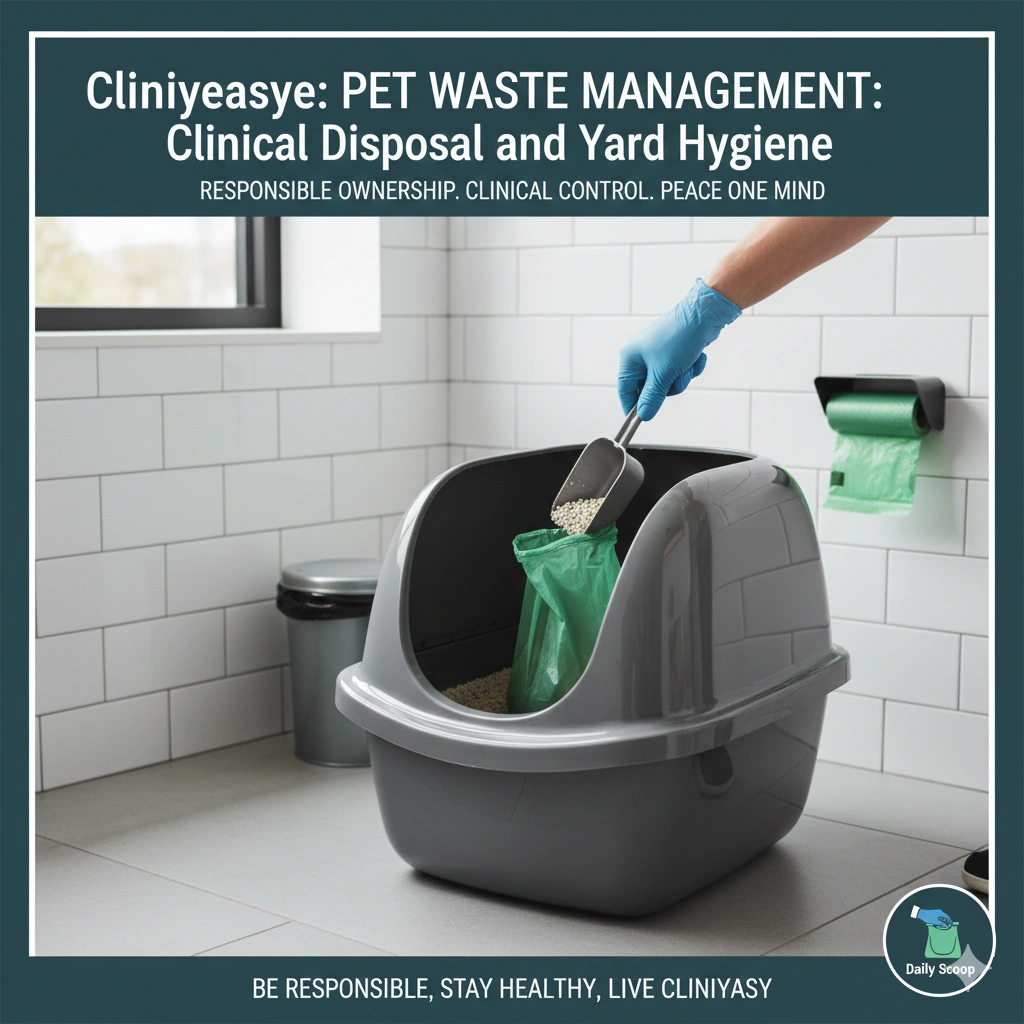
- Full Clean Weekly: Empty all litter, wash the box with hot, soapy water (and a capful of bleach solution if it’s plastic, then rinse thoroughly).
- Ventilation: Place the litter box in a well-ventilated area, away from food preparation zones and high-traffic family areas. Consider litter boxes with covered tops and carbon filters to help contain odors and dust.
3. Yard Hygiene: The “Invisible” Minefield
If you have a fenced yard, it’s easy to assume nature will “take care of” pet waste. This is a clinical error.
- The Hazard: Parasitic eggs (like roundworm or hookworm) can survive in soil for months, waiting for an unsuspecting host (pet or human) to pick them up. Children playing in the yard are particularly at risk.
- The Fix: Implement a “Daily Yard Sweep.” Pick up all dog waste daily. If you have multiple pets, consider a pet waste composting system that uses natural decomposition to neutralize pathogens (ensure it is a pet-specific composter, not a garden composter).
4. Glove Use and Handwashing: The Final Barrier
Direct contact with pet waste carries the highest risk of zoonotic disease transmission.
- The Clinical Rule: Always wear disposable gloves when cleaning litter boxes, or if you anticipate prolonged contact with pet waste. Even with bags, a tear can expose you. Always follow waste disposal with a thorough 20-second handwash with soap and water.
5. Cat Litter Disposal: Double Bagging and Outdoor Bins
Cat litter, especially clumping litter, is heavy and contains urine and feces.
- The Hazard: Tossing used cat litter directly into an indoor trash can allows odors and pathogens to permeate your home.
- The Clinieasy Method: Double bag scooped cat waste. Use a dedicated outdoor trash bin with a tight-fitting lid for pet waste only. This keeps odors and potential pests (like flies drawn to waste) away from your main household waste.
The Clinieasy “Waste Management” Checklist
- Immediate Pickup: Bag dog waste instantly.
- Double Scoop: Clean cat litter boxes twice daily.
- Weekly Deep Clean: Sanitize litter boxes every week.
- Daily Yard Sweep: Clear all waste from your garden area.
- Hands & Gloves: Always wear gloves and wash hands after handling waste.
Conclusion: Responsible Ownership, Healthy Living
Pet ownership brings immense joy, but with it comes the clinical responsibility of waste management. By implementing these clear protocols, you protect your home, your family, and your community from the invisible threats lurking in pet waste.
Be responsible, stay healthy, and keep it Clinieasy.
Disclaimer: If your pet is diagnosed with intestinal parasites, discuss a deworming schedule with your veterinarian. This will reduce the shedding of eggs into your home environment, but robust hygiene practices are still essential.
Why this fits Article #72:
- Addresses a Common “Dirty Secret”: Pet waste is often overlooked but critical for home hygiene.
- Strong AdSense Potential: Directly promotes waste bags, litter, and specialized cleaning tools.
- Highlights Serious Health Risks: Mentions Toxoplasmosis and Giardia to add authority and urgency.