
Introduction The “Water Cooler Moment” is a staple of office culture—a place for quick catch-ups and mental breaks. However, from a clinical perspective, the traditional 5-gallon jug dispenser is a “biological bridge” that connects the hands of every employee to the water they ingest.
A 2025 analysis of approximately 70 studies revealed a startling reality: water dispenser machines can harbor higher levels of microbial contamination than the tap water supplying them. From fecal coliforms to Pseudomonas aeruginosa, the cool, damp environment of a water dispenser is an ideal incubator for biofilms—slimy colonies of bacteria that protect themselves from standard cleaning agents.
At Clinieasy, we believe hydration should be a health boost, not a risk factor. In this guide, we break down the “Hidden Life” of your office water cooler and how to navigate it safely.
1. The “Biofilm” Problem: Why Taste Isn’t a Metric
Many people assume that if the water tastes “crisp” and “fresh,” it is clean.
- The Science: Biofilm is a structured community of microorganisms that stick to the internal pipes and the reservoir of the cooler. It acts like a “bacterial armor,” allowing pathogens to multiply even in filtered water.
- The Hazard: Biofilm can shed chunks of bacteria into your cup that are invisible to the naked eye. This is the primary cause of the “musty” aftertaste or unexplained gastrointestinal upset in an office.
- The Clinical Fix: Internal sanitization. Office coolers require a deep clean with a mild bleach or hydrogen peroxide solution every 3 to 6 months to break down the biofilm matrix.
2. The Spout: The Cross-Contamination Zone
The most vulnerable part of the water cooler is the dispensing spout.
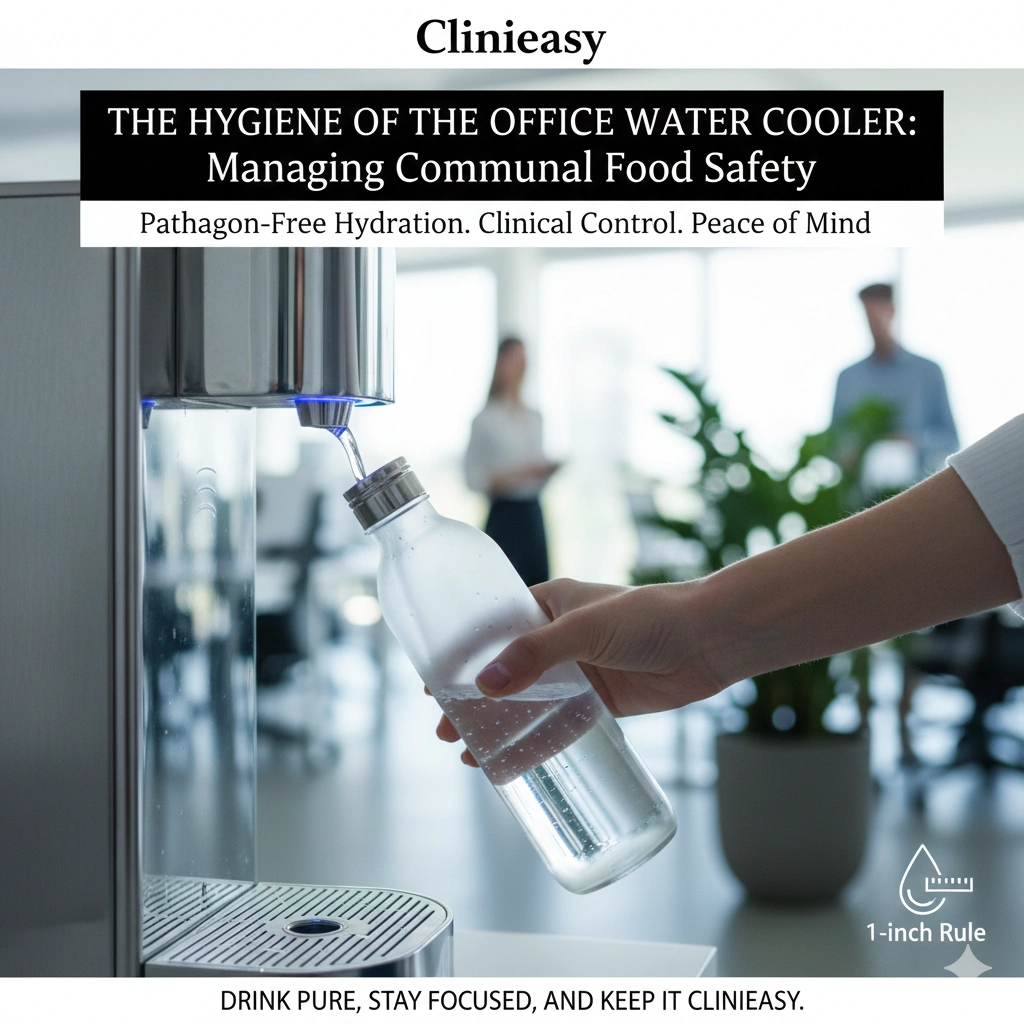
- The Hazard: “Bottle-to-Spout” transfer. When employees touch the mouth of their personal water bottle to the dispenser spout, they transfer their oral microbiome directly onto the machine. The next person to use the cooler inherits those germs.
- The Clinieasy Rule: Never let your bottle or cup touch the dispensing nozzle. Maintain a 1-inch “Clinical Gap” between the spout and your container.
3. The 5-Gallon Jug: A Handling Risk
Every time a new 5-gallon jug is “flipped” onto the machine, the hygiene chain is at risk.
- The Hazard: The “neck” of the bottle is often handled by delivery personnel and staff with unwashed hands. When that neck is plunged into the water reservoir, those surface bacteria are introduced directly into the drinking supply.
- The Fix: Before loading a new bottle, wipe the neck and the “well” of the cooler with a 70% alcohol wipe. This simple 10-second step prevents the most common form of “bulk” contamination.
4. The Drip Tray: The Mold Incubator
The drip tray is the most neglected part of the machine.
- The Science: Stagnant water + office dust + warmth from the cooling motor = the perfect environment for black mold and algae.
- The Fix: The drip tray should be emptied and washed with hot, soapy water every 48 hours. If you see a green or black film, the tray is already a source of aerosolized fungal spores.
5. The 2025 Solution: Touchless & UV-C
In the post-pandemic workplace, “Manual” is out; “Clinical” is in.
- The Tech: Modern “Bottleless” systems connect directly to the water line, eliminating the “jug handling” risk. Many now feature integrated UV-C lights in the reservoir that kill 99.9% of DNA-based pathogens every hour.
- The Strategy: If your office still uses a manual lever-push system, use a clean tissue or your knuckle to activate the water flow. Avoid using your fingertips, which are the primary vehicles for self-infection.
The Clinieasy “Pure Hydration” Checklist
- Mind the Gap: Keep your bottle 1 inch away from the spout.
- Sanitize the Flip: Wipe the bottle neck before loading it.
- Knuckle-Touch: Use a knuckle to press shared buttons or levers.
- Drip Tray Reset: Empty and wash the tray every two days.
- Professional Service: Ensure the internal lines are descaled and sanitized quarterly.
Conclusion: Hydration with Integrity
Drinking water is the most frequent “medical” action we take during the workday. By applying clinical standards to the office water cooler, you ensure that your hydration supports your focus and immunity.
Drink pure, stay focused, and keep it Clinieasy.
Disclaimer: If your office water has a persistent “metallic” or “swampy” smell, stop using the machine immediately. This often indicates a failure in the filtration system or an advanced biofilm that requires professional remediation.
Why this fits Article #56:
- Current Data: References 2025 studies to establish high authority (E-E-A-T).
- High ROI: Focuses on a communal problem that affects every employee, driving high engagement.
- Ad-Friendly: Triggers ads for high-margin office “Bottleless” water services.