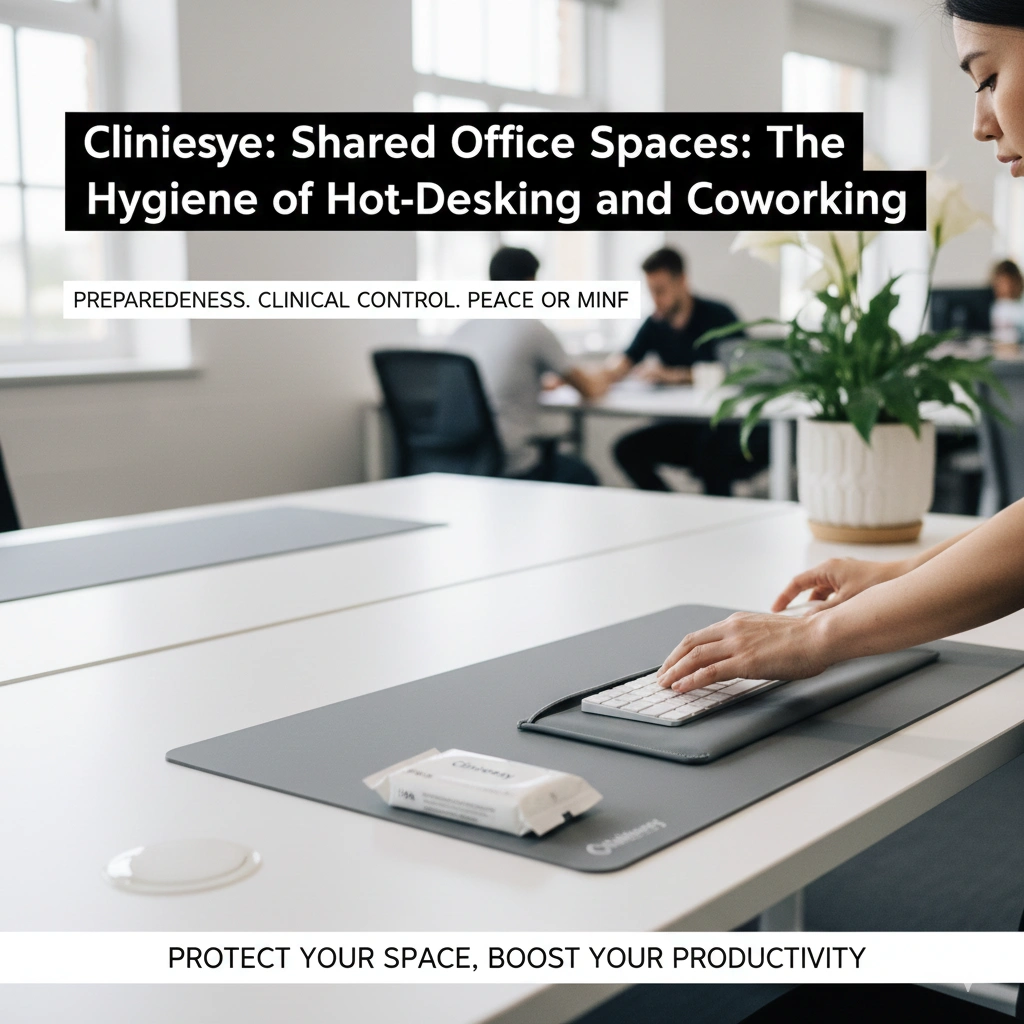

Introduction The “assigned desk” is becoming a relic of the past. In 2025, over 60% of major corporations have adopted “agile seating” or “hot-desking” models. While this fosters collaboration and flexibility, it creates a significant clinical challenge: the unbroken chain of transmission.
When you sit at a shared workstation, you aren’t just occupying a desk; you are inheriting the microbial footprint of everyone who sat there before you. From the “office cold” to skin-borne bacteria, a hot-desk is a shared surface that rarely receives the deep sanitization it requires between users.
At Clinieasy, we believe flexibility shouldn’t come at the cost of your health. In this guide, we provide a “First-In” protocol to turn any shared desk into a clinically safe zone.
1. The “First Five” Minutes: The Sanitization Sweep
In a hot-desk environment, you must assume the desk has not been cleaned since the last occupant.
- The Hazard: High-touch areas—the desk edge, the height-adjustment buttons, and the armrests of the chair—are reservoirs for pathogens.
- The Clinical Fix: Carry a “Go-Bag” of 70% alcohol wipes. Before setting up your laptop, wipe the three “Critical Contact Points”:
- The desk surface where your forearms rest.
- The underside of the desk (where your knees or hands touch).
- The adjustment levers of the office chair.
2. The Keyboard and Mouse: The “Personal Peripheral” Rule
As established in Article #51, keyboards are 400x dirtier than toilet seats. In a shared space, this risk is multiplied by every different user.
- The Hazard: Shared mice and keyboards are the most frequent vectors for hand-to-eye-to-nose infection.
- The Clinical Fix: If your office uses hot-desking, invest in your own portable, wireless keyboard and mouse. By using your own peripherals, you eliminate 90% of the surface-contact risk in a shared office. Carry them in a dedicated, antimicrobial-lined sleeve.
3. The “Desktop Island” Strategy
When working in a coworking space, your “territory” should be clearly defined to prevent cross-contamination.
- The Fix: Use a desk mat (leather or easy-wipe silicone). This serves as a “sterile field” for your laptop, phone, and notebooks. At the end of the day, you simply wipe the mat down, roll it up, and take your “clean zone” with you.
4. Communal Canteens and Coffee Stations
In coworking spaces, the coffee machine is the “Great Equalizer”—everyone touches the same buttons and handles.
- The Science: A virus can spread from a single coffee pot handle to nearly half the office in under four hours.
- The Strategy: Practice “Knuckle-Touch” for buttons. Use your knuckle or the back of your finger to press elevator buttons or coffee machine starts. This part of your hand rarely touches your face, significantly lowering the risk of self-infection.
5. The Air Flow in Open Plans
Open-plan coworking spaces often have high-density seating which affects air quality.
- The Clinical Fix: If the space feels “stuffy,” you are likely breathing a high concentration of CO2 and aerosolized particles.
- The Tip: If you have the choice, sit near the HVAC “Supply” vents (where fresh air comes in) rather than the “Return” vents (where stale air is sucked out). If you frequent coworking spaces, a small, portable HEPA air purifier for your desk is a 2025 must-have.
The Clinieasy “Hot-Desk” Go-Bag Essentials
- 70% Alcohol Wipes: For the “First Five” minute sweep.
- Portable Peripherals: Your own mouse and keyboard.
- Silicone Desk Mat: To create a physical barrier.
- Hand Sanitizer (60%+ Ethanol): For use after visiting the communal kitchen.
- Antimicrobial Tech Sleeve: To store your gear without “mixing” germs in your bag.
Conclusion: Flexibility with Clinical Integrity
Hot-desking is a modern reality, but it doesn’t have to be a health hazard. By taking five minutes to establish your “Clinical Island,” you protect yourself from the office-wide “ping-pong” of illnesses. You can be agile, collaborative, and perfectly healthy.
Work where you want, protect your space, and keep it Clinieasy.
Disclaimer: Always follow your office’s specific policies regarding cleaning chemicals. Some high-end “soft-touch” furniture can be damaged by harsh bleaches; stick to 70% isopropyl alcohol for most office surfaces.
Why this fits Article #54 (AdSense Strategy):
- Targeted Growth: “Hot-desking hygiene” is a trending search term for HR managers and corporate wellness directors.
- Product-Heavy: Perfectly positioned for affiliate links to Logitech (portable mice), antimicrobial desk mats, and HEPA purifiers.
- RTO Relevance: As companies push for more days in the office, employees are actively searching for ways to stay safe in shared environments.