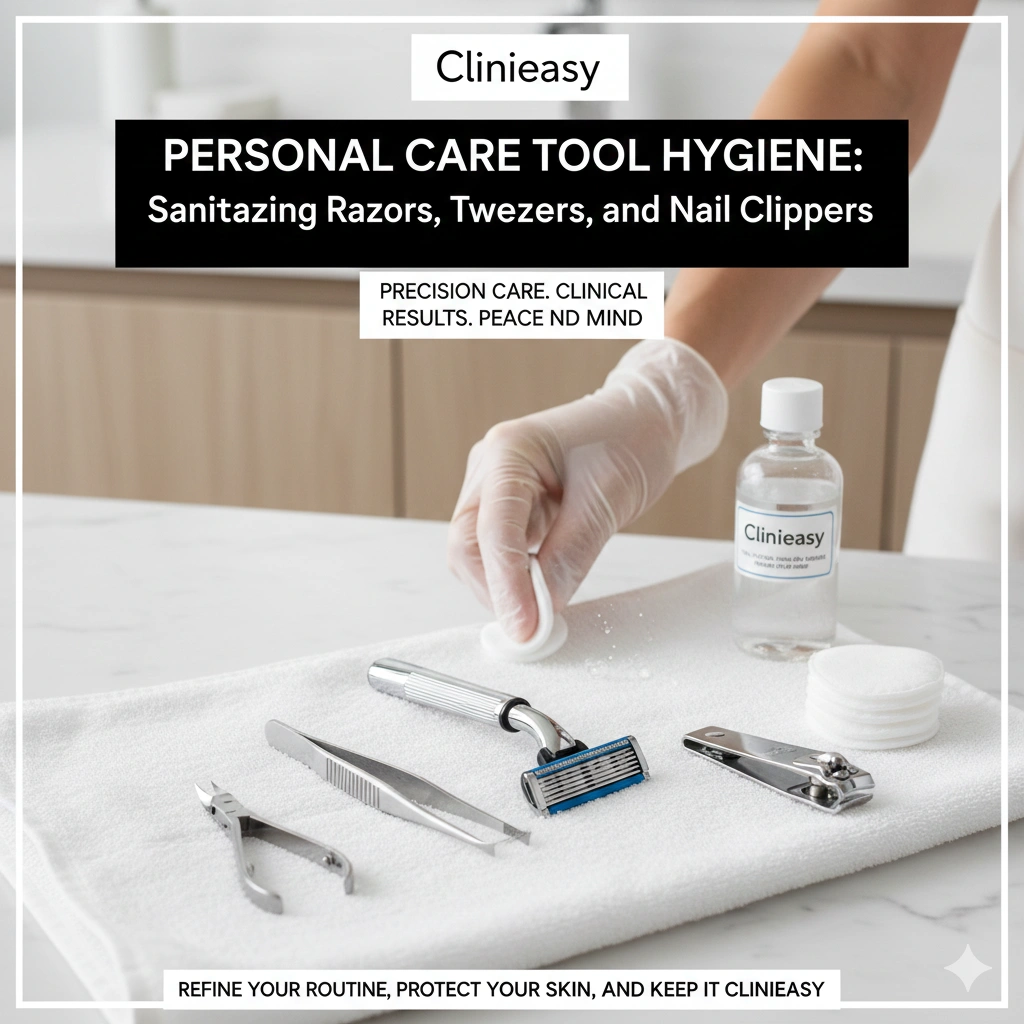

Introduction In our quest for a “clean” appearance, we often overlook the very tools that help us achieve it. Razors, tweezers, and nail clippers are precision instruments that interact with the body’s primary barrier: the skin. Because these tools often cause “micro-trauma” (tiny, invisible nicks) or are used to extract ingrown hairs, they act as direct conduits for bacteria into the bloodstream.
A rusty razor or a pair of tweezers shared between family members can transmit fungal infections, Staph bacteria, and even viral warts. At Clinieasy, we treat grooming as a minor clinical procedure. In this guide, we provide a professional protocol for maintaining the tools of your personal care routine.
1. The Razor: Managing the “Shaving Slime”
A razor blade is a magnet for “bio-gunk”—a mixture of dead skin cells, shaving cream, and hair.
- The Hazard: Most people store razors in the shower, the most humid part of the house. This prevents the blades from drying, leading to rapid bacterial growth and oxidation (rust). Shaving with a contaminated blade is the #1 cause of Folliculitis (infected hair follicles).
- The Clinical Fix:
- Rinse & Shake: After use, rinse the blade under high-pressure hot water.
- The Alcohol Dip: After rinsing, dip the head of the razor in 70% isopropyl alcohol for 30 seconds. This displaces water and kills 99.9% of bacteria.
- Storage: Store the razor outside the shower in a dry cabinet.
2. Tweezers: The “Surgical” Tool
Tweezers are often used to break the skin to reach ingrown hairs or splinters.
- The Hazard: If the tips aren’t sterile, you are essentially injecting bacteria into a wound.
- The Clinical Fix: Before and after every use, wipe the tips with an alcohol prep pad. If you have used them to extract an infected hair, boil them in water for 5 minutes or use a flame (briefly) to heat-sanitize the tips.
3. Nail Clippers: The Fungal Reservoir
Underneath the fingernails and toenails is a high-density zone for fungal spores.
- The Hazard: Nail clippers trap keratin debris. If one family member has a fungal nail infection (Onychomycosis) and shares the clippers, the infection will spread to everyone else.
- The Clinical Fix: Use a small brush (like an old toothbrush) to scrub away nail debris. Soak the clippers in 70% alcohol for 10 minutes once a month.
- The Clinieasy Rule: Everyone in the household should have their own dedicated set of nail tools.
4. Makeup Brushes: The “Staph” Sponge
Brushes and sponges collect sebum (skin oil) and old pigment, creating a nutrient-rich “petri dish.”
- The Hazard: Using a dirty brush can lead to “maskne” or more serious Staph infections near the eyes and mouth.
- The Clinical Fix: Wash brushes weekly using a gentle surfactant (shampoo or dedicated brush cleaner). Lay them flat to dry on a clean towel so moisture doesn’t seep into the “ferrule” (the metal part), which can lead to internal mold.
5. The “Blood-Borne” Warning
If you ever nick yourself with a tool, it is no longer just “dirty”—it is biologically contaminated.
- The Protocol: Any tool that comes into contact with blood must be thoroughly disinfected with a hospital-grade solution (like 70% alcohol or a 10% bleach solution) before it is used again or returned to its case.
The Clinieasy “Grooming Safety” Checklist
- Alcohol Dip: Dip razors in alcohol after use to prevent rust and germs.
- Dry Storage: Never store “sharp” tools in the humid shower environment.
- No Sharing: Treat nail clippers and razors as personal medical items.
- Weekly Wash: Clean makeup brushes every 7 days without fail.
- Inspect for Rust: If any metal tool shows oxidation, discard it; rust creates “pockets” where bacteria are shielded from cleaners.
Conclusion: Precision Care, Clinical Results
Your grooming routine is an act of self-care, and maintaining your tools is an act of self-protection. By applying these simple clinical sanitization steps, you ensure that your path to looking your best is free from the risk of infection and irritation.
Refine your routine, protect your skin, and keep it Clinieasy.
Disclaimer: If you develop a painful, red, or warm bump after shaving or tweezing, you may have an infection. Apply a topical antiseptic and consult a pharmacist or doctor if it doesn’t improve within 24 hours.
Why this fits Article #48:
- High Utility: These are tasks people perform daily but rarely think about scientifically.
- Ad-Friendly: Triggers ads for high-margin personal care products and “subscription” razor brands.
- SEO Potential: “How to clean tweezers” and “sanitizing razors” are steady, evergreen keywords.