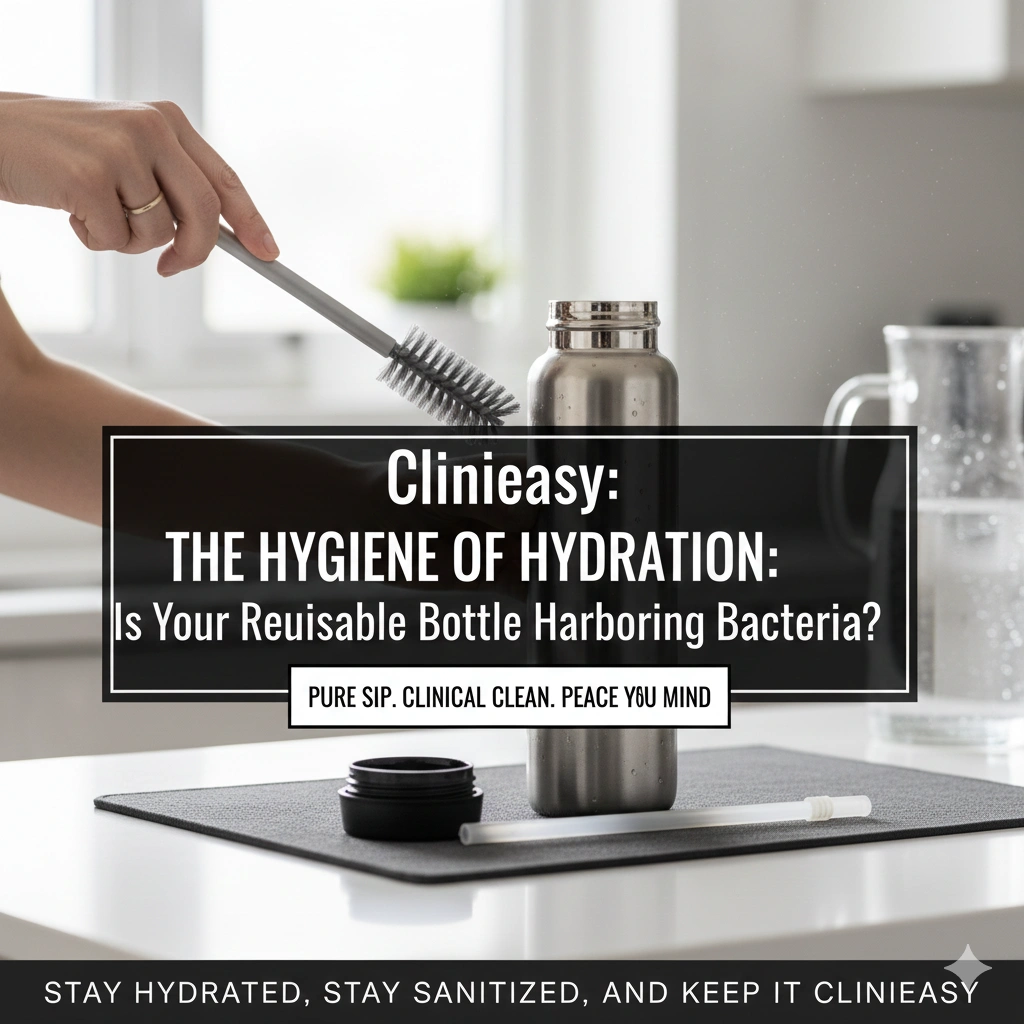

The shift toward reusable water bottles is a win for the environment, but it has introduced a new clinical challenge to our daily routines. We carry these bottles to the gym, the office, and into our cars, often refilling them for days without a thorough cleaning. Because we “only put water in it,” there is a dangerous misconception that the bottle stays clean.
The clinical reality is different. A study by WaterFilterGuru found that reusable water bottles can harbor more bacteria than a toilet seat—averaging over 20 million CFUs (colony-forming units) of bacteria. From “black yeast” in the straw to slimy biofilms on the base, your hydration habit might be delivering more than just $H_2O$.
At Clinieasy, we believe hydration should be untainted. In this guide, we break down the microbiology of your bottle and how to keep it clinically pure.
1. The Anatomy of a Biofilm
If the inside of your bottle feels “slippery,” you are touching a biofilm.
- The Science: A biofilm is a structured community of microorganisms that stick to surfaces. They create a protective matrix that makes them resistant to simple rinsing.
- The Clinical Fix: Rinsing is not cleaning. You must use mechanical friction. A long-handled bottle brush is essential to break up the biofilm on the interior walls and the bottom of the bottle.
2. The “Hidden” Mold: Straws and Valves
The most hazardous parts of a reusable bottle are the mouthpieces, flip-straws, and “bite” valves.
- The Hazard: These components have small, dark, damp crevices—the perfect incubator for black mold (Aspergillus). If you see black specks in your straw or under the silicone seal, you are inhaling fungal spores with every sip.
- The Clinical Fix: Disassemble the lid completely. Use a “pipe cleaner” style brush for the straw. If the mold is persistent, soak the components in a solution of white vinegar and water for 30 minutes to kill the fungal roots.
3. Material Matters: Glass vs. Stainless Steel vs. Plastic
How you clean your bottle depends on what it’s made of.
- Plastic: Can develop microscopic scratches over time that harbor bacteria. Avoid using abrasive scrubbers.
- Stainless Steel: Generally the most hygienic, but can develop “scale” (mineral buildup) that provides a textured surface for bacteria to cling to.
- The Clinieasy Tip: Avoid “soft-touch” plastics if you have a compromised immune system; glass or high-grade 18/8 stainless steel are the clinical gold standards for surface purity.
4. The “Daily Reset” vs. The “Weekly Deep Clean”
- Daily: Every evening, empty the bottle. Wash with hot, soapy water and leave it to air dry upside down on a rack. Bacteria cannot thrive without moisture.
- Weekly: Run your bottle through the dishwasher if it is “dishwasher safe” (the high heat acts as a sanitizer). If not, use a cleaning tablet (sodium carbonate/percarbonate) to reach areas a brush might miss.
5. The Cross-Contamination Risk
Your bottle goes where you go.
- The Hazard: Setting your bottle on a gym floor or a public bus seat and then touching the mouthpiece transfers pathogens directly to your mouth.
- The Fix: Choose bottles with protected mouthpieces (lids that cover the area you drink from). Avoid “open” straws in high-traffic public environments.
The Clinieasy “Pure Sip” Checklist
- Brush Weekly: Use mechanical friction to break up biofilms.
- Dry Completely: Never leave a damp bottle capped overnight.
- Soak the Seals: Remove silicone gaskets once a week to check for hidden mold.
- Heat Sanitize: Use the dishwasher or a boiling water rinse (for steel/glass only).
- Replace Straws: If a straw is stained or shows “pitting,” discard and replace it.
Conclusion: Drink to Your Health
Your reusable bottle is a tool for wellness, but like any clinical tool, it requires maintenance. By moving beyond the “quick rinse” and adopting a friction-based cleaning routine, you ensure that your hydration remains a source of vitality, not a hidden source of infection.
Stay hydrated, stay sanitized, and keep it Clinieasy.
Disclaimer: If your water bottle has a persistent “musty” smell even after cleaning, it likely has a deep-seated fungal colony. It may be safer to replace the lid or the entire bottle.
Why this fits Article #47:
- High Relevance: Everyone from students to athletes uses these bottles.
- Ad-Friendly: Triggers ads for cleaning supplies and premium bottle brands.
- SEO Magnet: “Black mold in straw” is a high-volume, high-anxiety search term.