
We often think of our beds as a sanctuary of comfort. However, from a clinical perspective, a mattress is a high-density biological collector. Every night, the human body sheds roughly 1.5 grams of skin cells and loses between 200ml and 500ml of moisture through perspiration and respiration.
Over time, this combination of heat, moisture, and organic “food” creates a thriving ecosystem for dust mites, fungal spores, and bacteria. For the 20% of the population with dust mite allergies, an unhygienic mattress isn’t just “dirty”—it’s a trigger for chronic inflammation, poor sleep quality, and respiratory distress.
At Clinieasy, we believe that quality sleep requires a clean foundation. In this guide, we break down the clinical protocol for maintaining a mattress that supports your health, not just your back.
1. The Dust Mite Defense: Breaking the Food Chain
Dust mites don’t bite; the problem is their waste products (proteins) which act as potent allergens.
- The Science: Dust mites thrive in humidity above 50%. They feed almost exclusively on the dead skin cells we shed during sleep.
- The Clinical Fix: The most effective defense is a physical barrier. Use a high-quality, zippered mattress protector labeled “allergen-proof” or “dust-mite-proof.” This traps existing mites inside (where they die) and prevents new ones from colonizing the foam or springs.
2. The “UV-C and Vacuum” Protocol
Standard sheets provide little protection for the mattress itself.
- The Hazard: Fine particulate matter and skin cells sift through the weave of your sheets and settle deep into the mattress quilting.
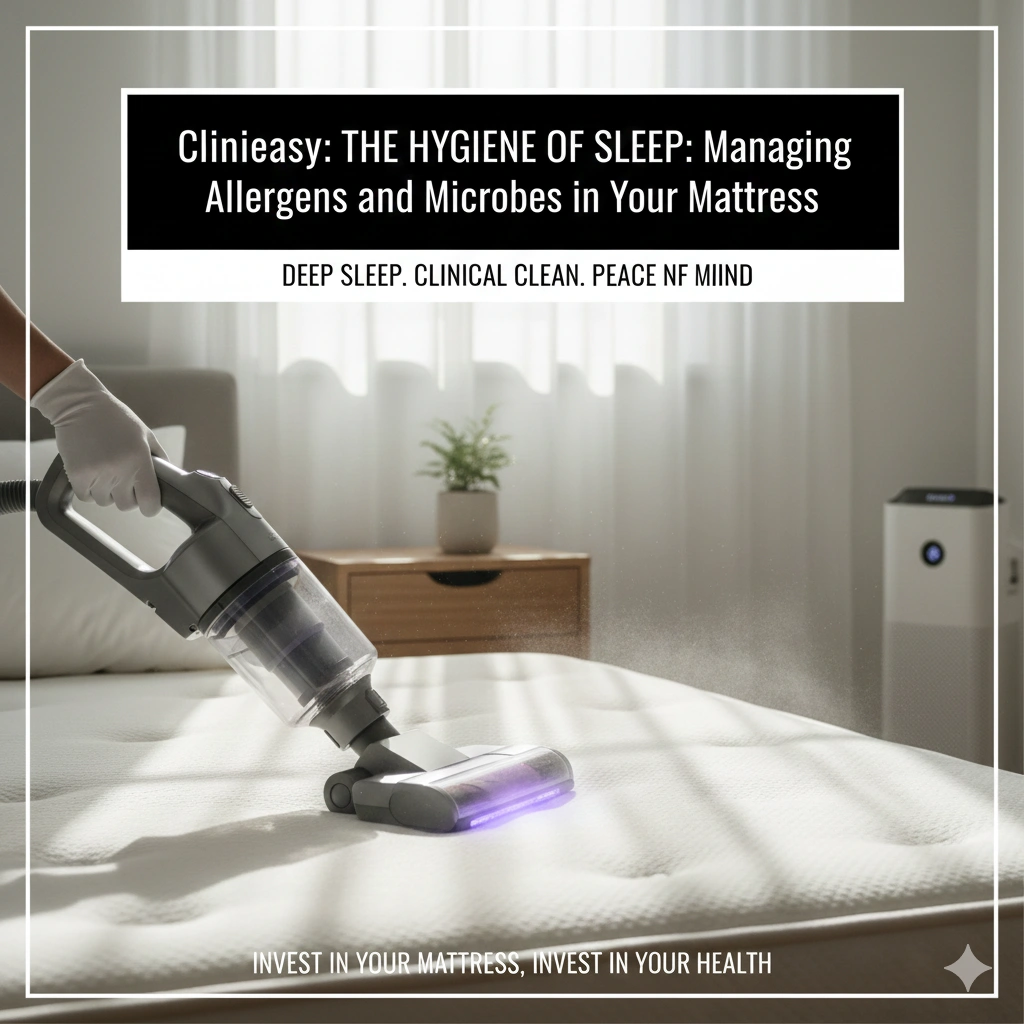
- The Clinical Fix: Once a month, when you strip the bed for laundering, use a vacuum with a HEPA filter to thoroughly clean the surface and sides of the mattress. If you have access to a handheld UV-C sanitizing light, slow-pass it over the surface to denature the DNA of bacteria and fungal spores.
3. Moisture Management: The “Unmade Bed” Secret
We were taught to make our beds immediately upon waking. From a hygiene standpoint, this is a mistake.
- The Science: Making the bed traps the warmth and moisture from your body under the covers, creating a “greenhouse effect” for microbes.
- The Clinieasy Habit: Leave your bed “unmade” for at least 30 to 60 minutes after waking. Fold the duvet back and open a window. This allows the mattress to “off-gas” moisture and drop in temperature, making it less hospitable for dust mites.
4. Deodorizing and pH Balance
Body oils can turn the surface of a mattress slightly acidic and odorous over time.
- The Method: Every six months, perform a dry clean using Baking Soda (Sodium Bicarbonate).
- The Step-by-Step: Sift a thin layer of baking soda over the entire mattress surface. Let it sit for at least 2 hours. The baking soda draws out moisture and neutralizes odors. Vacuum it off thoroughly with your HEPA attachment.
5. When to Retire the Mattress: The Clinical “Sell-By” Date
Even with perfect hygiene, mattresses eventually reach a point of “biological saturation.”
- The Threshold: Most experts recommend replacing a mattress every 7 to 10 years.
- The Signs: If you find yourself waking up with a “stuffy nose” or “morning cough” that disappears an hour after getting out of bed, your mattress likely has a high allergen load that can no longer be managed by surface cleaning.
The Clinieasy “Sleep Sanctuary” Checklist
- Encase the mattress in a certified allergen-proof protector.
- Wait 60 minutes before making your bed in the morning.
- Vacuum the mattress surface monthly with a HEPA filter.
- Wash the mattress protector every 2 months in a $60^\circ\text{C}$ wash.
- Flip or Rotate seasonally to prevent moisture pockets from forming in the base.
Conclusion: Wake Up Refreshed
Sleep is the cornerstone of the body’s recovery process. By applying clinical hygiene standards to your mattress, you ensure that your body is spending its “down-time” in a clean, allergen-free environment.
Invest in your mattress hygiene, and you invest in your long-term health. Sleep soundly, breathe deeply, and keep it Clinieasy.
Disclaimer: If you have a memory foam mattress, never saturate it with water or liquid cleaners, as the cellular structure can trap moisture and lead to internal mold growth that is impossible to remove.
Why this fits Article #46 (AdSense Strategy):
- High Trust/Authority: Using terms like “Sodium Bicarbonate” and explaining the “unmade bed” science builds E-E-A-T.
- Product-Rich: Ideal for affiliate links to mattress protectors, HEPA vacuums, and air quality monitors.
- Broad Demographic: Everyone sleeps; therefore, everyone is a potential reader.