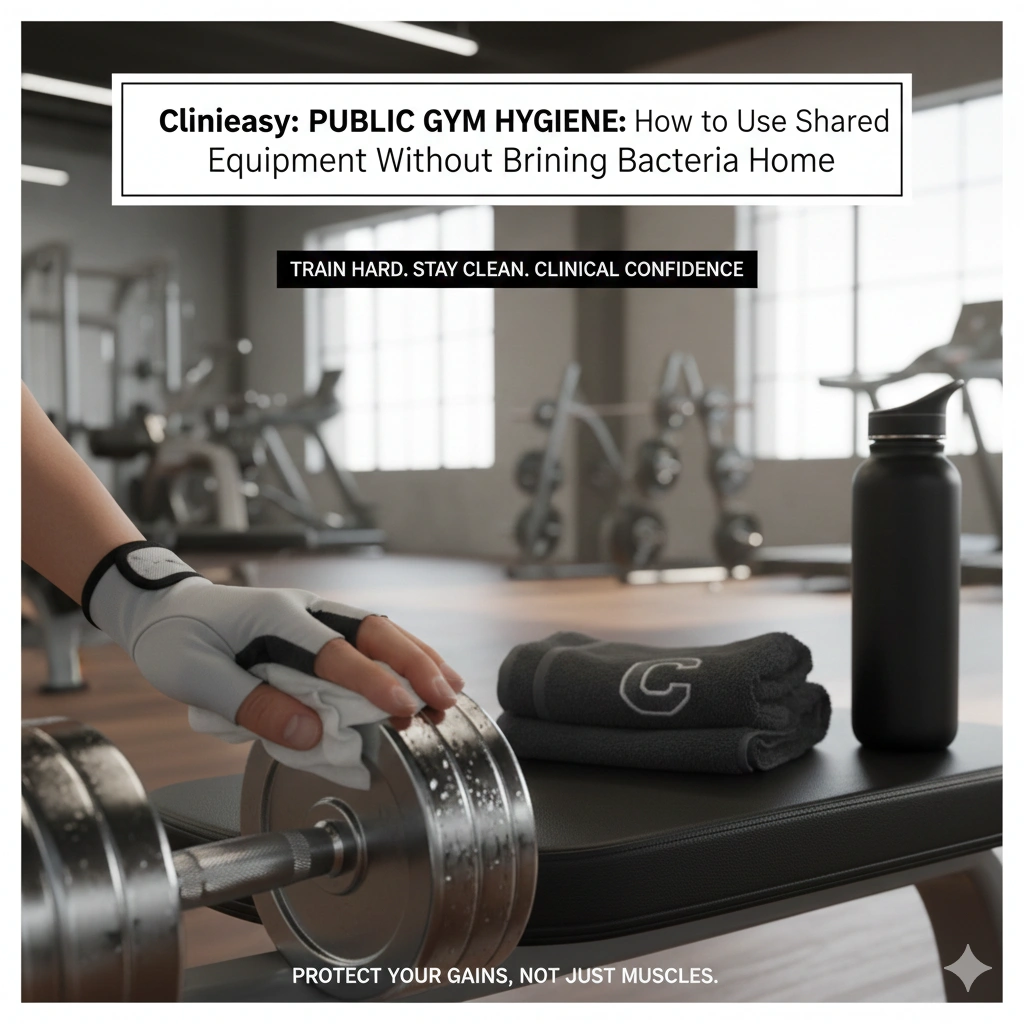

The gym is where we go to build our bodies and strengthen our cardiovascular health. However, because gyms are high-humidity, high-traffic environments filled with porous surfaces and shared equipment, they are also hotspots for microbial life.
From common skin infections like Ringworm and Athlete’s Foot to more serious concerns like MRSA (Staph) and the Human Papillomavirus (HPV), the “gains” you get at the gym shouldn’t include a trip to the dermatologist. At Clinieasy, we believe that peak physical performance requires a clinical defense strategy.
In this guide, we reveal how to navigate the weight room and the locker room with professional-grade hygiene, ensuring your workout remains a net positive for your health.
1. The “Wipe-Before-and-After” Protocol
Most gyms provide disinfectant sprays or wipes. Most people use them after they finish their sets.
- The Clinical Reality: You cannot guarantee the person before you wiped the equipment properly.
- The Strategy: Wipe the “contact points” (handles, benches, screens) before you touch them.
- The 2-Minute Rule: Most gym disinfectants require a specific “dwell time” to actually kill pathogens. If you wipe a surface and immediately sit on it while it’s wet, you haven’t sanitized it. Let it air dry for 30–60 seconds for maximum clinical efficacy.
2. The “Barrier” Method: Towels and Clothing
Your skin is your primary defense, but at the gym, you need secondary layers.
- The Hazard: Bench presses and yoga mats are “communal skin zones.” Direct contact between your back or legs and a vinyl bench can transfer fungi and bacteria into your pores.
- The Fix: Always lay a clean towel down before sitting or lying on equipment. Furthermore, wear moisture-wicking, long-sleeve layers if possible. The less direct skin-to-equipment contact you have, the lower your risk of developing “Acne Mechanica” or fungal rashes.
3. Locker Room Logic: The “Shower Shoe” Mandate
The communal shower floor is the primary transmission site for Tinea pedis (Athlete’s Foot) and plantar warts.
- The Science: These fungi thrive in the warm, wet tiles of a locker room. They are highly resilient and can survive for days in the grout.
- The Clinical Fix: Never let your bare feet touch the floor of a gym shower or changing area. Use high-quality, non-slip rubber flip-flops.
- The Exit Strategy: After showering, dry your feet thoroughly—especially between the toes—before putting on socks. Moisture trapped in a sock is a fungal incubator.
4. Personal Tech and Water Bottles
We’ve discussed phone hygiene in Article #24, but it’s never more critical than at the gym.
- The Hazard: You touch a dumbbell, then your phone, then your face. You’ve just created a direct path for “gym germs” to reach your mucosal membranes.
- The Fix: Use a “hands-free” magnetic mount for your phone so it doesn’t touch the floor or the equipment. Use a water bottle with a covered spout to prevent airborne droplets or gym dust from settling where you drink.
5. The Post-Gym “Golden Hour”
The time between finishing your workout and showering is when most skin infections take hold.
- The Hazard: Sweat trapped against the skin by tight gym clothes causes maceration—the softening of the skin that makes it easier for bacteria to penetrate.
- The Clinical Fix: Shower as soon as possible after your workout. If you have to commute home first, change out of your damp gym clothes immediately and use a body wipe containing tea tree oil or eucalyptus (natural antimicrobials) on your chest and back.
The Clinieasy “Gym Defense” Checklist
- Double-Wipe: Clean equipment before and after use.
- Towel Barrier: Never let bare skin touch a gym bench.
- Flip-Flops Always: No bare feet in showers or locker rooms.
- Covered Spouts: Use water bottles that protect the mouthpiece.
- Wash Gear: Launder gym clothes after every use in a $60^\circ\text{C}$ wash (see Article #41).
Conclusion: Stronger, Safer, Cleaner
A professional athlete wouldn’t neglect their recovery, and a Clinieasy athlete doesn’t neglect their hygiene. By treating the gym as a high-risk clinical environment, you protect your skin and your immune system, allowing you to focus entirely on your performance.
Train hard, stay clean, and keep it Clinieasy.
Disclaimer: If you notice a red, circular rash (Ringworm) or a painful, swollen bump that looks like a spider bite (potential Staph), consult a healthcare provider immediately and avoid the gym until cleared.
Why this fits Article #44 (AdSense Strategy):
- High-Intent Audience: Gym-goers are active researchers of health and wellness products.
- Premium Ad Space: Triggers high-CPM ads for fitness tech (Apple Watch, Whoop), athletic wear (Lululemon), and skincare (CeraVe).
- Viral Potential: Gym hygiene is a popular “re-shareable” topic on social media platforms like Instagram and TikTok.